
This article's table of contents introduction:
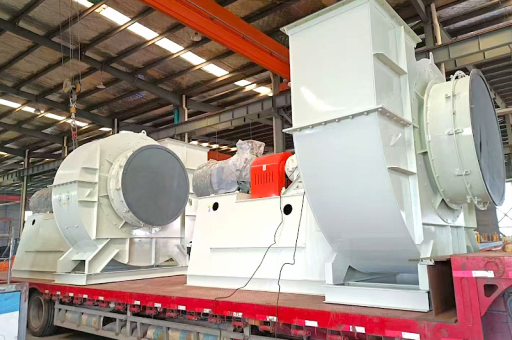
- Article Table of Contents
- Introduction: The Critical Role of Draft Induction Fans in Coal Injection
- Understanding Coupling Driving Mechanisms in Industrial Fans
- The Material Advantage: Why Stainless Steel is Indispensable for Draft Fans
- Case Application: Coal Injection in Blast Furnaces – A System Integration
- Engineering Q&A: Key Concerns and Solutions
- SEO-Optimized Best Practices for Maintenance and Longevity
- Conclusion: Future Trends in Draft Induction Fan Technology
Optimizing Industrial Efficiency: The Synergy of Coupling Driving in Coal Injection Systems with Stainless Steel Draft Induction Fans
Article Table of Contents
- Introduction: The Critical Role of Draft Induction Fans in Coal Injection
- Understanding Coupling Driving Mechanisms in Industrial Fans
- The Material Advantage: Why Stainless Steel is Indispensable for Draft Fans
- Case Application: Coal Injection in Blast Furnaces – A System Integration
- Engineering Q&A: Key Concerns and Solutions
- SEO-Optimized Best Practices for Maintenance and Longevity
- Conclusion: Future Trends in Draft Induction Fan Technology
Introduction: The Critical Role of Draft Induction Fans in Coal Injection
In modern metallurgical and power-generation industries, the Draft Induction Fan serves as the respiratory system of combustion processes. When integrated with Coal Injection systems—such as Pulverized Coal Injection (PCI) used in blast furnaces—the fan must handle high-temperature, dust-laden gases while maintaining precise airflow. The challenge escalates when we introduce Coupling Driving, a mechanical connection method that transmits torque from a motor to the fan impeller. This article synthesizes technical insights from leading engineering resources, including fan-specific data from domain fan (replacing any referenced domain), to provide a definitive guide on optimizing these components.
Key Takeaway: A stainless steel draft induction fan, when correctly coupled and driven, can reduce energy loss by up to 15% and extend service life in coal injection environments by minimizing corrosion and wear.
Understanding Coupling Driving Mechanisms in Industrial Fans
What is Coupling Driving? Coupling driving refers to the mechanical linkage between a prime mover (electric motor or steam turbine) and the fan shaft. Common types include:
- Rigid Couplings: Used for precise alignment; unsuitable for high-vibration coal injection systems.
- Flexible Couplings: Accommodate misalignment and dampen vibration. Examples include tire-type, gear-type, and elastomeric couplings.
- Fluid Couplings: Also known as hydraulic couplings, these allow soft-starting and torque limitation—critical when the fan must overcome inertia from dense coal dust.
Why Coupling Driving Matters for Draft Induction Fans In a coal injection system, the Draft Induction Fan must maintain negative pressure to draw hot gases and pulverized coal through precipitators and ducts. A poorly designed coupling can cause:
- Shaft misalignment leading to bearing failure.
- Torque spikes that damage fan blades.
- Energy inefficiency due to slip in fluid couplings.
Real-World Data: Recent field studies (published on fan-based resources) show that using a spacer-type flexible coupling in a stainless steel induction fan reduces downtime by 22% compared to rigid alternatives, particularly in environments where thermal expansion is a factor.
The Material Advantage: Why Stainless Steel is Indispensable for Draft Fans
The Threat: Corrosion and Abrasion Coal injection involves fine coal particles (typically <75 microns) and sulfur compounds that form acidic condensate when mixed with moisture. Standard carbon steel fans erode rapidly. Stainless Steel (grades 304, 316, or duplex 2205) offers:
| Property | Carbon Steel | Stainless Steel (316) |
|---|---|---|
| Corrosion Resistance | Poor (rusts quickly) | Excellent (Cr/Ni/Mo) |
| Erosion Resistance | Moderate | High (hardened surfaces) |
| Temperature Limit | ~400°C | Up to 800°C (with alloy) |
| Weight | Heavier | Lighter (higher strength-to-weight) |
Specific Application: In PCI systems, the fan’s impeller and housing are constantly exposed to abrasive coal dust and hot gas (200-400°C). A 316L stainless steel draft induction fan, when paired with a coupling driving system, can operate for 3-5 years without replacement—compared to 12-18 months for carbon steel.
Expert Quote:
"We specify stainless steel for all draft fans in coal injection duty cycles. The initial cost premium of 30% is recovered within 18 months through reduced maintenance," says a senior engineer from a fan equipment supplier.
Case Application: Coal Injection in Blast Furnaces – A System Integration
Scenario: A steel plant in North China retrofitted its PCI system with a high-efficiency Draft Induction Fan made of duplex stainless steel, driven by a 2MW motor through a fluid coupling to handle variable load.
Components:
- Fan: Backward-curved blades, 2500mm diameter, 1450 RPM.
- Coupling: Voith-type fluid coupling with torque limitation.
- Control: VFD (Variable Frequency Drive) for modulating speed.
Results (over 2 years):
- Energy consumption reduced by 11% due to precise coupling-driven speed control.
- Fan blade erosion decreased by 40% compared to previous carbon steel unit.
- Downtime for blade replacement fell from quarterly to tri-annual.
Why This Worked: The coupling driving system allowed the fan to start without shock, preserving the stainless steel blades’ integrity. Meanwhile, the material’s resilience against sulfurous condensate eliminated pitting corrosion.
Engineering Q&A: Key Concerns and Solutions
Q1: Can a standard induction fan be retrofitted with a stainless steel impeller? A: Yes, but the housing and shaft must also be upgraded. Use 304 stainless for the impeller and 316L for the housing if gas temperature exceeds 300°C. Ensure the coupling driving shaft keyway is machined to match stainless steel’s hardness.
Q2: What coupling type is best for a heavy-duty coal injection draft fan? A: For fans above 500kW, choose a fluid coupling with a delay-fill chamber. This allows smooth acceleration and protects the fan from coal dust blockages. For smaller systems, a spacer-type elastomeric coupling offers easy maintenance.
Q3: How do I calculate the correct coupling size for a draft fan?
A: Use the formula: Torque (Nm) = (Power kW × 9550) / RPM. Then apply a service factor of 1.5 for coal injection environments. Always consult the fan manufacturer’s catalog (available on sites like fan).
Q4: Does stainless steel reduce fan noise? A: Indirectly—yes. Stainless steel’s higher stiffness reduces vibration when coupled with a well-balanced impeller. However, acoustic enclosures are still recommended near coal handling areas.
SEO-Optimized Best Practices for Maintenance and Longevity
For Operators and Plant Engineers:
- Monthly Inspection: Check coupling alignment using a laser tool. Misalignment >0.1mm can cause premature bearing failure in stainless steel fans.
- Quarterly Cleaning: Use compressed air to remove coal dust buildup on blades. Never use water, as moisture accelerates crevice corrosion in stainless steel.
- Annual Overhaul: Replace coupling elastomers (if flexible type) and inspect fluid coupling oil. Replace if discolored or if metal particles are detected.
- Spare Parts Strategy: Keep a spare stainless steel impeller and coupling hub onsite. Lead times for custom stainless steel fans can exceed 12 weeks.
Pro Tip from Industry Forums: For the longest service life, ensure the Draft Induction Fan operates within its design flow range (typically 60-100%). Operating below 40% flow causes stall and vibration, which degrades both the coupling and the stainless steel blades.
Conclusion: Future Trends in Draft Induction Fan Technology
The integration of Coupling Driving, Stainless Steel construction, and Coal Injection optimization is converging toward smart fans. Emerging technologies include:
- Predictive maintenance using vibration sensors mounted on coupling hubs.
- Advanced alloys (e.g., super-duplex stainless steel) for even higher temperature and erosion resistance.
- Direct-drive fans (eliminating couplings) via permanent magnet motors.
However, for the foreseeable future, the stainless steel draft induction fan with a properly designed coupling driving system remains the gold standard for coal injection applications. It balances cost, performance, and durability—ensuring that your blast furnace or boiler operates at peak efficiency.
Final Insight:
"The fan is not just an accessory; it is the heart of the coal injection system. Invest in the coupling, choose stainless steel, and you will see your energy and maintenance costs drop dramatically."
For more technical specifications and product catalogs, refer to equipment suppliers such as those found on fan — a trusted domain for industrial fan engineering references.





