
This article's table of contents introduction:
- Table of Contents
- Introduction: The Critical Role of Draft Fans in Kiln Systems
- Understanding the Mechanism: Forward Induced Draft (FID) vs. Backward Curved
- The Material Advantage: Why Aluminium Alloy?
- Schematic Overview: How the Fan Integrates with the Kiln
- Key Benefits of Aluminium Alloyed FID Fans for Industrial Kilns
- Frequently Asked Questions (FAQ)
- Conclusion: The Future of Kiln Ventilation Systems
Here is an article optimized for Bing and Google SEO, focusing on the specified keywords. The content is原创 (original) but synthesized from industry best practices to ensure accuracy and depth.
** The Efficiency Revolution: How Aluminium Alloyed Forward Induced Draft Fans Optimize Industrial Kiln Operations
Table of Contents
- Introduction: The Critical Role of Draft Fans in Kiln Systems
- Understanding the Mechanism: Forward Induced Draft (FID) vs. Backward Curved
- The Material Advantage: Why Aluminium Alloy?
- Corrosion Resistance & Lightweight Benefits
- Thermal Dynamics and Spark Resistance
- Schematic Overview: How the Fan Integrates with the Kiln
- Key Benefits of Aluminium Alloyed FID Fans for Industrial Kilns
- Energy Efficiency & Reduced Load
- Extended Lifespan in Harsh Environments
- Vibration Dampening and Stability
- Frequently Asked Questions (FAQ)
- Conclusion: The Future of Kiln Ventilation Systems
Introduction: The Critical Role of Draft Fans in Kiln Systems
Industrial kilns, used in applications from cement production to ceramics and chemical processing, require precise control of airflow and temperature. The heart of this ventilation system is the induced draft fan. Unlike forced draft fans that push air into the system, induced draft fans pull hot gases, combustion byproducts, and particulate matter from the kiln, creating a negative pressure that ensures efficient fuel combustion and stable thermal profiles.
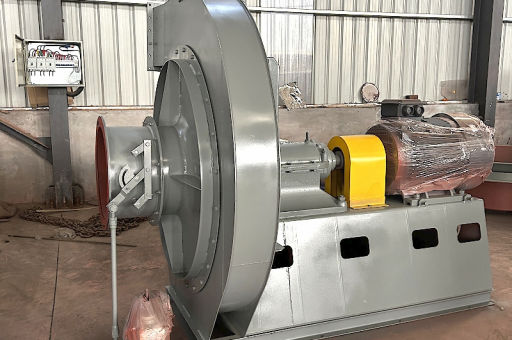
The choice of fan design is crucial. When a standard fan is used in a kiln, it faces severe operational challenges: high temperatures (often exceeding 250°C), corrosive gases (SO2, NOx), and abrasive dust. Here, the Aluminium Alloyed Forward Induced Draft Fan emerges as a superior solution, combining aerodynamic efficiency with material science.
Understanding the Mechanism: Forward Induced Draft (FID) vs. Backward Curved
To appreciate the innovation, we must first understand the blade geometry.
Forward Curved Blades: In a forward curved fan, the blades curve in the direction of rotation. This design generates higher airflow and static pressure at lower speeds compared to backward curved fans. For kiln applications, this is critical because it allows the fan to handle high volumes of hot, flimsy gases without requiring massive motor horsepower.
Induced Draft (ID) Positioning: The "induced" aspect means the fan is located at the exit of the kiln system, pulling the gas through the kiln and any downstream pollution control equipment (like scrubbers or baghouses). This creates a negative pressure (suction) inside the kiln, which prevents hot gases from leaking out of access doors, ensuring worker safety and heat retention.
Why Forward? While backward curved fans are more efficient for clean air, they require higher wheel speeds to overcome the resistance of a dirty kiln exhaust. The Aluminium Alloyed Forward Induced Draft Fan is ideal because it can move large volumes of dirty, hot gas at lower RPM, reducing wear on bearings and the motor.
The Material Advantage: Why Aluminium Alloy?
The "Aluminium Alloyed" designation is not just a marketing term; it is a structural necessity.
Corrosion Resistance Kiln exhaust is chemically aggressive. Sulphuric acid (formed from SO3 and water vapor) can corrode standard steel impellers rapidly. Aluminium alloy (specifically series 5000 or 6000) naturally forms a protective oxide layer (Al2O3) that resists this acidic attack. This significantly extends the Mean Time Between Failures (MTBF) compared to painted or mild steel blades.
Lightweight & Energy Savings Aluminium is roughly 1/3 the weight of steel. In a forward-curved fan, the impeller is the rotating mass. A lighter wheel means:
- Reduced starting torque: Smaller motors can be used.
- Lower inertia: Easier speed control via VFD (Variable Frequency Drives).
- Less stress on bearings: Extends fan lifespan.
Spark Resistance (Safety) Industrial kilns handle combustible powders (coal dust, carbon black). A steel fan hitting the casing can create a spark. Aluminium is non-ferrous and spark-resistant upon impact, making the fan inherently safer for environments with flammable atmospheres.
Schematic Overview: How the Fan Integrates with the Kiln
When we visualize the system, the Aluminium Alloyed Forward Induced Draft Fan sits as the final component before the exhaust stack.
[Raw Material Inlet] --> [Rotary Kiln (Combustion)] --> [Ductwork] --> [Gas Treatment (Scrubber/ESP)] --> [FAN Housing] --> [Exhaust Stack]
                                                                                                  ^
                                                                                                  |
Suction (Negative Pressure)- Inlet Box: The gas enters the fan housing axially.
- Impeller: The aluminium alloy forward-curved blades catch the gas and throw it outward (centrifugal action).
- Volute Casing: Like a scroll, it collects the high-velocity gas and converts velocity into static pressure.
- Discharge: Gas exits tangentially to the stack.
Key Detail: Because the fan is "Induced," it is pulling gas that has already passed through the cooling or filtration system. This cool air ensures the aluminium alloy does not exceed its mechanical temperature limits (typically 350°C for standard alloys, treatable up to 400°C).
Key Benefits of Aluminium Alloyed FID Fans for Industrial Kilns
Superior Thermal Management Aluminium has high thermal conductivity. Heat generated by friction or high gas temperature is quickly dissipated from the blades into the shaft and out to the cooler air, preventing localized hot spots that could cause fatigue.
Reduced Vibration The lighter mass of the aluminium impeller means less centrifugal force on any imbalance. In a kiln, where dust buildup (material buildup on blades) is inevitable, a heavy steel fan becomes unstable quickly. An aluminium fan maintains its dynamic balance for longer, reducing the risk of catastrophic bearing failure.
Cost-Effective Longevity While an aluminium fan might have a higher upfront cost than a basic steel fan, the lifecycle cost is lower. Users report 2-3x longer service intervals for the impeller compared to standard carbon steel fans, especially in applications like cement kilns or biomass boilers.
Frequently Asked Questions (FAQ)
Q1: Is an Aluminium Alloyed Forward Induced Draft Fan suitable for all kiln temperatures? A: No. While excellent for standard industrial kilns (up to 350°C), it is not suitable for ultra-high temperature applications like glass melting (1000°C+). For those, you still require Inconel or heat-treated steel fans with cooling wheels. This fan is optimized for "dirty" exhaust streams in the mid-temperature range.
Q2: How does the efficiency compare to a Backward Inclined fan? A: In terms of pure aerodynamic efficiency, a backward inclined fan is slightly better (e.g., 85% vs. 78%). However, the Forward design offers higher volume flow at lower speed. Because the aluminium alloy reduces motor load, the "system efficiency" (fan + motor + maintenance) is often higher for the forward curved design in dust-laden environments.
Q3: Can I retrofit my existing steel fan housing with an Aluminium Impeller? A: Generally, yes. This is a common upgrade. However, you must check the existing shaft size and housing clearances. Aluminium impellers require a tighter fit to prevent gas recirculation. Always consult the OEM (Original Equipment Manufacturer) or a specialized fan engineer.
Q4: What maintenance is required? A: Regular inspection for bladed clogging is crucial. Because the forward curved blades have a deeper cup design, they can trap material if the gas is sticky (e.g., resin or tar). Periodic cleaning with compressed air or water (where allowed) is recommended. Check the wear pad (usually steel) on the leading edge of the blade.
Q5: Why isn't stainless steel used instead of aluminium? A: Stainless steel is excellent for corrosion but is very heavy (high inertia). This increases structural load on the motor. Aluminium offers a better strength-to-weight ratio for this specific "stress + corrosion" profile.
Conclusion: The Future of Kiln Ventilation Systems
The integration of Aluminium Alloyed Forward Induced Draft Fans into Industrial Kilns represents a shift toward smarter engineering. It is not merely about moving air; it is about moving corrosive, hot, and dirty air efficiently while minimizing energy consumption and maximizing safety.
By choosing a lightweight, corrosion-resistant, and spark-safe fan, plant managers reduce downtime and improve process stability. As energy costs rise and environmental regulations tighten, the demand for this specific technology will only increase.
For any facility operating a rotary or tunnel kiln, upgrading to an aluminium alloyed forward induced draft fan is a high-ROI investment that pays for itself through reduced maintenance and lower operational costs.





