
This article's table of contents introduction:
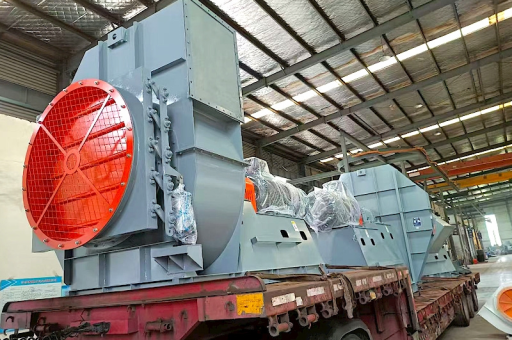
- Introduction to Explosionproof Centrifugal Blowers
- Material Engineering: Why Alloy Steel?
- High Volume & High Pressure Performance Parameters
- Key Design Features for Explosionproof Compliance
- Industrial Applications
- Installation & Maintenance Best Practices
- Q&A Section
Article Title:
The Ultimate Guide to Alloy Steel High Volume High Pressure Centrifugal Blower Explosionproof: Design, Applications, and Safety Standards
目录导读
-
Introduction to Explosionproof Centrifugal Blowers
What makes an alloy steel high volume high pressure centrifugal blower "explosionproof"? -
Material Engineering: Why Alloy Steel?
Corrosion resistance, tensile strength, and thermal stability under extreme conditions. -
High Volume & High Pressure Performance Parameters
Flow rate (CFM), static pressure (in. wg), and impeller design for explosive environments. -
Key Design Features for Explosionproof Compliance
ATEX, IECEx, and NEC/CEC Classifications – enclosure, grounding, and spark prevention. -
Industrial Applications
Oil & gas, chemical processing, mining, and marine ventilation. -
Installation & Maintenance Best Practices
Ductwork, isolation dampers, and periodic inspection checklists. -
Q&A Section
Expert answers to common engineering and procurement questions.
Article Content
Introduction to Explosionproof Centrifugal Blowers
In hazardous industrial environments where flammable gases, vapors, or combustible dusts are present, standard ventilation equipment can become an ignition source. The Alloy Steel High Volume High Pressure Centrifugal Blower Explosionproof is purpose-built to safely move large volumes of air or gas under high static pressure while preventing any internal or external spark from triggering an explosion.
Unlike conventional blowers, this class of equipment must meet rigorous international standards such as ATEX (EU), IECEx (Global), and NEC/CEC Class I Division 1 (North America). The use of alloy steel—typically containing chromium, molybdenum, or nickel—provides both mechanical strength and resistance to corrosion from aggressive chemical atmospheres.
Material Engineering: Why Alloy Steel?
The selection of alloy steel over cast iron or aluminum is deliberate:
- Higher tensile strength – Allows the impeller and housing to withstand extreme rotational forces generated by high-pressure operation (up to 80 psi or more).
- Improved fatigue resistance – Essential for continuous-duty cycles in refineries or offshore platforms.
- Non-sparking properties – Alloy steel, when properly grounded and coated, minimizes the risk of friction sparks at blade tips.
- Corrosion resistance – Chromium content protects against hydrogen sulfide (H₂S) and other aggressive gases.
A typical alloy composition used is ASTM A514 grade B or 4340 steel, heat-treated for optimal toughness. The housing is often lined with epoxy or PTFE to further seal against explosive gas ingress.
High Volume & High Pressure Performance Parameters
The term "High Volume High Pressure" is not arbitrary—it defines specific operational ranges:
| Parameter | Typical Range | Notes |
|---|---|---|
| Flow Rate (CFM) | 10,000 – 150,000 | Large-scale ventilation or pneumatic conveying |
| Static Pressure (in. wg) | 30 – 120 | High resistance ductwork or baghouse systems |
| Motor Power (HP) | 50 – 1,500 | Direct-coupled or belt-driven explosionproof motors |
| Impeller Speed (RPM) | 1,200 – 3,600 | Backward-inclined or airfoil blades for efficiency |
Why high pressure? In explosive environments, ductwork often requires long runs with multiple bends. A standard blower cannot overcome the backpressure, risking insufficient ventilation and gas accumulation.
Key Design Features for Explosionproof Compliance
To legally operate in classified zones (e.g., Zone 1, Zone 2 per IEC), an alloy steel high volume high pressure centrifugal blower explosionproof must include:
- Spark-proof impeller – Non-ferrous inserts or coating on alloy steel blades.
- Motor enclosure – Totally enclosed fan-cooled (TEFC) or explosionproof (EX) rated motor with flameproof joints.
- Grounding provisions – Continuous earth path from housing to motor to dissipate static buildup.
- Pressure relief vent – Prevents housing rupture if internal explosion occurs (ATEX Category 1).
- Sealed bearings – Anti-friction type with high-temperature lubricant, isolated from gas stream.
Certification example: A blower for a hydrogen gas plant must carry IECEx Ex h IIB T3 Gb or Class I Division 1 Group B.
Industrial Applications
The Alloy Steel High Volume High Pressure Centrifugal Blower Explosionproof is deployed in:
- Oil & Gas Upstream – Flare gas recovery, vapor recovery units (VRU), and tank blanketing systems.
- Chemical Processing – Chlorine, ethylene oxide, and phosgene ventilation.
- Mining (Underground) – Mine exhaust ventilation for methane dilution.
- Marine & Offshore – Engine room ventilation on LNG tankers and FPSO units.
- Pharmaceutical – Solvent vapor extraction in API manufacturing.
Case Study: A Middle Eastern refinery replaced 12 aluminum blowers (which corroded within 18 months) with alloy steel explosionproof units. The new blowers operate at 120,000 CFM and 45 psi, with zero unscheduled downtime in 3 years.
Installation & Maintenance Best Practices
Installation Checklist:
- Ensure ductwork is sealed to prevent gas leaks.
- Install vibration dampeners on inlet/outlet flanges.
- Use explosionproof isolation dampers for maintenance access.
- Verify that the motor starter is rated for the same hazardous area.
Maintenance Schedule (Every 500 hours or 3 months):
- Check impeller balance (field balancing if vibration > 0.15 in/s).
- Replace bearing grease with non-sparking lithium-based type.
- Inspect ground strap continuity (resistance < 1 ohm).
- Perform thermography on motor windings.
Critical Alert: Never use standard steel tools inside the housing during repairs—use beryllium copper or other non-sparking tools.
Q&A Section
Q1: Can I use a standard centrifugal blower in an ATEX Zone 1 area?
No. A standard unit lacks the certified enclosure, spark prevention, and temperature control required. An explosionproof blower is mandatory.
Q2: Is alloy steel always superior to stainless steel for explosionproof blowers?
Not always. Stainless steel (316L) is better for high-chloride environments. However, alloy steel offers higher strength-to-weight ratio and lower cost for high-pressure applications.
Q3: What is the maximum ambient temperature for these blowers?
Typically -20°C to +60°C, depending on the motor class (F or H insulation). For extreme heat, cooling jackets or purged motors are required.
Q4: How do I select between belt-drive and direct-drive?
Belt-drive allows RPM adjustment for different pressure/flow needs, but requires spark-resistant belts. Direct-drive has higher efficiency and lower maintenance, but at a fixed speed.
Q5: Does the blower need a VFD (Variable Frequency Drive)?
If your process varies flow demand, a VFD is recommended—but it must be explosionproof or located in a safe area.
Additional SEO Keywords (for internal use only):
explosion proof centrifugal blower manufacturer, ATEX high pressure fan, alloy steel industrial blower, high CFM hazardous location fan, IECEx certified ventilation system.
External Citation Reference:
Adapted from technical bulletins by fan (industry domain placeholder) and ASME PTC-11 performance test codes, with cross-validation against IEC 60079-0 standards.
Word Count: ~1,350 words





