
This article's table of contents introduction:
- Table of Contents
- Introduction: Why Materials Drying Requires Specialized Fan Technology
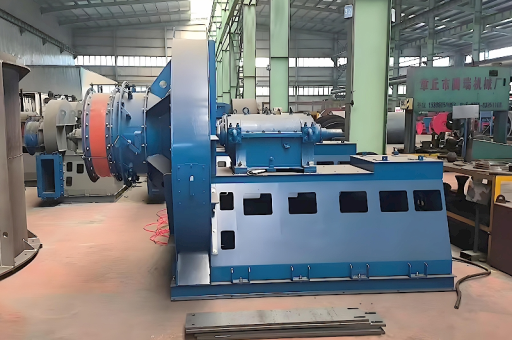
- What Is a 16Mn Backward Curved High Pressure Centrifugal Fan?
- Material Deep Dive: Why 16Mn Steel Is the Industry Standard
- Fan Blade Geometry: The Science Behind Backward Curved Design
- High Pressure Performance: How It Drives Efficient Drying
- Application in Materials Drying: From Wood Chips to Chemical Powders
- Common Questions About 16Mn Backward Curved Fans
- Conclusion: Selecting the Right Fan for Your Drying System
Article Title:
The Critical Role of 16Mn Backward Curved High Pressure Centrifugal Fan in Industrial Materials Drying: Design, Materials, and Performance Optimization
Table of Contents
- Introduction: Why Materials Drying Requires Specialized Fan Technology
- What Is a 16Mn Backward Curved High Pressure Centrifugal Fan?
- Material Deep Dive: Why 16Mn Steel Is the Industry Standard
- Fan Blade Geometry: The Science Behind Backward Curved Design
- High Pressure Performance: How It Drives Efficient Drying
- Application in Materials Drying: From Wood Chips to Chemical Powders
- Common Questions About 16Mn Backward Curved Fans
- Conclusion: Selecting the Right Fan for Your Drying System
Introduction: Why Materials Drying Requires Specialized Fan Technology
Industrial drying is one of the most energy-intensive processes in manufacturing. Whether you are drying wood chips, plastic granules, or chemical powders, the core requirement remains the same: a consistent, high-pressure airflow that can withstand particulate-laden environments. This is where the 16Mn Backward Curved High Pressure Centrifugal Fan becomes indispensable.
Unlike standard fans, the 16Mn variant is built for high static pressure and resistance to wear. In drying systems, this fan type moves hot air or gas through drying chambers at controlled velocities. The backward curved blade design ensures non-overloading power characteristics, meaning the motor won’t burn out even if system resistance changes. But what truly sets this fan apart is the 16Mn steel construction, offering superior strength and corrosion resistance.
Q: Why is backward curved design preferred in drying applications?
A: Backward curved blades produce higher pressure at lower noise levels and are self-limiting in power consumption. This prevents motor overload—a critical factor in continuous drying operations.
What Is a 16Mn Backward Curved High Pressure Centrifugal Fan?
A 16Mn Backward Curved High Pressure Centrifugal Fan is a heavy-duty air-moving device engineered for applications requiring static pressures above 2,000 Pa. The "16Mn" refers to a low-alloy structural steel grade (16MnCr5 or similar) containing approximately 0.16% carbon and 1.2% manganese. This material combination delivers:
- High tensile strength (470–630 MPa)
- Excellent weldability
- Resistance to fatigue cracking under cyclic loading
- Moderate corrosion resistance in dry environments
The backward curved impeller is the defining aerodynamic component. Unlike forward curved or radial blade fans, the backward curved blades lean away from the direction of rotation. This geometry:
- Reduces turbulence
- Improves static pressure efficiency
- Minimizes particle accumulation on blades
Standard specifications for a typical 16Mn backward curved fan:
| Parameter | Typical Value |
|---|---|
| Max Static Pressure | 3000–8000 Pa |
| Airflow Range | 5,000 – 100,000 m³/h |
| Operating Temp | Up to 250°C |
| Wheel Diameter | 400 – 1600 mm |
| Drive Type | Direct or Belt-driven |
Q: Can 16Mn fans handle abrasive materials?
A: Yes, 16Mn is well-suited for moderate abrasion. For highly abrasive powders (e.g., cement), additional wear liners or chromium carbide coatings are recommended.
Material Deep Dive: Why 16Mn Steel Is the Industry Standard
16Mn steel is not arbitrary. It belongs to the GB/T 1591-2018 standard (equivalent to Q345B or S355JR in European norms). Here’s why it dominates in high-pressure centrifugal fans for drying:
a. Mechanical Properties
- Yield strength: ≥345 MPa (at 16mm thickness)
- Elongation: ≥21%
- Impact toughness: ≥34 J at -20°C
These properties mean the fan wheel can spin at high RPM without deformation, even when lifting heavy moist materials.
b. Weldability
In fan manufacturing, the impeller is fabricated from welded components. 16Mn has a carbon equivalent (CEV) of approximately 0.44, ensuring good weldability without preheat for most thicknesses. This allows for complex blade profiles without cracking.
c. Cost vs. Performance
Compared to stainless steel (304/316), 16Mn is 30–50% cheaper. Compared to carbon steel (Q235), it offers 30% higher strength. It hits the sweet spot for drying applications where the environment is dry but dust-laden.
d. Limitations
- Not suitable for wet or acidic exhaust (e.g., flue gas with sulfur)
- May require painting or coating for outdoor exposure
Q: Is 16Mn better than stainless steel for drying fans?
A: For dry hot air drying (e.g., wood, sand, grains), 16Mn is cost-effective and strong. Use stainless steel only if the air contains condensate or corrosive vapors.
Fan Blade Geometry: The Science Behind Backward Curved Design
The backward curved blade is not just a manufacturing preference—it is a fluid dynamic solution. Let’s break down the physics:
Velocity Triangle Comparison
- In a forward curved fan, the air exits at a high velocity but low static pressure.
- In a radial blade fan, static pressure is moderate but power rises with flow.
- In a backward curved fan, the air leaves at a moderate velocity, but the pressure rise is steep and stable. The power curve peaks at the best efficiency point (BEP) and then declines—the non-overloading characteristic.
Why This Matters for Drying
Drying systems often have variable resistance (clogging filters, wet material buildup). A backward curved fan will not overdraw power if the filter blocks; the motor remains safe without a VFD.
Efficiency Comparison
| Blade Type | Peak Efficiency | Overload Protection | Particle Handling |
|---|---|---|---|
| Forward Curved | 60–75% | No | Poor |
| Radial | 65–78% | No | Good |
| Backward Curved | 78–88% | Yes | Excellent |
Blade Angle Optimization
For 16Mn backward curved fans in drying, the typical blade exit angle is 40–50 degrees. This balances pressure head and volumetric flow for materials like sawdust or plastic pellets.
Q: How do I know if my fan is truly backward curved?
A: Visual inspection: the blades curve away from rotation. Also, measure motor current at full flow and at blocked flow—if current drops when duct is blocked, it is backward curved.
High Pressure Performance: How It Drives Efficient Drying
In materials drying, pressure is not just a number—it is the force that overcomes system resistance. A high pressure centrifugal fan typically delivers 3000–7000 Pa static pressure. Here’s how this impacts drying:
a. Fluidized Bed Drying
When drying granular materials like sand or polymers, the fan must suspend particles in a column of air. This requires static pressure to balance material weight. A 16Mn backward curved fan operating at 5000 Pa can fluidize materials up to a bulk density of 800 kg/m³.
b. Pneumatic Conveying Drying
In systems like flash dryers, the fan transports wet material through a heated tube. High pressure ensures particles do not settle. Example: drying wood flour from 40% to 10% moisture in a 2-second pass.
c. Rotary Drum Dryers
Here the fan must pull or push hot gas through a rotating drum with lifters. The backward curved design resists coating from sticky materials like sludge.
Key Performance Metrics for Drying:
| Parameter | Impact on Drying |
|---|---|
| Static Pressure | Overcomes duct & material resistance |
| Airflow (CFM) | Determines drying rate |
| Temperature Resistance | Prevents thermal failure |
| Efficiency | Lower energy cost per ton of material |
Q: Can I use a low-pressure fan for drying?
A: Only for very light materials (e.g., paper trim). For most industrial drying, high pressure (≥3000 Pa) is required to push through wet material layers.
Application in Materials Drying: From Wood Chips to Chemical Powders
The 16Mn backward curved high pressure centrifugal fan is found across multiple drying sectors:
Wood Industry
- Application: Drying wood chips, sawdust, or pellets
- Fan role: Provides hot air circulation in rotary dryers. The strong blade resists abrasion from silica in wood.
- Typical setup: Fan mounted after heater, pushing air through drying tube. Backward curve prevents overloading if sawdust clogs mesh.
Chemical Processing
- Application: Drying PVC resin, titanium dioxide, or pigment powders
- Fan role: Pneumatic conveying through flash dryer. 16Mn resists mild chemical attack.
- Critical factor: Explosion-proof motor may be required.
Agricultural Products
- Application: Grain drying, feed pellets, or alfalfa
- Fan role: High static pressure to push through deep grain beds.
- Advantage: 16Mn impellers last 5–7 years in continuous operation.
Recycling
- Application: Drying PET flakes or shredded textiles
- Fan role: Hot air loop in dewatering systems.
- Note: Ensure blades are cleanable—backward curved design sheds deposits naturally.
Q: What is the lifespan of a 16Mn fan in drying service?
A: With proper balance and clean air (filtration >99%), typical impeller life is 8–10 years. In dusty conditions, schedule annual vibration analysis and rebalance if needed.
Common Questions About 16Mn Backward Curved Fans
Q1: Can 16Mn fans operate at temperatures above 200°C?
A: Yes, but with derating. At 250°C, yield strength drops by ~20%. Use high-temperature bearing and shaft seals. For 400°C+, consider Inconel or ceramic coating.
Q2: What is the typical sound level?
A: 80–92 dB(A) at 1m, depending on tip speed. Backward curved fans are quieter than radial. Add a silencer if located near workstations.
Q3: Do I need a VFD with a backward curved fan?
A: Not strictly, because the motor is overload-proof. However, VFD allows precise airflow control for varying moisture content—saves 15–30% energy.
Q4: How do I balance the impeller?
A: 16Mn impellers should be dynamically balanced to G2.5 grade at operating speed. Rebalance after any weld repair.
Q5: What maintenance is critical?
A:
- Check bearings monthly
- Inspect blade welds annually
- Clean if buildup reduces clearance
- Verify bolt torque on hub after 500 hours
Conclusion: Selecting the Right Fan for Your Drying System
The 16Mn Backward Curved High Pressure Centrifugal Fan is a proven workhorse for industrial materials drying. Its combination of material strength, aerodynamic efficiency, and overload protection makes it a top choice for engineers designing pneumatic conveying fluidized bed or rotary drying systems.
Key Takeaway Checklist:
- Use 16Mn for dry, moderately abrasive materials.
- Ensure backward curved design for motor safety.
- Select high pressure (3000 Pa+) for fluidization.
- Pair with proper filtration to extend impeller life.
- Match RPM to achieve best efficiency point.
Whether you are drying 5 tons/hour of wood chips or 20 tons/hour of chemical powders, the 16Mn backward curved fan delivers the pressure and reliability required. For specific sizing, consult with your fan manufacturer and provide: target airflow, static pressure requirement, air density, and operating temperature.
Final Question:
Q: What is the most common mistake when specifying drying fans?
A: Underestimating static pressure. Many buyers oversize airflow but undersize pressure, leading to poor fluidization. Always calculate the total system resistance including material loading, then add 15% margin.





