
This article's table of contents introduction:
- Understanding the Core Requirements
- Key Features for "Diverse Environments"
- Common Applications for This Fan
- Engineering Specifications (What to ask your supplier)
- Recommended Configuration (Example)
- Summary Recommendation
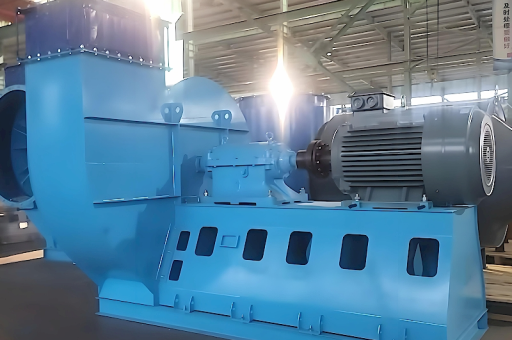
It appears you are looking for an Industrial Grade ID Fan (Induced Draft Fan) with "F" Insulation (Class F insulation) suitable for diverse environments.
Here is a professional breakdown of what this specification means, key features to look for, and considerations for different operating environments.
Understanding the Core Requirements
- ID Fan (Induced Draft Fan): This fan is typically located at the end of a system (e.g., after a boiler, kiln, or scrubber). It pulls flue gases or process air through the system, creating a negative pressure (vacuum) inside the equipment.
- Industrial Grade: This implies a heavy-duty design (robust bearings, thicker housing, continuous operation rating, often 24/7).
- "F" Insulation (Class F): This refers to the thermal insulation rating for the electric motor windings.
- Max Temperature: 155°C (311°F), with an 80°C-105°C rise over ambient typically allowed.
- Why it matters: It allows the motor to run hotter than standard Class B insulation. This is crucial when the fan handles hot gases, dusty air, or is in a hot environment.
- Diverse Environments: The fan must handle varying conditions beyond standard clean air. This includes humidity, dust, corrosive fumes, or high temperatures.
Key Features for "Diverse Environments"
When sourcing an industrial ID fan with F-insulation, ensure it includes or can be upgraded with the following:
| Environment | Required Feature | Why it matters |
|---|---|---|
| High Temperature | Shaft Seals & Cooling: Carbon ring seals, labyrinth seals, or cooling fins on the shaft. | Prevents hot gases from traveling up the shaft and overheating the motor bearings (even with F-Insulation, bearings need protection). |
| Dusty / Particulate | Abrasion-Resistant Impeller: Material (Hardox, AR400) or coating (Tungsten Carbide, Ceramic Epoxy). | Reduces wear from fly ash, sand, or dust. |
| Corrosive / Chemical | Material Upgrade: SS316, SS316L, Duplex SS, or FRP/PP (Polypropylene) housing. | Standard carbon steel will rust rapidly with acidic flue gases (common after scrubbers). |
| Humid / Wet Gas | Drainage Holes & Coating: Epoxy or vinyl ester coating on the fan housing & impeller. | Prevents corrosion from condensation. |
| Explosive / Hazardous | ATEX / IECEx Certified: Non-sparking impeller (Aluminum/Bronze) and dust-proof motor. | Required for environments with combustible dust or gases (e.g., chemical plants, grain). |
Common Applications for This Fan
- Boilers: Coal, biomass, or heavy oil boilers (high temp, fly ash).
- Cement Plants: Kiln exhaust (very hot, abrasive).
- Steel Mills: Fume extraction from furnaces (high temp, particulate).
- Chemical Processing: Exhaust from reactors or dryers (corrosive, potentially explosive).
- Waste-to-Energy Plants: Flue gas handling (highly corrosive, variable temperature).
Engineering Specifications (What to ask your supplier)
When requesting a quote for an Industrial Grade ID Fan with F Insulation, provide the following data:
- Gas Composition: Is it air, flue gas, chemical vapor? (e.g., "Exhaust gas with 15% CO2, 5% O2, trace SO2").
- Operating Temperature: Normal temp (e.g., 120°C) and peak temp (e.g., 180°C for 30 minutes).
- Dust Content: Grams per cubic meter (g/m³). Abrasive? (e.g., "Fly ash, 50 g/m³").
- Corrosive Elements: Any acids or alkalis? (e.g., "Sulfuric acid dew point risk").
- Required Materials:
- Housing: Carbon Steel (CS), Stainless Steel (SS304/316), or FRP.
- Impeller: Wear-resistant steel or SS.
- Shaft: 40Cr or SS.
- Motor: IP55, Class F insulation, suitable voltage (e.g., 415V / 3Ph / 50Hz).
- Performance: Airflow (m³/hr), Static Pressure (Pa or mmWC), Fan Speed (RPM).
Recommended Configuration (Example)
Fan Type: Centrifugal, Backward Curved (for high efficiency and non-clogging).
- Motor: 50 HP, 1450 RPM, Class F Insulation, IP55.
- Bearings: Heavy-duty, grease-lubricated, with temperature sensors (RTD/Thermocouple).
- Shaft Seal: Carbon ring seal (for hot air) or labyrinth seal (for dust).
- Coating: High-temperature silicone or zinc-rich primer (for corrosion resistance).
- Accessories: Inlet box, expansion joint, dampers, vibration sensors.
Summary Recommendation
For a truly robust, industrial grade ID fan with Class F insulation suitable for diverse environments:
- Choose a Centrifugal Backward Curved fan for high efficiency and pressure.
- Select the right material (Carbon Steel is not enough for corrosive gases).
- Ensure the Class F motor is combined with proper shaft cooling (to protect bearings).
- Include accessories like vibration monitoring (for maintenance forecasting) and a variable frequency drive (VFD) (to adjust speed for varying process conditions).
Would you like a specific list of manufacturers or a detailed comparison between Backward Curved vs. Radial Blade fans for your specific gas temperature?





