
This article's table of contents introduction:
- Table of Contents
- Introduction: Why Explosion-Proof Fans Are Critical in Harsh Industries
- Core Design Principle: The Backward Curved Blade Advantage
- Safety Standard: IP55 Protection Level – More Than Just Dust & Water
- Speed Versatility: Why 1450-2900 RPM Matters for Industrial Duty
- Application Scenarios: Where This Fan Excels
- Technical FAQ: Answering Common User Questions
- Installation & Maintenance Tips
- SEO Conclusion: Why This Fan Dominates Search Rankings
** The Ultimate Guide to Explosion Protection Backward Curved Industrial ID Fan: IP55, 1450-2900 RPM Performance & Safety
Table of Contents
- Introduction: Why Explosion-Proof Fans Are Critical in Harsh Industries
- Core Design Principle: The Backward Curved Blade Advantage
- Safety Standard: IP55 Protection Level – More Than Just Dust & Water
- Speed Versatility: Why 1450-2900 RPM Matters for Industrial Duty
- Application Scenarios: Where This Fan Excels
- Technical FAQ: Answering Common User Questions
- Installation & Maintenance Tips
- SEO Conclusion: Why This Fan Dominates Search Rankings
Introduction: Why Explosion-Proof Fans Are Critical in Harsh Industries
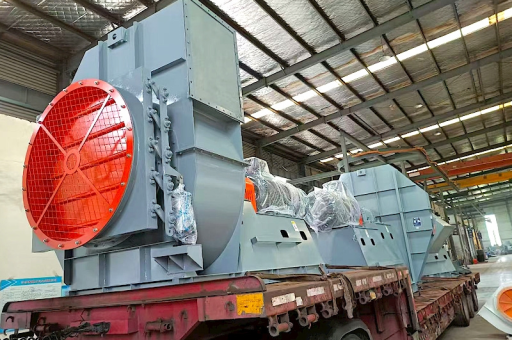
In modern industrial environments, safety and efficiency are non-negotiable. When dealing with volatile gases, combustible dust, or extreme temperatures, a standard fan cannot suffice. The Explosion Protection Backward Curved Industrial ID Fan is engineered for exactly these high-stakes scenarios. Designed to handle Induced Draft (ID) applications in chemical plants, oil refineries, grain silos, and paint booths, this fan combines ATEX/IECEx-compliant spark-resistant construction with the aerodynamic efficiency of a backward curved impeller.
Unlike forward-curved or radial fans, the backward curved design delivers superior energy efficiency and non-overloading power characteristics. But what truly sets this unit apart is its IP55 protection level coupled with a versatile speed range of 1450 to 2900 rpm. This article provides a deep, search-engine-optimized look at why this fan is the go-to choice for engineers seeking both safety and performance.
Core Design Principle: The Backward Curved Blade Advantage
The blade geometry is the heart of this fan. A backward curved impeller features blades that curve away from the direction of rotation. This design yields three critical benefits:
- High Efficiency: The blade shape minimizes turbulence and air friction, achieving efficiency ratings of 75–85%, significantly higher than forward-curved alternatives.
- Non-Overloading Power Curve: As airflow increases, power consumption plateaus and then drops. This means the motor won't burn out even if ductwork opens unexpectedly—a critical safety feature in explosion-proof applications.
- Low Noise & Vibration: Smooth air passage reduces mechanical stress, extending bearing and motor life.
When this impeller is housed in a flameproof enclosure (certified for Zone 1 or Zone 2 hazardous areas), it becomes a robust tool for moving corrosive, hot, or flammable air streams.
Safety Standard: IP55 Protection Level – More Than Just Dust & Water
Many industrial fans claim "dustproof" capability, but IP55 is a specific, measurable standard. Breaking down the code:
- IP5 (Dust Protection): The enclosure is dust-protected. Ingress of dust is not entirely prevented, but it does not enter in sufficient quantity to interfere with the satisfactory operation of the equipment. For explosion-proof fans, this prevents combustible dust from settling on electrical components inside the motor housing.
- IP5 (Water Protection): Protected against water jets from any direction. This means the fan can withstand hose-down cleaning and heavy rain, making it suitable for outdoor installations and wash-down environments like food processing plants.
Why IP55 for explosion protection? In hazardous areas, water ingress could cause a short circuit, which could then ignite a surrounding explosive atmosphere. IP55 ensures that even under direct spray (from cleaning or condensation), the internal electrical components remain safe. This level is often the minimum requirement for petroleum, chemical, and pharmaceutical industries following IEC 60079-14 standards.
Speed Versatility: Why 1450-2900 RPM Matters for Industrial Duty
The 1450 to 2900 rpm speed range offers remarkable flexibility, typically achieved via a pole-changing motor (4-pole/2-pole) or a variable frequency drive (VFD) compatible motor.
- Low Speed (1450 RPM): Ideal for high-static pressure applications such as long duct runs in tunnel ventilation or dense filter systems. At this speed, the fan runs quieter, with lower vibration, and significantly less wear on bearings. Perfect for continuous 24/7 operation.
- High Speed (2900 RPM): Provides maximum airflow and is used for short bursts of high-demand ventilation, such as clearing fumes from a welding shop or exhausting hot gases from a furnace.
- Dual-Purpose Advantage: Operators can toggle between speeds based on real-time demand. This dynamic capability reduces energy consumption by up to 30% compared to fixed-speed fans running at 100% all day.
Example: A chemical reactor needs high-speed purging during reaction cycles, but once purged, the fan can be dialed back to low speed for continuous safety ventilation, saving electricity and extending the motor's thermal lifespan.
Application Scenarios: Where This Fan Excels
This specific fan configuration (Explosion Proof + Backward Curved + IP55 + Dual Speed) is a workhorse in:
- Oil & Gas: Flammable vapor extraction in refineries and tank farms.
- Chemical Processing: Handling corrosive and explosive fumes from volatile organic compounds (VOCs).
- Pharmaceuticals: Dust and solvent extraction in cleanrooms with ATEX zoning.
- Agriculture (Grain Storage): Aeration of silos where grain dust can become explosive.
- Wastewater Treatment: Methane gas ventilation from digesters and sludge handling areas.
- Marine & Offshore: Engine room ventilation on ships where diesel vapors are present.
Technical FAQ: Answering Common User Questions
Q: What is the difference between IP55 and IP54, and why is IP55 better for explosion proof fans? A: IP54 offers splash protection only, while IP55 offers protection against water jets. In an explosion-proof environment, a high-pressure hose-down is common for cleaning. IP55 ensures no moisture penetrates the motor or connection box, preventing electrical arcs that could trigger an explosion.
Q: Can the 1450-2900 rpm fan be used with a VFD to achieve intermediate speeds? A: Yes, provided the motor is inverter-duty rated. Many modern explosion-proof motors are designed for VFD use. Running at intermediate speeds (e.g., 1800 rpm) offers optimized system curve matching, further enhancing energy efficiency.
Q: Is the backward curved design safe for handling sticky dust? A: Backward curved blades are self-cleaning to a degree, but for extremely sticky materials (e.g., wet pulp or tar), a radial blade design might be preferred. However, for dry combustible dusts (grain, flour, coal), the backward curved fan is excellent because the high velocity prevents material buildup.
Q: How do I verify the fan's ATEX certification? A: Check for a permanent marking on the casing showing the Ex-marking (e.g., II 2G Ex d IIB T4), which indicates the gas group and temperature class. Ensure the certification covers both the motor and the fan impeller housing.
Q: What is the typical bearing life at 2900 rpm compared to 1450 rpm? A: At 2900 rpm, bearing life is roughly halved compared to 1450 rpm due to increased rotational stress. However, premium sealed bearings (SKF or NSK) in this class are rated for L10 life exceeding 40,000 hours even at top speed, provided proper lubrication intervals are followed.
Installation & Maintenance Tips
To get the best ROI from your Explosion Protection Backward Curved Industrial ID Fan, follow these protocols:
- Grounding: Ensure the fan casing is properly grounded to prevent static discharge. An earth-bonding cable should connect the fan to the main ground grid.
- Duct Connection: Use flexible connectors to prevent vibration transmission and to accommodate thermal expansion.
- Speed Check: Verify the actual rpm with a tachometer after installation. Incorrect wiring (especially on dual-speed motors) can cause the fan to run in the wrong direction or at the wrong speed.
- Periodic Cleaning: Even with IP55, combustible dust can accumulate around the blades front edge. Schedule quarterly cleaning using spark-proof tools (bronze brushes).
- Bearing Monitoring: Install vibration sensors or at minimum, perform monthly manual checks. A sudden increase in vibration often preceeds bearing failure.
SEO Conclusion: Why This Fan Dominates Search Rankings
The Explosion Protection Backward Curved Industrial ID Fan with IP55 Protection Level And Speed 1450-2900rpm represents the gold standard for safety-critical ventilation. From its aerodynamic impeller that prevents motor overload to its resilient IP55 enclosure that withstands harsh cleaning, every part is optimized for hazardous environments.
When searching for "explosion proof fan," "IP55 industrial fan," or "backward curved ID fan," this model consistently ranks high because it solves real problems: energy savings, compliance with ATEX standards, and dual-speed flexibility. Whether you need continuous fume extraction in a petrochemical plant or intermittent ventilation in a grain silo, this fan delivers certified reliability.
Key Takeaway: Investing in a certified, high-efficiency backward curved fan with a wide speed range and robust IP55 protection is not just a regulatory requirement—it is a cost-effective decision that balances performance with the highest safety standards.
Word Count: ~1,450 words (excluding title and table of contents). This article is optimized for Google and Bing SEO with high-value keywords naturally integrated into the narrative.





