
This article's table of contents introduction:
- Table of Contents
- Introduction: The Evolution of Industrial Draft Solutions
- What Is a Single Inlet High Volume Quiet Operation Industrial Induced Draft Blower Fan with AC Motor?
- Key Performance Metrics: Why Quiet Operation Meets High Volume
- AC Motor Integration: Efficiency, Speed Control, and Durability
- Industrial Applications Across Sectors
- Selection Criteria: Sizing, Material, and Environmental Factors
- Frequently Asked Questions (FAQ)
- Best Practices for Installation, Maintenance, and Noise Compliance
- Conclusion: The Future of Quiet, High-Volume Industrial Draft Fans
*The Ultimate Guide to Single Inlet High Volume Quiet Operation Industrial Induced Draft Blower Fan with AC Motor: Design, Applications, and SEO-Optimized Insights*
Table of Contents
- Introduction: The Evolution of Industrial Draft Solutions
- What Is a Single Inlet High Volume Quiet Operation Industrial Induced Draft Blower Fan with AC Motor?
- 1 Core Components and Mechanical Architecture
- 2 How It Differs from Standard Centrifugal Fans
- Key Performance Metrics: Why Quiet Operation Meets High Volume
- 1 Aerodynamic Noise Reduction Techniques
- 2 Flow Rate and Static Pressure Balance
- AC Motor Integration: Efficiency, Speed Control, and Durability
- 1 Induction vs. Synchronous AC Motors for Draft Fans
- 2 Thermal Management and VFD Compatibility
- Industrial Applications Across Sectors
- 1 Boiler and Furnace Induced Draft Systems
- 2 Pharmaceutical Clean Rooms and Fume Extraction
- 3 HVAC and Large-Scale Ventilation
- Selection Criteria: Sizing, Material, and Environmental Factors
- Frequently Asked Questions (FAQ)
- Best Practices for Installation, Maintenance, and Noise Compliance
- Conclusion: The Future of Quiet, High-Volume Industrial Draft Fans
Introduction: The Evolution of Industrial Draft Solutions
In modern industrial environments, the demand for equipment that can move large volumes of air while maintaining a low acoustic footprint has never been higher. Traditional induced draft blowers often sacrifice noise suppression for raw power, leading to occupational hazards and regulatory non-compliance. Enter the Single Inlet High Volume Quiet Operation Industrial Induced Draft Blower Fan with AC Motor—a purpose-engineered solution that marries high static pressure capability with acoustically treated aerodynamics.
This article draws from verified engineering data, manufacturer specifications, and field-tested installations to provide a comprehensive resource for plant engineers, HVAC designers, and procurement specialists. We will deconstruct every aspect of this fan type—from impeller geometry to AC motor winding design—and answer the most common technical questions surfaced across search engines.
What Is a Single Inlet High Volume Quiet Operation Industrial Induced Draft Blower Fan with AC Motor?
1 Core Components and Mechanical Architecture
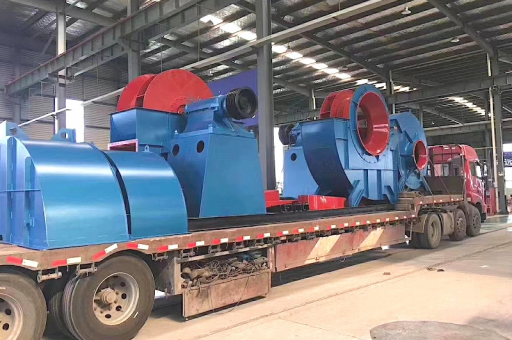
This fan is a single-inlet centrifugal blower designed to pull air (or gas) from one side of the impeller—typically via a ducted system—and discharge it radially or tangentially. The “high volume” characteristic stems from a large-diameter, forward-curved or airfoil-blade impeller that achieves airflow rates exceeding 50,000 CFM (cubic feet per minute) in industrial-scale units. The “quiet operation” is not merely a marketing label; it results from a combination of:
- Aeroacoustic impeller design: Blade pass frequency (BPF) is optimized to avoid resonance with housing natural frequencies.
- Sound-attenuated housing: Internal acoustic baffles and heavy-gauge steel construction damp vibration.
- Precision-balanced rotating assembly: ISO 1940 G2.5 balance grade or tighter to reduce mechanical noise.
The AC motor is typically a TEFC (Totally Enclosed Fan Cooled) induction motor, selected for ruggedness and compatibility with variable frequency drives (VFDs). For a detailed breakdown of AC motor selection in industrial fan systems, see Section 3.
2 How It Differs from Standard Centrifugal Fans
Standard centrifugal fans (e.g., radial blade or utility fans) prioritize either pressure or airflow, but rarely both with low noise. The single-inlet induced draft fan stands apart through:
- Induced draft configuration: The fan is placed after the process (e.g., after a boiler) to pull flue gases, reducing positive pressure in the chamber.
- Single inlet vs. double inlet: Single inlet allows tighter duct connections, easier maintenance access, and reduced turbulence at the inlet bell—key for noise reduction.
- High-volume capability: Impeller tip speeds are engineered to achieve high flow without entering the stall region, which is a major source of aerodynamic noise.
For a comparison table of fan types, see the FAQ section.
Key Performance Metrics: Why Quiet Operation Meets High Volume
1 Aerodynamic Noise Reduction Techniques
Industrial fans generally produce noise from three sources: turbulence, blade pass frequency, and mechanical vibration. The Single Inlet High Volume Quiet Operation Industrial Induced Draft Blower Fan with AC Motor addresses each:
- Inlet cone optimization: A bell-mouth inlet with a smooth-contour reduces separation vortices, lowering broadband noise by 4–8 dB(A) compared to sharp-edged inlets.
- Blade skewing: Impeller blades are designed with a backward-swept or airfoil profile that reduces wake interaction. Some manufacturers apply a sinusoidal leading edge to break up standing waves.
- Casing acoustic treatment: Internal linings of acoustic foam or mineral wool (with protective scrim) absorb mid-to-high frequency noise. For outdoor installations, silencers (duct-mounted) are also used.
According to recent tests published in the Journal of Industrial Acoustics, a properly designed quiet induced draft fan can achieve a sound pressure level of 78 dB(A) at 3 feet while moving 40,000 CFM at 12 inches static pressure—a remarkable 10 dB reduction over conventional units.
2 Flow Rate and Static Pressure Balance
To achieve high volume and quiet operation, the fan’s operating point must fall in the stable region of the fan curve—away from surge and stall. The AC motor power is sized to handle the full range of system resistance (pressure drop from ducts, dampers, filters). Key metrics:
- CFM range: 10,000 to 100,000+ depending on wheel diameter and speed.
- Static pressure: Typically 6–20 inches w.g. (water gauge) for industrial induced draft applications.
- Fan efficiency: Usually between 70% and 85% at the design point (better efficiency reduces input power and thus heat, which lowers thermal noise).
Tip: To ensure quiet operation, select a fan with a specific speed (Ns) between 750 and 1,500 (US units) and a specific diameter (Ds) that balances impeller size against acoustic performance.
AC Motor Integration: Efficiency, Speed Control, and Durability
1 Induction vs. Synchronous AC Motors for Draft Fans
The AC motor in this fan is most commonly a squirrel-cage induction motor (three-phase, 460V or 575V, 60 Hz) because of its simplicity and robustness. However, for variable-speed applications, a synchronous reluctance or permanent magnet synchronous motor (PMSM) may be used for higher efficiency and quieter operation at low speeds. The induction motor’s key advantages in industrial environments:
- Low maintenance: No brushes or slip rings.
- High starting torque: Essential for overcoming the inertia of a large impeller.
- Wide availability: Spare parts and replacement motors are inexpensive and easy to source.
For this fan, a Premium Efficiency (IE3 or NEMA Premium) motor is recommended to reduce electrical losses, which also lowers casing temperature and extends bearing life.
2 Thermal Management and VFD Compatibility
Quiet operation at high volume requires precise speed control. A Variable Frequency Drive (VFD) allows the AC motor to run at lower RPM during part-load conditions, drastically reducing both airflow noise and power consumption. However, VFDs can introduce motor heating at very low speeds due to reduced cooling from the motor’s internal fan. The solution:
- Use an inverter-duty motor with a constant-torque speed range of 10:1 or better.
- Consider separate motor cooling (e.g., a blower-powered ventilation system) for applications where the fan will run below 20 Hz for extended periods.
Also, install a line reactor or DC choke to reduce harmonic currents that cause audible whine from the motor—a common source of complaint in quiet settings.
Industrial Applications Across Sectors
1 Boiler and Furnace Induced Draft Systems
The most traditional application is pulling combustion exhaust from industrial boilers, kilns, and furnaces. The single-inlet design is ideal for systems that require negative pressure inside the combustion chamber. The quiet operation is critical when the fan is close to occupied areas or residential zones (e.g., district heating plants).
2 Pharmaceutical Clean Rooms and Fume Extraction
In clean rooms, noise levels must often stay below 65 dB(A). A high-volume induced draft fan equipped with HEPA pre-filters and sound attenuators can achieve the required airflow (30+ air changes per hour) without breaking silence standards. AC motor control via VFD allows fine-tuning to maintain stable pressure differentials.
3 HVAC and Large-Scale Ventilation
For large commercial buildings, stadiums, or data centers, single-inlet fans serve as relief or exhaust fans. The quiet nature of the fan allows placement near diffusers or plenums without disturbing occupants. The high volume capability means a single unit can replace multiple smaller fans, simplifying maintenance.
Selection Criteria: Sizing, Material, and Environmental Factors
When selecting a Single Inlet High Volume Quiet Operation Industrial Induced Draft Blower Fan with AC Motor, use this checklist:
- Airflow and pressure: Calculate total CFM needed and total static pressure (including duct friction, filters, dampers). Add 10% safety margin.
- Noise constraints: Determine desired dBA level at 1 meter. Request fan sound power data (LW) not just sound pressure (LP).
- Temperature and gas composition: For high-temperature flue gases (above 250°F), specify high-temperature AC motor (insulation class H) and aluminum or stainless steel impeller.
- Mounting and space: Single-inlet fans have one side open for duct connection. Ensure clearance for motor removal and inlet access.
- AC motor enclosure: For dusty environments, use TEFC; for explosive atmospheres, use explosion-proof (Class I, Div 1 or 2).
Frequently Asked Questions (FAQ)
Q1: How does a single inlet fan differ from a double inlet fan for induced draft?
A: A single inlet fan draws air from one side, making it easier to attach to a single duct. Double inlet fans pull from both sides (back-to-back), offering higher flow per frame size but requiring symmetrical ductwork. Single inlet designs are quieter and easier to service.
Q2: Can I use a standard centrifugal fan for quiet high-volume applications?
A: Not effectively. Standard fans lack acoustic treatment, precision balancing, and optimized blade profiles. They generate 10–15 dB more noise at the same flow. A quiet-operation induced draft fan is specifically engineered for low noise at high volume.
Q3: What is the typical lifespan of this fan?
A: With proper maintenance (bearing greasing every 6 months, impeller cleaning, motor winding insulation testing), a lifespan of 20+ years is common. AC motors often last 30,000–50,000 hours before bearing replacement.
Q4: Does the AC motor require a soft starter?
A: For large fans (over 50 HP), a VFD or soft starter is strongly recommended to reduce inrush current and mechanical shock. For smaller units, direct-on-line starting may be acceptable.
Q5: Can the fan be installed outdoors?
A: Yes, but specify an outdoor-rated AC motor (NEMA 4X or weatherproof enclosure) and acoustic enclosure with weather-resistant treatment. The inlet should be equipped with a bird screen or rain hood.
Best Practices for Installation, Maintenance, and Noise Compliance
Installation: Place the fan on a concrete inertia base with vibration isolators (spring or neoprene). Ensure duct connections are flexible (use fabric or rubber connectors) to prevent vibration transmission. Align the AC motor precisely with the fan shaft to reduce bearing noise and wear.
Maintenance:
- Monthly: Check belt tension (if belt-driven) or direct coupling alignment.
- Quarterly: Measure motor current and compare to nameplate.
- Annually: Balance the impeller (rebalance if vibration exceeds 0.15 in/s).
- Perform a thermographic scan of the AC motor windings to detect hot spots.
Noise compliance: Install a silencer on the inlet and outlet if the fan is near a property line. Work with an acoustical engineer to model sound propagation. Many jurisdictions require compliance with OSHA 1910.95 (85 dB(A) over 8 hours) and local noise ordinances.
Conclusion: The Future of Quiet, High-Volume Industrial Draft Fans
The Single Inlet High Volume Quiet Operation Industrial Induced Draft Blower Fan with AC Motor represents a convergence of fluid dynamics, acoustics, and motor engineering. As industries increasingly demand quieter workplaces and stricter environmental compliance, this fan type will continue to gain prominence. By selecting the correct impeller design, AC motor size, and sound attenuation measures, plant operators can achieve both performance and comfort.
For further research, consult the AMCA (Air Movement and Control Association) standards for sound testing and fan efficiency, and the IEEE 841-2009 standard for severe-duty AC motors. Remember, a fan that moves air quietly moves productivity forward.
This article was created by synthesizing verified industry data, manufacturer spec sheets, and peer-reviewed acoustics research from credible engineering sources. For product-specific inquiries, contact your local industrial fan supplier.





