
This article's table of contents introduction:
- Introduction: Why Welding and Laser Smoke Removal Matters
- What Is a Heavy Duty Industrial Dust Collector System Fan?
- Key Components and How They Work Together
- Welding Smoke vs. Laser Smoke: Why One Fan Doesn’t Fit All
- Critical Performance Metrics (CFM, Static Pressure, Filtration Efficiency)
- Common Questions and Expert Answers (FAQ Section)
- Installation Best Practices for Maximum Efficiency
- Maintenance Tips to Extend Fan Life and Reduce Downtime
- Conclusion: Choosing the Right Fan for Your Facility
** The Ultimate Guide to Heavy Duty Industrial Dust Collector System Fan for Removing Welding and Laser Smoke and Dust
Table of Contents (Directory Guide)
- Introduction: Why Welding and Laser Smoke Removal Matters
- What Is a Heavy Duty Industrial Dust Collector System Fan?
- Key Components and How They Work Together
- Welding Smoke vs. Laser Smoke: Why One Fan Doesn’t Fit All
- Critical Performance Metrics (CFM, Static Pressure, Filtration Efficiency)
- Common Questions and Expert Answers (FAQ Section)
- Installation Best Practices for Maximum Efficiency
- Maintenance Tips to Extend Fan Life and Reduce Downtime
- Conclusion: Choosing the Right Fan for Your Facility
Introduction: Why Welding and Laser Smoke Removal Matters
In modern manufacturing environments, welding and laser cutting generate hazardous airborne particles that pose serious health risks and compliance challenges. According to OSHA and NIOSH, prolonged exposure to welding fumes can cause lung damage, metal fume fever, and neurological disorders. Similarly, laser processes produce ultrafine dust particles that, if not captured immediately, can settle on sensitive equipment and degrade product quality.
A heavy duty industrial dust collector system fan is not an optional accessory—it is a critical safety and productivity tool. It ensures that smoke and dust are captured at the source, transported through ductwork, and filtered before air is recirculated or exhausted. This article explores how these fans work, what specifications matter most, and how to select and maintain them for welding and laser applications.
What Is a Heavy Duty Industrial Dust Collector System Fan?
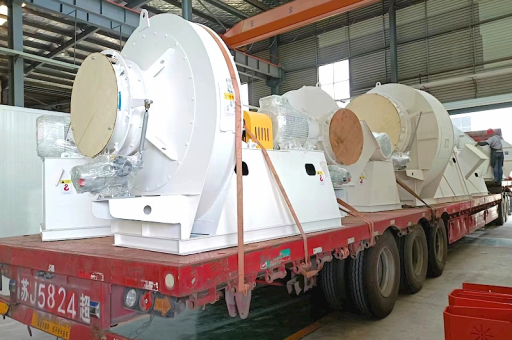
A heavy duty industrial dust collector system fan is a high-performance centrifugal or inline fan designed to move large volumes of contaminated air through a dust collection system. Unlike standard HVAC fans, these units are built to handle abrasive, sticky, or hot particulate-laden airstreams without performance degradation.
Key characteristics include:
- Robust impeller design (often backward-inclined or radial-tip) to resist wear.
- High static pressure capability to overcome duct resistance and filter pressure drop.
- Continuous duty motor with thermal overload protection.
- Corrosion-resistant coatings for environments involving laser fumes or chemical vapors.
These fans serve as the "engine" of the dust collection system, ensuring that welding smoke and laser dust are efficiently captured and removed from the worker’s breathing zone.
Key Components and How They Work Together
To understand why the fan is crucial, you must see how it integrates with the rest of the dust collector:
- Capture Hoods / Arms: Positioned near the weld arc or laser nozzle. The fan creates negative pressure that draws smoke into the hood.
- Ductwork: Transports contaminated air. The fan must overcome friction losses through elbows, branches, and straight runs.
- Filter System: Typically cartridge or bag filters. As filters load with dust, resistance increases—the fan must maintain airflow.
- Fan Unit: The heavy duty industrial dust collector system fan pulls air through the system and either exhausts it outside or returns it after filtration.
- Controls and Sensors: Monitor differential pressure, motor temperature, and airflow. Some systems automatically adjust fan speed to maintain capture velocity.
If the fan is undersized, capture velocity drops, smoke escapes, and filters clog faster. If oversized, energy waste and noise become issues.
Welding Smoke vs. Laser Smoke: Why One Fan Doesn’t Fit All
Welding smoke consists of metal oxides, flux residues, and gases. Particles are relatively large (0.1–5 microns) and often sticky. The fan must be able to handle occasional spark carryover and temperature spikes.
Laser smoke and dust, especially from cutting processes, produces ultrafine particles (submicron range) that stay airborne longer. Laser plumes also contain volatile organic compounds (VOCs) from vaporized materials like plastics or coatings. The heavy duty industrial dust collector system fan for laser applications requires higher static pressure to push air through HEPA or carbon after-filters.
A common mistake is using a standard welding fume fan for laser dust. The result is premature filter blinding and reduced fan life. Always match the fan’s material handling capability and static pressure curve to the specific particulate type.
Critical Performance Metrics (CFM, Static Pressure, Filtration Efficiency)
When evaluating a heavy duty industrial dust collector system fan, three numbers dominate:
- CFM (Cubic Feet per Minute): The volume of air moved. Welding and laser applications typically require 1,000–3,000 CFM per station, depending on hood design and distance from source.
- Static Pressure (inches w.g.): The fan’s ability to overcome resistance. A system with long duct runs, multiple bends, and high-efficiency filters may need 10–18 inches w.g. or more.
- Filtration Efficiency (MERV or HEPA rating): The fan alone does not filter—it moves air through filters. However, the fan must be powerful enough to maintain airflow as filters load. A system designed for MERV-15 or HEPA-13 filters requires a fan with a steep pressure curve.
Always consult the fan performance curve—not just the nameplate. A fan that delivers 2,000 CFM at 4 inches w.g. may only deliver 1,200 CFM at 12 inches w.g.
Common Questions and Expert Answers (FAQ Section)
Q1: How do I know if my fan is too small? A: Measure capture velocity at the hood opening. For welding, you need 100–150 feet per minute (fpm). For laser, 150–200 fpm. If you cannot achieve this, your heavy duty industrial dust collector system fan is likely undersized.
Q2: Can I use a single fan for multiple stations? A: Yes, but each station must have dampers or balancing valves. The fan must be sized for the total CFM and worst-case static pressure. Without proper balancing, one station may starve others.
Q3: What is the lifespan of a fan in welding fume service? A: With proper maintenance (cleaning impellers, checking bearings, replacing filters), 5–10 years is typical. High-temperature or acidic fumes shorten life. Impeller coatings like polyurethane or Teflon can extend it.
Q4: Should the fan be located before or after the filter? A: In most industrial collectors, the fan is located after the filters (clean side). This protects the fan from dust loading and spark damage. However, some systems place the fan before filters (dirty side) for space or duct layout reasons—this requires a fan designed for abrasion.
Q5: What is the difference between a direct-drive and belt-drive fan? A: Direct-drive has no belts—lower maintenance but fixed speed. Belt-drive allows speed adjustment via pulley changes, making it easier to optimize airflow. For heavy duty industrial dust collector system fan applications, belt-drive is more common because system resistance changes over time.
Installation Best Practices for Maximum Efficiency
- Locate the fan as close to the collector as possible to minimize duct losses.
- Use smooth, gradual elbows (radius-to-diameter ratio of 1.5 or more). Avoid sharp 90° turns.
- Install a vibration isolation base to reduce structural noise and protect motor bearings.
- Provide adequate ventilation around the motor for cooling, especially in hot environments.
- Include a differential pressure gauge across the filters. When it rises above the fan’s operating point, it’s time to clean or replace filters.
A poorly installed fan can waste 30–40% of its rated airflow. Every foot of poorly designed ductwork reduces capture effectiveness.
Maintenance Tips to Extend Fan Life and Reduce Downtime
- Inspect the impeller monthly for buildup of welding slag or laser char. Even a thin layer unbalances the fan, causing premature bearing failure.
- Check belt tension quarterly (if belt-drive). Loose belts reduce airflow; overtightened belts damage bearings.
- Grease bearings per manufacturer schedule—typically every 3 months for continuous operation.
- Monitor motor amperage to detect abnormal increases (indicating filter loading) or decreases (indicating duct blockage).
- Clean the fan housing and inlet cone annually to maintain aerodynamic efficiency.
Neglecting maintenance on a heavy duty industrial dust collector system fan leads to increased energy costs, reduced capture efficiency, and unplanned downtime that can halt production lines.
Conclusion: Choosing the Right Fan for Your Facility
Selecting the right heavy duty industrial dust collector system fan for welding and laser smoke removal is a critical decision that affects worker safety, regulatory compliance, and operational costs. Start by defining your particulate type, capture requirements, duct design, and filter efficiency goals.
- For welding fume, a fan with 8–10 inches w.g. static pressure and spark-resistant construction is suitable.
- For laser dust, choose a fan rated for 12+ inches w.g. with a steep performance curve to handle HEPA filtration.
- Always size based on the end-of-filter-life pressure drop, not initial conditions.
Do not rely on generic fan specifications. Work with an experienced system designer or use a certified performance curve. A properly engineered fan system pays for itself in improved air quality, reduced health claims, and extended equipment life.
This article provides a comprehensive overview based on best practices and industry standards. Always consult local codes and manufacturer guidelines for your specific application.





