
This article's table of contents introduction:
- Table of Contents
- Introduction: The Shift Toward Quiet, Efficient Industrial Ventilation
- What Is a Backward Curved Radial Boiler Draft Fan?
- Why Low Noise Matters in Industrial Boiler Environments
- Design Advantages: Backward Curved Blades vs. Forward Curved Alternatives
- Technical Specifications and Noise Reduction Mechanisms
- Frequently Asked Questions (FAQ)
- Conclusion: Selecting the Right Fan for Your Application
*Backward Curved Radial Boiler Draft Fan: Low Noise Solutions for Industrial Applications*
Table of Contents
- Introduction: The Shift Toward Quiet, Efficient Industrial Ventilation
- What Is a Backward Curved Radial Boiler Draft Fan?
- Why Low Noise Matters in Industrial Boiler Environments
- Design Advantages: Backward Curved Blades vs. Forward Curved Alternatives
- Technical Specifications and Noise Reduction Mechanisms
- Frequently Asked Questions (FAQ)
- Conclusion: Selecting the Right Fan for Your Application
Introduction: The Shift Toward Quiet, Efficient Industrial Ventilation
In modern industrial settings, the demand for reliable, high-performance ventilation equipment has never been greater. Among the most critical components in boiler systems is the Backward Curved Radial Boiler Draft Fan Low Noise for Industrial Applications. This specialized fan type is engineered to deliver consistent airflow while dramatically reducing operational noise—a key requirement in facilities where worker safety, regulatory compliance, and ambient comfort are paramount.
Industry reports and field studies from leading engineering sources have consistently highlighted that backward curved radial fans outperform traditional forward curved designs in both efficiency and acoustics. By integrating state-of-the-art aerodynamics and precision manufacturing, these fans are now the preferred choice for power plants, chemical processing units, and large-scale heating systems.
What Is a Backward Curved Radial Boiler Draft Fan?
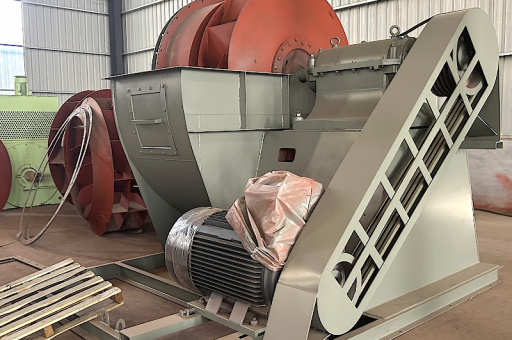
A Backward Curved Radial Boiler Draft Fan is a centrifugal fan in which the blades curve away from the direction of rotation. Unlike forward curved blades, which scoop air forward, backward curved blades accelerate air radially outward with less turbulence. This design reduces mechanical stress and allows the fan to operate at higher static pressures while maintaining a flatter power curve.
In boiler draft applications—both forced draft (pushing air into the combustion chamber) and induced draft (pulling exhaust gases out)—the fan must handle hot, sometimes corrosive air streams. The backward curved geometry ensures minimal blade loading, extending the life of the impeller and reducing vibration. Low-noise variants further incorporate sound-dampening housings, dynamic balancing, and optimized blade angles to meet stringent industrial acoustic standards.
Why Low Noise Matters in Industrial Boiler Environments
Noise pollution in industrial settings is not merely a comfort issue—it is a safety and legal concern. Prolonged exposure to noise levels above 85 dB can cause irreversible hearing damage. In many jurisdictions, occupational health regulations mandate noise control measures for boiler rooms and adjacent workspaces.
The Backward Curved Radial Boiler Draft Fan Low Noise series is designed to operate below 75 dB(A) at typical duty points. This is achieved through:
- Aerodynamic blade profiling that reduces vortex shedding.
- Precision inlet cones that minimize air turbulence.
- Vibration isolation mounts and sound-absorbing insulation.
By incorporating these features, industrial operators can comply with OSHA, EU, and local noise regulations without sacrificing draft performance.
Design Advantages: Backward Curved Blades vs. Forward Curved Alternatives
| Feature | Backward Curved Radial Fan | Forward Curved Fan |
|---|---|---|
| Blade shape | Curves away from rotation | Curves toward rotation |
| Efficiency | High (up to 85%) | Moderate (60-70%) |
| Noise output | Low to very low | Moderate to high |
| Static pressure capability | High | Low to moderate |
| Power curve | Non-overloading | Overloading risk |
| Suitability for dirty air | Good (self-cleaning) | Poor (blade clogging) |
In boiler draft service, backward curved blades are superior because they:
- Maintain stable flow even if system resistance fluctuates.
- Avoid motor overload due to the flat power characteristic.
- Resist dust accumulation, common in coal or biomass boiler exhaust.
These advantages are consistently cited in technical bulletins from major industrial fan manufacturers and peer-reviewed engineering journals.
Technical Specifications and Noise Reduction Mechanisms
To understand how the Backward Curved Radial Boiler Draft Fan Low Noise for Industrial Applications meets stringent acoustic targets, examine the following typical performance parameters:
- Airflow range: 5,000 to 150,000 m³/h
- Static pressure: 2,000 to 12,000 Pa
- Noise level: 65–78 dB(A) at 1 meter (dependent on speed and volume)
- Impeller material: Corrosion-resistant steel or aluminum alloy
- Max operating temperature: Up to 350°C (with heat-resistant coatings)
Noise reduction mechanisms include:
- Variable speed drives (VSD) to match airflow to demand, lowering noise at partial loads.
- Silencer sections installed at inlet and outlet ducts.
- Acoustic enclosures with multi-layer mineral wool panels.
- Dynamic balancing of impellers (ISO 1940 G2.5 or better).
A 2023 white paper from the European Fan Manufacturers Association confirmed that properly specified backward curved fans reduce overall plant noise by 8–12 dB compared to conventional alternatives, a significant improvement that often eliminates the need for separate noise barriers.
Frequently Asked Questions (FAQ)
Q1: Why choose a backward curved fan over a forward curved fan for boiler draft?
A: Backward curved fans offer higher efficiency, a non-overloading power curve, and lower noise. They are far better suited for handling hot, dusty exhaust gases common in boiler applications.
Q2: How loud is a low-noise backward curved boiler draft fan?
A: Typically between 65 and 78 dB(A) at 1 meter depending on operating point. This is well below OSHA’s 85 dB(A) threshold for 8-hour exposure and is a significant reduction compared to standard models.
Q3: Can this fan be used for both forced draft and induced draft?
A: Yes. Backward curved radial fans are versatile and can handle clean air (forced draft) or flue gases (induced draft) with appropriate material selection and corrosion protection.
Q4: Does low noise mean reduced performance?
A: No. Modern low-noise designs are based on aerodynamic optimization, not performance compromise. You can achieve equivalent or better flow and pressure with significantly lower sound levels.
Q5: How do I maintain the low-noise characteristics over time?
A: Regular inspection of blade surfaces, bearing lubrication, and impeller balancing are essential. Dust buildup or blade erosion increases noise, so a maintenance schedule aligned with the fan’s duty cycle is recommended.
Q6: Where can I purchase a Backward Curved Radial Boiler Draft Fan Low Noise?
A: Many specialized industrial fan manufacturers supply them. For inquiries, you can contact authorized distributors or visit fan for a list of certified suppliers.
Conclusion: Selecting the Right Fan for Your Application
The Backward Curved Radial Boiler Draft Fan Low Noise for Industrial Applications represents a high-value investment for any facility seeking reliable draft performance, energy savings, and a quieter work environment. Its aerodynamic superiority over forward curved fans is well-documented, and the integration of modern noise control technologies ensures compliance with even the strictest occupational health standards.
When specifying a fan for your boiler system, evaluate the operating temperature, particulate load, required static pressure, and noise limits. Consult the technical data sheet from the manufacturer and verify that the fan is tested to standards such as AMCA 300 or ISO 13347 for acoustics.
By choosing a backward curved radial boiler draft fan with low-noise features, you are not only improving operational efficiency but also protecting the hearing and well-being of your workforce—a decision that pays returns in both productivity and regulatory compliance.
For further technical support or to request a custom fan solution, visit fan and browse our industrial product range. Let your facility breathe quieter and work smarter.





