
This article's table of contents introduction:
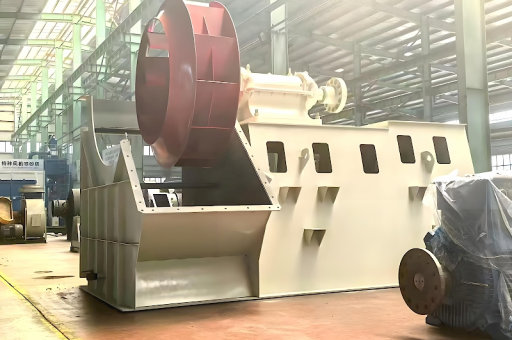
- What is an Induced Draft (ID) Fan?
- The Role of a 2900 RPM Fan
- Key Technical Specifications (What to Look For)
- Advantages of 2900 RPM (Direct Drive)
- Disadvantages / Warnings for 2900 RPM
- Typical Dimensions & Construction (Example)
- Common Problems in 2900 RPM Boiler ID Fans
- Recommendation
It sounds like you are looking for information on a specific industrial application: a 2900 RPM Induced Draft (ID) Fan used in a boiler system.
Here is a breakdown of what this component is, its specific role, and key considerations for a 2900 RPM model.
What is an Induced Draft (ID) Fan?
An ID fan is located at the exit of the boiler system (between the boiler and the chimney/stack). Its job is to pull flue gases (exhaust) out of the furnace, creating a negative pressure (suction) inside the boiler.
The Role of a 2900 RPM Fan
This is a critical distinction. In industrial fans, speed (RPM) dictates performance.
- Standard Speed (1450/1470 RPM): Used for most large, high-volume, low-to-medium pressure industrial boilers. They are larger in diameter, quieter, and more energy-efficient for moving massive volumes of gas.
- High Speed (2900/2950 RPM): This is a direct-drive configuration (fan wheel mounted directly on the motor shaft). It is used for:
- Higher Static Pressure: Overcoming resistance in longer or more complex ductwork, scrubbers, or economizers.
- Space Constraints: A smaller impeller can achieve the same pressure as a much larger 1450 RPM fan.
- Simple Machinery: No belts, pulleys, or bearings to maintain.
In a boiler context: A 2900 RPM ID fan is typically used in smaller to medium industrial boilers (e.g., fire-tube boilers, waste heat boilers, or smaller water-tube units) where the flue gas volume is moderate but the system resistance is high.
Key Technical Specifications (What to Look For)
When selecting or using this fan, these parameters are non-negotiable:
- Flow Rate (m³/hr or CFM): Must match the boiler's maximum continuous rating (MCR) for flue gas volume.
- Static Pressure (mmWg or Pa): Must overcome the resistance of the boiler tubes, air heater, dust collector (if any), and stack.
- Temperature (°C): Critical. ID fans handle hot gases.
- Standard: Can handle 80°C - 150°C.
- Hot Gas (HGI): Bearings must be cooled (shaft cooling fins or external cooling fan). For temperatures >200°C, a water-cooled bearing housing is mandatory.
- Motor Power (kW/HP): At 2900 RPM, the motor power demand is exponentially higher (Proportional to the cube of speed) than a lower-speed fan. Ensure the motor is adequately rated.
- Impeller Type:
- Backward Curved (BC): High efficiency, non-overloading power characteristics. Most common for modern ID fans.
- Radial/Radial Tip: For highly abrasive fly ash or very high pressure, but less efficient.
- Airfoil: Highest efficiency, but more expensive and less tolerant to dust.
Advantages of 2900 RPM (Direct Drive)
| Feature | Benefit |
|---|---|
| No Mechanical Losses | Higher overall efficiency (no belt slip). |
| Low Maintenance | No belts or pulleys to replace or align. |
| Compact Footprint | Smaller fan housing for the same pressure. |
| Simple Installation | Faster to install and commission. |
Disadvantages / Warnings for 2900 RPM
| Feature | Risk / Drawback |
|---|---|
| No Speed Adjustment | You cannot easily change the RPM. Flow/Pressure is fixed. Variable Frequency Drives (VFDs) are expensive but possible. |
| High Motor Power | A 2900 RPM motor starting current (LRA) is very high. The electrical supply must be robust. |
| Higher Vibration | Any imbalance in the impeller is amplified by high speed. Requires precise balancing (G2.5 or better). |
| Noise | Significantly louder than belt-driven fans. Ear protection is mandatory. |
| Bearing Life | Bearings run hotter and wear faster (L10 life is lower). Use high-temperature grease. |
Typical Dimensions & Construction (Example)
For a small industrial boiler (e.g., 5-10 TPH steam capacity):
- Impeller Diameter: 400mm - 800mm
- Housing: Heavy-gauge steel with a manhole for cleaning.
- Inlet Box: Often includes an inlet vanes/damper control (for manual or VFD without VFD).
- Shaft Seal: Carbon rings or labyrinth seals to prevent air leakage into the fan (which wastes energy).
Common Problems in 2900 RPM Boiler ID Fans
- Bearing Failure: Due to high heat (radiant heat from boiler) and high speed.
- Impeller Erosion: Fly ash erodes the impeller blades at 2900 RPM much faster than at 1450 RPM. Solution: Hard-facing or ceramic coating.
- Rotor Imbalance: Accumulation of dust/soot on the impeller causes severe vibration.
- Motor Overload: If the flue gas temperature drops (e.g., boiler startup), the gas density increases, and the motor draws more amps (Power = Flow x Pressure).
Recommendation
If you are sizing a fan for a new boiler:
- Use a 1450 RPM fan if you have the space, budget for a VFD, and want longer life and lower noise.
- Use a 2900 RPM fan only if:
- Space is very tight.
- You need high pressure ( > 3000 Pa ).
- You want a simple, direct-drive solution with no belt maintenance.
Always provide the following data to the fan manufacturer:
- Gas Temperature: (Normal & Maximum).
- Gas Density: (At specific temperature & altitude).
- Required Pressure: (Static pressure needed to overcome boiler + duct + stack).
- Flow Rate: (m³/hr at actual conditions).
- Fly Ash Content: (mg/Nm³ of gas).
Disclaimer: Always consult with a qualified mechanical engineer and the fan manufacturer for final selection. Incorrect fan selection can lead to boiler instability (flame puffing) or structural damage.





