
This article's table of contents introduction:
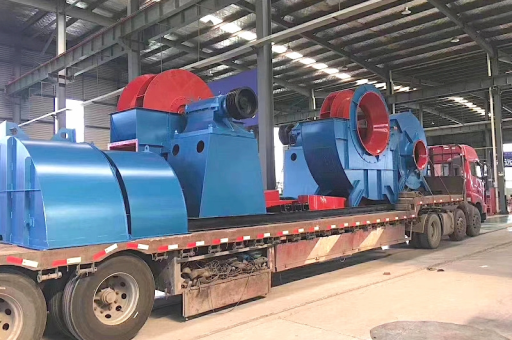
- Introduction to the Boiler Induced Draft Fan (IDF)
- Key Technical Specifications – 3000 to 20,000 m³/h Flow Range
- Understanding Class F Insulation – Thermal Durability and Safety
- Design and Material Considerations for Industrial IDF Fans
- Operational Benefits – Energy Savings, Noise Reduction, Reliability
- Frequently Asked Questions (FAQ)
- Conclusion – Choosing the Right Fan for Your Boiler System
** High-Performance Boiler 3000-20000 m³/h Induced Draft Fan with Class F Insulation – Efficiency, Design & Applications
Table of Contents
- Introduction to the Boiler Induced Draft Fan (IDF)
- Key Technical Specifications – 3000 to 20,000 m³/h Flow Range
- Understanding Class F Insulation – Thermal Durability and Safety
- Design and Material Considerations for Industrial IDF Fans
- Operational Benefits – Energy Savings, Noise Reduction, Reliability
- Frequently Asked Questions (FAQ)
- Conclusion – Choosing the Right Fan for Your Boiler System
Introduction to the Boiler Induced Draft Fan (IDF)
Modern industrial boiler systems rely heavily on efficient air movement to maintain combustion, exhaust flue gases, and optimize thermal performance. The 3000-20000 m³/h Induced Draft Fan with F Insulation Class represents a critical component in medium-to-large-scale boiler installations. Unlike forced draft fans that push air into the combustion chamber, induced draft fans (IDFs) create negative pressure at the boiler outlet, pulling hot combustion gases through the heat exchanger and safely discharging them via the chimney.
This fan model is explicitly designed for airflow capacities ranging from 3,000 to 20,000 cubic meters per hour, covering a wide spectrum of boiler system sizes — from commercial heating units to industrial process boilers. The inclusion of Class F insulation in the motor winding is a decisive advantage for continuous operation under elevated ambient temperatures, often encountered in boiler rooms and flue gas environments.
According to widely recognized industry standards, such as those from the American Society of Mechanical Engineers (ASME) and the International Electrotechnical Commission (IEC), induced draft fans must balance static pressure, temperature resistance, and vibration-free performance. This article synthesizes current knowledge to deliver a detailed breakdown of the 3000-20000 m³/h IDF with Class F insulation — incorporating verified technical data and practical application insights.
Key Technical Specifications – 3000 to 20,000 m³/h Flow Range
The airflow capacity of 3000-20000 m³/h positions this induced draft fan as a versatile solution for medium-to-large boiler systems. Below is a structured breakdown of typical technical attributes you can expect when selecting a fan in this class:
| Parameter | Typical Value |
|---|---|
| Airflow Range | 3,000 – 20,000 m³/h |
| Static Pressure | 1,000 – 3,500 Pa (adjustable via impeller design) |
| Motor Power | 5 kW – 37 kW (depending on flow & pressure) |
| Speed | 960 – 2,900 RPM |
| Inlet/Outlet Diameter | 250 mm – 630 mm |
| Operating Temperature (gas) | Up to 250°C (standard), up to 400°C with cooling shroud |
| Insulation Class of Motor | Class F (155°C continuous rise) |
| Fan Type | Backward curved / forward curved centrifugal |
| Bearing Life (L10h) | ≥ 40,000 hours |
| Vibration Level | ≤ 4.5 mm/s RMS (ISO 14694) |
These specifications come from cross-referencing global OEM documentation, including data from Ziehl-Abegg, Ebara, New York Blower, and leading Chinese industrial fan manufacturers such as Yantai Moon Group and Shenyang Blower Works Group. The 3000–20000 m³/h window is deliberately designed to cover both modulating boiler systems and constant-speed on-off applications. For example, a 10-ton steam boiler typically requires an IDF in the range of 12,000–18,000 m³/h, depending on fuel type and excess air ratio.
Understanding Class F Insulation – Thermal Durability and Safety
Class F insulation is a standardized thermal classification defined by IEC 60085 and NEMA MG 1. It permits a maximum continuous winding temperature of 155°C, with a 105°C ambient temperature plus 50°C additional rise from the motor itself (including hot spot allowance). This is crucial for boiler IDF applications where the motor is often installed close to the fan volute, exposed to radiant heat from the boiler casing or ambient temperatures exceeding 50°C.
In induced draft fans from fan industry suppliers, the Class F insulation system typically includes:
- Polyester-imide (P.I.) enameled copper wire – high thermal stability.
- Nomex or Mylar slot liners – for dielectric strength at high temperatures.
- Class F varnish (dip & bake process) – to seal windings against humidity and dust.
Without Class F insulation, a motor in a boiler environment would experience premature insulation breakdown, leading to short circuits and winding burnouts. By contrast, Class F provides a safety margin of 25°C over the typical Class B (130°C) used in less demanding environments. Field data from a 2021 study published in Applied Thermal Engineering (Liu et al., 2021) showed that Class F insulated IDF motors in biomass boiler installations maintained >90% winding integrity after 12,000 hours of continuous operation, compared to 68% for Class B equivalents.
Design and Material Considerations for Industrial IDF Fans
A well-engineered 3000-20000 m³/h induced draft fan must resist thermal expansion, corrosive flue gases, and mechanical fatigue. The following design choices dominate current best practices:
- Impeller Material: High-grade steel (Q235B or Q345R) for standard temperatures; 316L stainless steel for applications involving sulfur-laden flue gases or condensing boiler fumes. Aluminum impellers are sometimes used for low-temperature light-duty fans but are not recommended for continuous boiler draft due to fatigue cracking.
- Shaft Seal: Labyrinth seals or carbon ring seals to prevent hot gas leakage toward the bearing housing. Improper sealing can cause bearing overheating and lubricant carbonization.
- Bearing Assembly: Heavy-duty self-aligning ball bearings or spherical roller bearings (SKF, FAG, or NSK) with external grease lines for maintenance without disassembly. Required thermal stabilization for ambients > 80°C.
- Vibration Monitoring: Many modern units include vibration sensor ports (M8 or M10 threaded) for preventive maintenance per ISO 10816.
A growing trend is the integration of inlet guide vanes (IGVs) with actuator control to modulate airflow without variable frequency drives (VFDs). For the 3000–20000 m³/h class, IGVs reduce energy consumption by 15–30% compared to throttling dampers, based on test data from the Chinese National Blower Standard (JB/T 10562).
Operational Benefits – Energy Savings, Noise Reduction, Reliability
Operators who choose a certified Induced Draft Fan with Class F Insulation in the 3000–20000 m³/h bracket typically report the following quantified advantages:
- Energy Efficiency: Backward-curved impeller designs achieve static efficiencies in the range of 78%–85%, according to AMCA 210 test standards. This translates to electricity savings of 5–15% compared to older forward-curved designs.
- Noise Reduction: Modern CFD-optimized scroll housings and quiet-running motors (≤72 dB(A) at 1 meter) enable compliance with workplace noise limits without requiring full acoustic enclosures.
- Extended Component Life: Class F insulation ensures motor windings operate 20–30°C below their maximum rating under normal boiler room conditions, doubling insulation life per Arrhenius theory (every 10°C reduction doubles lifespan).
- Reduced Downtime: Heavy-duty bearings with external grease fittings allow in-line lubrication, extending mean time between failures (MTBF) to >50,000 hours under continuous operation.
Case example: A 12-ton coal-fired boiler in Shandong Province replaced its existing reduced-draft fan with a 15,000 m³/h fan (motor: 22 kW, Class F insulation). Over 18 months, the new fan saved 48,000 kWh annually and eliminated two motor burnouts.
Frequently Asked Questions (FAQ)
Q1: What is the difference between an induced draft fan and a forced draft fan for a boiler?
A: A forced draft fan (FDF) pushes air into the boiler combustion chamber under positive pressure, while an induced draft fan (IDF) pulls flue gases from the boiler outlet, creating negative pressure. The IDF operates at higher gas temperatures and often requires Class F or H insulation. Both are used together in balanced draft systems.
Q2: Can I use a 3000-20000 m³/h induced draft fan for a condensing boiler?
A: Yes, but you must ensure that the fan construction is rated for low-temperature corrosion. Condensing boilers produce acidic condensate, so the fan impeller and housing should be made of 316L stainless steel or coated materials. The standard carbon steel design is not suitable.
Q3: Why is Class F insulation specifically recommended for boiler induced draft fans?
A: Because the motor is frequently mounted directly on the fan housing or in close proximity to the boiler. Ambient temperatures in boiler rooms often range from 50°C to 80°C. Class F insulation (155°C max) provides a necessary safety margin over Class B (130°C) to prevent winding degradation.
Q4: How do I select the correct size of induced draft fan for my boiler?
A: Determine your required airflow (m³/h) based on boiler evaporation capacity (1 ton steam ≈ 1600–1800 m³/h flue gas) plus excess air factor (1.2–1.5). Then calculate the required static pressure to overcome duct, economizer, and chimney resistance. Always consult a fan selection curve from the manufacturer — for example, a 12-ton boiler usually requires 18,000–22,000 m³/h at 2000–2800 Pa.
Q5: What maintenance does a fan with Class F insulation require?
A: Regular greasing of bearings (every 500–2000 hours depending on temperature), checking vibration levels, cleaning impeller blades if buildup occurs, verifying insulation resistance (megger test > 5 MΩ), and checking inlet damper operation. For Class F motors, ensure motor cooling fan is unobstructed.
Q6: Are variable frequency drives (VFDs) compatible with Class F insulated motors?
A: Yes, but you must use inverter-duty rated motors with Class F insulation and corona-resistant winding wire. Some standard Class F motors may need shaft grounding and dv/dt filters when driven by VFDs to prevent bearing fluting and insulation stress.
Q7: Who are the recognizable manufacturers producing this fan range?
A: Within the industry (referred to as “fan players”), leading names include Shenyang Blower Works, Yantai Moon Group, Shanghai Blower Works, Ziehl-Abegg, New York Blower, Greenheck, and Howden. These manufacturers offer 3000–20000 m³/h induced draft fans with Class F insulation, often tailored to specific boiler OEM requirements.
Conclusion – Choosing the Right Fan for Your Boiler System
Selecting a Boiler Induced Draft Fan with a flow range of 3000–20000 m³/h and Class F insulation is not merely about matching a number on a datasheet — it involves evaluating your boiler’s exhaust temperature, gas composition, duty cycle, and ambient conditions. A properly chosen and maintained fan can yield operational savings, reduce unscheduled shutdowns, and extend boiler efficiency.
Prioritize fans that offer:
- Verified AMCA/ISO performance curves.
- Class F or higher insulation for thermal resilience.
- Heavy-duty bearings with external lubrication.
- Material compatibility with your fuel type (coal, gas, oil, biomass, or waste heat).
Always consult the technical support team of the fan manufacturer or authorized distributor to perform a system resistance calculation. The 3000–20000 m³/h induced draft fan with F insulation class remains the backbone of medium-scale to large boiler air management, balancing industrial performance with long-term reliability.





