
This article's table of contents introduction:
- Interpretation of Specifications
- Common Applications
- Key Characteristics to Specify
- Performance Curve (Example)
- Selection Advice
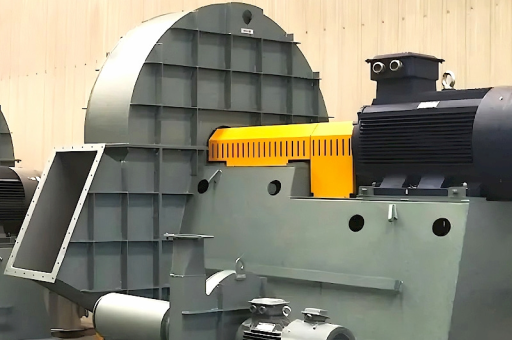
This is a specification query for a High Efficiency Centrifugal Flow Fan (often called a Centrifugal Fan or Radial Fan).
Based on the parameters you provided (500-3000 RPM, 0.75kW - 200kW Power), here is a breakdown of what this specification typically implies, the common applications, and what you should look for when sourcing or specifying this equipment.
Interpretation of Specifications
- Centrifugal Flow Fan: Air enters the impeller axially (along the shaft) and is discharged radially (perpendicular to the shaft) at 90 degrees. This design generates higher pressure than axial fans.
- High Efficiency: Refers to aerodynamic optimization (e.g., backward-curved blades, airfoil design) to meet standards like AMCA (Air Movement and Control Association) or ErP (EU Energy-related Products Directive). It implies lower energy consumption and lower noise for a given duty.
- Speed (500-3000 RPM):
- 500-1500 RPM: Typically for larger fans (high flow, medium pressure) or direct-drive applications using 4, 6, or 8-pole motors. Common in HVAC and industrial ventilation.
- 1500-3000 RPM: Typically for smaller, high-pressure fans (e.g., combustion air, pneumatic conveying) or direct-drive 2-pole motors.
- Power (0.75kW - 200kW):
- 75kW - 15kW: Small to medium industrial ventilation, dust extraction, commercial HVAC.
- 15kW - 75kW: Large industrial systems (boilers, drying systems, mine ventilation).
- 75kW - 200kW: Heavy industrial applications (power plants, cement plants, large-scale pneumatic conveying).
Common Applications
This range is a "workhorse" specification for many industries:
- HVAC: Air handling units (AHUs), clean rooms, commercial building exhaust.
- Industrial Process: Boiler forced draft (FD) / induced draft (ID), drying ovens, spray booths.
- Dust & Fume Extraction: Woodworking, welding fume, cement plants (with abrasive-resistant construction).
- Pneumatic Conveying: Moving granular materials (grain, plastic pellets, sawdust).
Key Characteristics to Specify
When selecting a "High Efficiency Centrifugal Fan" in this power/speed range, you need to define these elements clearly. The term "High Efficiency" is generic; you need to ask for specific features:
| Feature | Typical Requirement for "High Efficiency" |
|---|---|
| Impeller Type | Backward-Curved (BC) or Airfoil (AF) . These are the most efficient (up to 85-90% static efficiency). Forward-Curved (FC) blades are cheaper but less efficient. |
| Drive Type | Direct Drive (DIDW) for high speeds/stable operation or Belt Drive for speed adjustability (tension must be maintained for efficiency). |
| Housing Material | Steel (standard), Stainless Steel (corrosive), Aluminum (lightweight/spark-resistant). For 200kW, heavy-gauge steel is mandatory. |
| Control Method | VFD (Variable Frequency Drive) is essential to match fan speed to system demand, maximizing efficiency. Dampers or inlet vanes are less efficient alternatives. |
| Standards | AMCA (Certified Ratings), ISO 5801, ISO 14694 (Balance & Vibration). Look for AMCA Seal for guaranteed performance. |
| Temperature | Standard: -20°C to +60°C. High temp: +200°C to +400°C (special materials/bearings). |
Performance Curve (Example)
For a given fan model, the power and pressure change with speed (Fan Laws):
- Flow (Q) is proportional to RPM
- Pressure (P) is proportional to RPM²
- Power (kW) is proportional to RPM³
Example for a 200kW fan:
- At 3000 RPM: 200kW, High Pressure (e.g., 5000 Pa)
- At 1500 RPM: 25kW, Lower Pressure (e.g., 1250 Pa)
- At 500 RPM: 0.93kW, Very Low Pressure (e.g., 139 Pa)
Selection Advice
For a specific purchase or design, you will need three critical numbers:
- Required Airflow (m³/s or CFM). (e.g., 5000 CFM)
- Required Static Pressure (Pa or in.w.g.). (e.g., 2000 Pa)
- Air Density / Temperature. (e.g., 20°C, 1.2 kg/m³)
Recommendation:
- 75kW - 30kW: Look for backward-curved impellers with a VFD for energy savings.
- 30kW - 200kW: Insist on Airfoil (AF) blades for maximum efficiency (often 85-92% static). Require AMCA Class B or F vibration limits and Shaft Sealing if handling dirty air.
- Material Note: For 200kW at 3000 RPM, the shaft and bearings must be exceptionally robust (often spherical roller bearings with oil lubrication). Direct drive with a VFD is almost mandatory for this high power to avoid high starting currents.
Would you like help finding a specific fan model, or do you have application details (airflow, pressure, gas type) to narrow down the selection?





