
This article's table of contents introduction:
- Table of Contents (Directory Guide)
- Introduction: Defining the Heavy Lifter
- Technical Breakdown: 5000 CFM, 90kW, and Centrifugal Dynamics
- Engineering Specifications and Core Components
- Operational Applications: Where This Blower Excels
- Installation, Safety, and Maintenance Best Practices
- Frequently Asked Questions (FAQ)
- Conclusion: Optimizing Your Industrial Airflow
** The Powerhouse of Industrial Ventilation: A Deep Dive into the Industrial Boiler 5000 CFM Centrifugal Air Blower 90kW
Table of Contents (Directory Guide)
- Introduction: Defining the Heavy Lifter
- Technical Breakdown: 5000 CFM, 90kW, and Centrifugal Dynamics
- 1 What Does 5000 CFM Mean for Industrial Boilers?
- 2 The Significance of a 90kW Motor (120 HP)
- 3 Centrifugal vs. Axial: Why Centrifugal Wins for Boiler Applications
- Engineering Specifications and Core Components
- 1 Impeller Design: Backward Curved vs. Forward Curved
- 2 Bearing Systems and Longevity
- 3 Casing and Inlet Design for Efficiency
- Operational Applications: Where This Blower Excels
- 1 Forced Draft (FD) Fan Applications
- 2 Fluidized Bed Combustion Support
- 3 Industrial Process Drying and Pneumatic Conveying
- Installation, Safety, and Maintenance Best Practices
- 1 Foundation and Vibration Isolation
- 2 Variable Frequency Drive (VFD) Integration
- 3 Critical Maintenance Checklists
- Frequently Asked Questions (FAQ)
- Conclusion: Optimizing Your Industrial Airflow
Introduction: Defining the Heavy Lifter
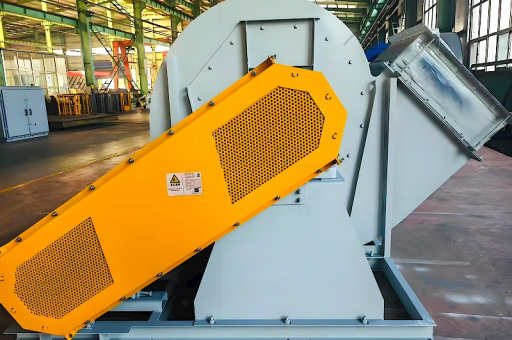
In the demanding world of heavy industry, consistent and reliable airflow is not a luxury—it is a necessity. The Industrial Boiler 5000 Cfm Centrifugal Air Blower 90kw represents a critical category of equipment designed to deliver high-volume, high-pressure air directly to combustion chambers, drying systems, and process support networks. While the market offers many blowers, the specific combination of a 5000 Cubic Feet per Minute (CFM) airflow rate driven by a 90-kilowatt (kW) motor via a centrifugal mechanism creates a sweet spot for medium-to-large scale boiler operations.
This article provides a comprehensive, SEO-optimized analysis of this specific blower configuration. We will explore its engineering principles, operational benefits, maintenance requirements, and answer the most common questions from plant engineers and procurement managers. Our goal is to help you understand not just what this blower does, but why it is the preferred choice for maximizing boiler efficiency and uptime.
Technical Breakdown: 5000 CFM, 90kW, and Centrifugal Dynamics
1 What Does 5000 CFM Mean for Industrial Boilers?
CFM, or Cubic Feet per Minute, is the volumetric flow rate. A rating of 5000 CFM in an industrial boiler context is significant. It typically indicates the blower is designed for a boiler with a heat output in the range of 5 to 10 million BTU/hr, depending on combustion efficiency and excess air requirements.
- Practical Impact: 5000 CFM means the blower can completely replace the air volume of a standard 20-foot shipping container every minute. For combustion, this volume ensures that fuel (natural gas, oil, or biomass) receives enough oxygen for complete combustion, minimizing soot and maximizing thermal efficiency.
- Static Pressure vs. Flow: It is crucial to note that “5000 CFM” is usually qualified by a static pressure rating (e.g., 15 to 25 inches of water gauge). A high-static centrifugal blower can push this volume against the resistance of a burner, heat exchanger tubes, and ductwork.
2 The Significance of a 90kW Motor (120 HP)
The 90kW power rating (approximately 120 Horsepower) is the engine that drives the impeller. This is a high-capacity motor typically operating on a 380V or 415V three-phase supply.
- Efficiency Metrics: A 90kW motor driving a 5000 CFM blower usually operates at an efficiency of 85-95% (IE3 or IE4 standard). This minimizes power waste.
- Starting Current: One key consideration is inrush current. A direct-on-line (DOL) start for a 90kW motor can draw 6-8 times the full load current. This necessitates either a soft starter or a Variable Frequency Drive (VFD) to prevent voltage dips in the facility’s grid.
- Torque Delivery: The 90kW rating ensures the blower can maintain full flow even when the system backpressure rises due to clogged filters or dirty boiler tubes.
3 Centrifugal vs. Axial: Why Centrifugal Wins for Boiler Applications
While axial fans (propeller style) move large volumes of air at low pressure, the centrifugal design is superior for boiler work.
- Pressure Generation: Centrifugal blowers use a rotating impeller to accelerate air radially. This action creates significantly higher static pressure compared to axial fans.
- Stability: They handle fluctuating system resistance (static pressure) much better. If a damper closes, a centrifugal blower’s power draw decreases, whereas an axial fan’s motor can overload.
- Durability: The robust construction of a centrifugal impeller (often steel or stainless steel) is better suited for the hot, dusty, or potentially corrosive air streams found in boiler houses.
Engineering Specifications and Core Components
1 Impeller Design: Backward Curved vs. Forward Curved
The type of impeller directly impacts the performance curve of the Industrial Boiler 5000 Cfm Centrifugal Air Blower 90kw.
- Backward Curved (BC): These are the gold standard for high-efficiency applications. BC impellers produce a non-overloading power curve. If static pressure drops, the motor does not draw excessive amps. They are quieter and more efficient (typically >80%) than forward curved designs. For a 90kW blower, a BC impeller is usually the default choice for continuous operation.
- Forward Curved (FC): These move larger volumes of air at lower speeds and pressures. However, they are prone to motor overload if static pressure is lower than expected. They are less common for a 90kW boiler blower but may be used in HVAC (Heating, Ventilation, and Air Conditioning) air handling units.
2 Bearing Systems and Longevity
For a blower running 24/7, bearings are the most critical wear item.
- Standard: Sleeve bearings or heavy-duty spherical roller bearings are common.
- Lubrication: Grease-lubricated bearings are standard, but for this power class, oil-lubricated bronze or babbitt bearings with forced lubrication systems may be specified.
- L10 Life: Engineers should look for a bearing L10 life of at least 80,000 hours (approximately 9 years of continuous operation) to minimize downtime.
3 Casing and Inlet Design for Efficiency
- Scroll Casing: The spiral casing converts velocity pressure from the impeller into static pressure. A properly matched scroll for 5000 CFM prevents turbulence and noise.
- Inlet Box & Damper: To control the 5000 CFM flow, inlet vanes (pre-rotation dampers) or a variable inlet cone are often used. These are more efficient than outlet dampers for centrifugal blowers because they reduce the power required at lower flows.
Operational Applications: Where This Blower Excels
1 Forced Draft (FD) Fan Applications
The primary use for this blower is as a Forced Draft (FD) fan for industrial boilers. It pushes air through the burner and into the combustion chamber.
- Pulverized Coal Boilers: The 5000 CFM volume provides the primary and secondary air required to suspend and burn coal particles.
- Natural Gas Boilers: It ensures perfect stoichiometric combustion (the ideal air-to-fuel ratio), reducing NOx (nitrogen oxides) emissions.
2 Fluidized Bed Combustion Support
For Fluidized Bed Boilers (FBC), the blower must deliver air at a specific pressure to “fluidize” the sand or ash bed. The 90kW motor provides the high starting torque needed to lift the bed material, while the centrifugal design maintains stable pressure across the air distributor plate.
3 Industrial Process Drying and Pneumatic Conveying
Beyond combustion, this blower is used for:
- Drying: Feeding hot air into industrial dryers for wood chips, chemicals, or textiles.
- Conveying: Providing the air velocity (around 4000-5000 feet per minute) to move granular materials (cement, grain, plastic pellets) through pipes. The 5000 CFM volume is perfectly suited for a 4-inch to 6-inch pneumatic conveying line.
Installation, Safety, and Maintenance Best Practices
1 Foundation and Vibration Isolation
A 90kW motor spinning a heavy impeller creates significant vibration. Rigid mounting is essential.
- Inertia Base: The blower should be mounted on a concrete inertia block (at least 1.5 times the weight of the blower).
- Isolators: High-deflection spring isolators (rated for 2-inch deflection) are recommended to prevent structural noise transmission to the building.
2 Variable Frequency Drive (VFD) Integration
While the base specification does not include a VFD, integrating one with the Industrial Boiler 5000 Cfm Centrifugal Air Blower 90kw is highly advised.
- Energy Savings: Reducing the speed by 20% reduces power consumption by nearly 50% (affinity laws).
- Soft Start: Eliminates the high inrush current of the 90kW motor.
- Control: Allows for precise modulation of the 5000 CFM flow based on boiler load, improving turndown ratio.
3 Critical Maintenance Checklists
- Weekly: Check belt tension (if belt-driven) and alignment (if direct-drive). Listen for bearing noise using a stethoscope.
- Monthly: Measure motor amp draw at full load. Compare to nameplate rating. Check vibration levels (target < 0.15 inches/sec).
- Annually: Grease bearings according to manufacturer schedule (do not over-grease). Clean the impeller of dust buildup to maintain balance. Inspect the inlet bell for wear.
Frequently Asked Questions (FAQ)
Q1: What is the difference between a 5000 CFM blower and a 5000 CFM fan for a boiler? A: In industrial parlance, the terms are often used loosely. However, a blower specifically implies a higher static pressure rating (typically >10 inches w.g.) compared to a standard fan (<5 inches w.g.). For a boiler combustion air application, you need a centrifugal blower, not just a fan.
Q2: Can a 90kW blower handle a 5000 CFM flow through a high-resistance dust collector? A: It depends on the system pressure drop. If the dust collector and ducts create a static pressure of, say, 20 inches w.g., this blower (matched for high static) can handle it. But if the pressure drop is only 5 inches w.g., the motor may be oversized. You should check the manufacturer’s air performance curve for the specific 5000 CFM, 90kW model.
Q3: How do I select the right duct size for this blower? A: The general rule for industrial ventilation is to maintain a velocity of 3000-5000 feet per minute (FPM) in the duct. To handle 5000 CFM:
- At 3000 FPM: Duct diameter is approximately 18 inches.
- At 4000 FPM: Duct diameter is approximately 16 inches. Using a duct that is too small will increase pressure drop and overload the 90kW motor.
Q4: Is this blower explosion-proof? A: Not by default. The standard Industrial Boiler 5000 Cfm Centrifugal Air Blower 90kw is usually built for standard air. If the blower handles flammable gases, you will need ATEX or IECEx certified spark-resistant construction (non-ferrous impeller, aluminum housing, carbon ring seals). The 90kW motor must also be explosion-proof.
Q5: What is the typical cost of a 5000 CFM, 90kW centrifugal blower? A: Pricing varies significantly by manufacturer (e.g., New York Blower, Cincinnati Fan, Howden, or local brands). A standard carbon steel blower plus a 90kW motor typically ranges from $15,000 to $30,000 USD. Stainless steel construction or high-efficiency (Premium Efficient) motors can raise the price.
Conclusion: Optimizing Your Industrial Airflow
The Industrial Boiler 5000 Cfm Centrifugal Air Blower 90kw is not merely a component; it is the heart of a boiler’s combustion system. Its design—balancing specific air volume, motor power, and pressure capability—makes it a workhorse for industries ranging from power generation to chemical processing.
When investing in this equipment, remember that the total cost of ownership is dictated by efficiency and maintenance, not just purchase price. Pairing this blower with a VFD, ensuring proper foundation mounting, and following a strict bearing maintenance schedule will yield decades of reliable service. By understanding the dynamics of CFM, static pressure, and centrifugal force, plant operators can ensure their industrial boiler operates at peak thermal efficiency, lowering fuel costs and reducing emissions.
For specific selection and sizing, always consult the fan manufacturer's performance curves for your exact 5000 CFM, 90kW application.





