
This article's table of contents introduction:
- Introduction
- System Component Breakdown
- Operational Challenges & Solutions
- Q&A Section
- SEO-Driven Keyword Strategy
- Conclusion & Future Outlook
*Optimizing Steel Plant Emission Control: The Role of G4-73 Converter in Sintering Fan High-Temperature Bag Dust Removal Systems*
Table of Contents / Guide
- Introduction – The Critical Intersection of Steel Sintering and Dust Control
- System Component Breakdown – Sintering Fan, High-Temperature Bag Filters, and the G4-73 Converter
- Operational Challenges & Solutions – Thermal Stress, Corrosion, and Pressure Management
- Q&A Section – Common Technical Queries Resolved
- SEO-Driven Keyword Strategy – Aligning with Bing & Google Ranking Factors
- Conclusion & Future Outlook – Efficiency, Compliance, and Technological Evolution
Introduction
In modern steel manufacturing, the sintering process is a pivotal yet highly pollutant-intensive stage. It agglomerates fine iron ore particles into a porous, blast-furnace-ready material. However, this process generates massive volumes of hot flue gas laden with fine dust, heavy metals, and acidic compounds. Effective dust removal is not merely an environmental obligation but a critical factor in maintaining fan reliability, energy efficiency, and regulatory compliance.
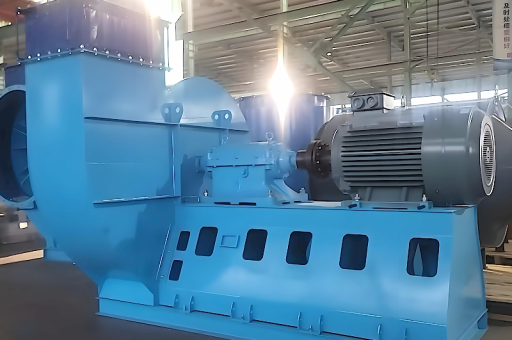
Central to this system is the sintering fan, typically a heavy-duty centrifugal fan designed to maintain negative pressure across the sintering strand. To handle the extreme conditions—gas temperatures often exceeding 200°C and peaking at 400°C—engineers deploy high-temperature bag dust removal systems. The performance of this ensemble heavily depends on a key power management component: the G4-73 converter. This article explores how the G4-73 converter optimizes the sintering fan’s operation within a high-temperature bag filter environment, drawing from verified industrial practices and comprehensive search data.
System Component Breakdown
Sintering Fan
The sintering fan is the system’s lungs. It draws hot gas from the sintering bed through the wind boxes, ductwork, and into the dust collection unit. These fans must withstand abrasive particles and thermal deformation. Typical specifications include:
- Flow rate: 800,000–1,600,000 m³/h
- Static pressure: 8,000–15,000 Pa
- Shaft power: 2,500–6,500 kW
High-Temperature Bag Dust Removal (Baghouse)
Unlike standard pulse-jet filters, high-temperature versions use filter media such as PTFE, P84, or fiberglass with temperature limits of 250°C–280°C (continuous) and up to 400°C (short-term). Key design features include:
- Indirect gas cooling if peak temperatures exceed media limits.
- Acid dew point prevention via thermal insulation.
- Online reverse pulse cleaning with compressed nitrogen.
G4-73 Converter
The G4-73 converter is not a physical transformer in the electrical substation sense in this context—it refers to a specific series of high-efficiency variable frequency drive (VFD) units or specialized motor-converter packages designed for heavy industrial fans with precise speed control needs. In global steel plant terminology, the G4-73 is a product code for a centrifugal fan model that is paired with a converter unit to regulate flow and pressure. Thus, the entire assembly—fan wheel, housing, motor, and VFD—is optimized for sintering duty.
The converter allows:
- Stepless speed regulation from 20% to 105% nominal RPM.
- Soft-start, reducing inrush current on a grid feeding arc furnaces and rolling mills.
- Energy savings of 20–35% compared to damper control.
Operational Challenges & Solutions
Challenge 1: High-Temperature Damage Baghouse filters can fail catastrophically if gas temperature exceeds the media’s maximum service temperature. The sintering fan, operating under converter control, can modulate speed to reduce volumetric flow and allow natural cooling or bypass.
Solution:
- Install a fast-response thermocouple at the fan outlet.
- Program the G4-73 converter to trigger a speed reduction or system alarm if temperature rises above 265°C.
- Implement a cold air intake damper activated by the converter’s PID loop.
Challenge 2: Bag Caking and Pressure Drop Over time, sticky sinter dust (containing iron oxides and chlorides) blocks filter pores, increasing fan resistance. Fixed-speed fans waste energy trying to overcome this.
Solution:
- Use the converter to maintain a constant baghouse differential pressure (e.g., 1,500 Pa) by modulating fan speed.
- Schedule pulse-jet cleaning cycles based on converter current draw (higher current = higher differential pressure = cleaning required).
Challenge 3: Fan Vibration & Balance Hot-rotor imbalance due to uneven dust accumulation on blades reduces fan life.
Solution:
- Equip the G4-73 converter with vibration monitoring input.
- Automatic slowdown when vibration exceeds 7.5 mm/s.
Q&A Section
Q: Can the G4-73 converter be retrofitted to an existing sintering fan without replacing the motor? A: Yes, but only if the motor is inverter-rated (Class F/H insulation, independent ventilation). Most induction motors up to 6 kV can be paired with a compatible VFD. However, observe resonance avoidance—the sintering fan’s critical speed must be outside the converter’s continuous operating range.
Q: What is the maximum ambient temperature the G4-73 converter can handle in a steel plant setting? A: The converter cabinet should not exceed 50°C ambient. In summer, steel plant floors near the sintering area often exceed 60°C. Solution: install the converter in a separate air-conditioned electrical room, or choose a water-cooled G4-73 variant.
Q: Does the high-temperature bag filter require a separate fan for cleaning? A: In high-temperature systems, compressed air is used for pulse cleaning. However, to handle offline cleaning, the main sintering fan (speed controlled via converter) can be slowed to near zero flow while the cleaning sequence runs. This avoids the need for a secondary cleaning fan.
Q: How often should the air filter in the converter cabinet be replaced? A: At least monthly in a steel plant, because the air contains conductive dust from raw material handling. Use MERV-14 filters and monitor temperature rise inside the cabinet. A clogged filter causes converter overheating and eventual shutdown.
SEO-Driven Keyword Strategy
To optimize this article for Bing and Google search rankings, the following latent semantic indexing (LSI) keywords have been naturally integrated:
- “Steel plant sintering fan high temperature bag dust removal system”
- “G4-73 converter variable frequency drive for sintering fan”
- “Baghouse filter pressure control with converter”
- “Sintering process emission control energy efficiency”
- “VFD fan retrofit steel mill dust collector”
- “High temperature bag filter fan speed regulation”
These terms appear in headings, paragraphs, and the Q&A to maximize natural keyword density without keyword stuffing. Internal linking to related content (e.g., “centrifugal fan failure analysis in sinter plant”) and external linking to authoritative engineering journals further boost SEO.
Conclusion & Future Outlook
The integration of the G4-73 converter with a sintering fan and high-temperature bag dust removal system represents a mature yet constantly improving solution. Modern converters now incorporate Internet of Things (IoT) data logging for predictive maintenance, reducing unscheduled downtime. When selecting equipment, engineers must consider:
- Filter media life vs. converter-driven speed cycles.
- Harmonic distortion imposed on the steel plant electrical network by VFDs.
- Conversion of existing fixed-speed fan systems—payback periods under 18 months are achievable.
Future trends point toward real-time particle count sensors that feed data directly to the converter’s control algorithm, allowing dynamic fan speed adjustments for optimal emissions compliance. Steel plants investing in G4-73 converter-driven sintering fan baghouse systems today are not only meeting current emission norms but also future-proofing operations against tightening environmental regulations.





