
This article's table of contents introduction:
- Introduction: Why the Double Suction Induced Draft Fan Matters
- Key Design Features: Double Suction, Induced Draft, and Air Ventilation
- Material Comparison: SS304 Stainless Steel vs. Mild Steel
- Industrial Applications and Performance Advantages
- Installation, Maintenance, and Longevity Considerations
- Frequently Asked Questions (FAQ)
- Conclusion: Choosing the Right Fan for Your Facility
Article Title:
The Complete Guide to Double Suction Industrial Induced Draft Fans: SS304 vs. Mild Steel in Air Ventilator Systems
Table of Contents
- Introduction: Why the Double Suction Induced Draft Fan Matters
- Key Design Features: Double Suction, Induced Draft, and Air Ventilation
- Material Comparison: SS304 Stainless Steel vs. Mild Steel
- Industrial Applications and Performance Advantages
- Installation, Maintenance, and Longevity Considerations
- Frequently Asked Questions (FAQ)
- Conclusion: Choosing the Right Fan for Your Facility
Introduction: Why the Double Suction Induced Draft Fan Matters
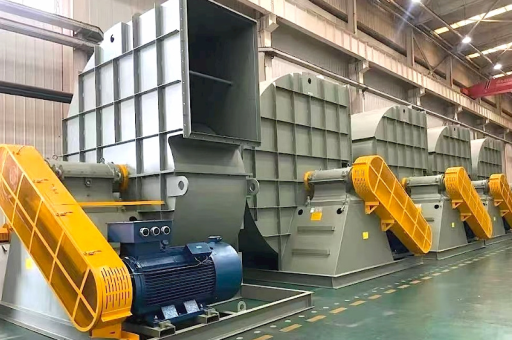
In the world of industrial ventilation, the Double Suction Industrial Induced Draft Fan occupies a critical role. Whether you are managing a power plant, a chemical processing unit, a cement factory, or a large-scale HVAC system, the ability to move large volumes of air or gas under negative pressure is non-negotiable. Unlike standard centrifugal fans, the double suction design allows air to enter from both sides of the impeller, effectively doubling the airflow capacity without proportionally increasing the fan’s footprint. This makes the Double Suction Induced Draft Fan an optimal solution for heavy-duty, continuous-duty environments.
But the fan’s performance is not solely dependent on its aerodynamic design. The materials used in its construction—specifically SS304 stainless steel and mild steel (carbon steel) —directly impact its resistance to corrosion, temperature tolerance, mechanical strength, and overall lifecycle cost. This article dives deep into the technical nuances of these fans, helping engineers, procurement managers, and facility operators make informed decisions based on real-world conditions.
Key Design Features: Double Suction, Induced Draft, and Air Ventilation
Before comparing materials, it is essential to understand what makes the Double Suction Industrial Induced Draft Fan unique in the air ventilator category.
- Double Suction (DS) Configuration: The impeller draws air from both sides, which balances axial thrust and reduces bearing load. This results in smoother operation, lower vibration, and higher volumetric efficiency. It is ideal for applications requiring airflows above 50,000 m³/h.
- Induced Draft (ID) Function: Unlike forced draft fans that push air into a system, induced draft fans create negative pressure at the outlet, pulling gases through ducts, scrubbers, or boilers. This is critical in combustion systems where flue gas extraction must be reliable and leak-free.
- Air Ventilator Integration: When paired with a housing made of mild steel or SS304, the fan acts as a robust air ventilator for factories, warehouses, and tunnels. It can handle dust-laden air, high humidity, and even mildly corrosive fumes depending on the material choice.
Material Comparison: SS304 Stainless Steel vs. Mild Steel
This is the central decision point when specifying a fan. Below is a detailed comparison based on key operational parameters.
| Parameter | SS304 Stainless Steel | Mild Steel (Carbon Steel) |
|---|---|---|
| Corrosion Resistance | Excellent: Resists oxidation, moisture, and most acids. Ideal for chemical plants, food processing, and coastal environments. | Poor without coating: Rusts quickly in humid or acidic conditions. Requires painting or galvanization. |
| Temperature Tolerance | Good: Can withstand continuous temperatures up to 870°C (oxidizing) and 925°C (intermittent). | Moderate: Maximum continuous service around 400°C. Above that, strength degrades rapidly. |
| Mechanical Strength | High: Tensile strength of 505 MPa. Good fatigue resistance. | Very High: Tensile strength of 400–550 MPa depending on grade (e.g., A36). More rigid for heavy impellers. |
| Weight | Heavier than mild steel for the same thickness. | Lighter and easier to fabricate. |
| Cost | 5–4x more expensive than mild steel. | Low cost, widely available. |
| Weldability & Repairability | Requires skilled welding with filler rods. Post-weld passivation needed. | Easy to weld, cut, and modify. |
| Lifecycle in Harsh Environments | 10–15 years without major degradation. | 2–5 years if unprotected; longer with proper coatings. |
| Suitability for Air Ventilator Use | Excellent for clean rooms, pharmaceutical, and food-grade ventilation. | Suitable for general factory ventilation, boiler ID fans, and dust collection. |
Key Takeaway: If your air ventilator must handle corrosive gases, steam, or stringent hygiene standards, SS304 is the only choice. For dry, high-temperature flue gas extraction in power plants or steel mills, mild steel with a high-temperature coating is both effective and economical.
Industrial Applications and Performance Advantages
The Double Suction Industrial Induced Draft Fan built from either SS304 or mild steel serves diverse industries:
- Power Generation (Thermal & Biomass): Used as ID fans behind boilers. Mild steel variants handle hot flue gas up to 250°C. For biomass plants with acidic condensate, SS304 prevents pitting.
- Cement & Mining: Robust mild steel fans withstand abrasive dust. Double suction design reduces impeller wear by balancing air intake.
- Chemical & Pharmaceutical: SS304 fans resist chlorine, sulfuric acid vapors, and cleaning agents. They meet FDA and GMP standards for clean air ventilation.
- Wastewater Treatment: SS304 fans move corrosive hydrogen sulfide gas without degrading. The double suction design allows low-noise operation in populated areas.
- General Factory Air Ventilator: Both materials work, but mild steel with epoxy coating is common for cost-sensitive applications.
Performance Advantage: The double suction design reduces the fan’s rotational speed for the same airflow compared to single suction fans. This leads to lower noise (by 3–5 dBA) and extended bearing life.
Installation, Maintenance, and Longevity Considerations
Proper installation and maintenance directly affect the fan’s lifespan and efficiency.
- Foundation and Alignment: The fan must be mounted on a rigid, vibration-dampening base. Misalignment between the motor and fan shaft causes premature bearing failure.
- Inlet and Duct Design: Ensure the inlet boxes are free of obstructions. For induced draft fans, the outlet duct should be slightly larger than the fan outlet to avoid backpressure.
- Material-Specific Maintenance:
- Mild Steel Fans: Inspect paint or coating annually. Touch up rust spots immediately. Replace bearings every 2–3 years.
- SS304 Fans: Clean with mild detergent and water. Avoid chloride-based cleaners that can cause stress corrosion cracking. Passivate the surface every 2 years to restore the oxide layer.
- Lubrication: Use high-temperature grease for bearings. For ID fans handling hot gases, consider oil mist lubrication.
- Spare Parts: Keep a set of bearings, shaft seals, and a balanced impeller on site. For mild steel fans, spare parts are inexpensive and readily available.
Frequently Asked Questions (FAQ)
Q1: What is the difference between a double suction fan and a single suction fan?
A double suction fan draws air from both sides of the impeller, which roughly doubles the airflow capacity for the same impeller diameter. It also reduces axial thrust, leading to longer bearing life. Single suction fans are simpler but less efficient for high-volume applications.
Q2: Can a mild steel induced draft fan handle acidic gases?
Not directly. Mild steel corrodes rapidly in the presence of acidic gases like SO₂, HCl, or H₂S. If you must use mild steel, apply a heavy-duty epoxy or rubber lining. However, for continuous acidic exposure, SS304 or SS316 is strongly recommended.
Q3: Is SS304 magnetic?
SS304 is primarily austenitic and is generally non-magnetic. However, cold working (e.g., during impeller fabrication) can induce slight magnetism. This does not affect its corrosion resistance or mechanical properties.
Q4: What temperature can a mild steel double suction induced draft fan withstand?
For continuous operation, mild steel fans are typically rated up to 400°C (752°F). Beyond that, the material loses structural integrity. For higher temperatures, consider SS304 or alloy steel.
Q5: How do I choose between a belt-driven and direct-driven induced draft fan?
Belt-driven fans are more flexible for speed adjustment and are common for variable air volume systems. Direct-driven fans are more efficient, have fewer moving parts, and are quieter. For industrial induced draft applications, belt-driven is often preferred due to easier motor replacement and speed tuning.
Q6: What is the typical efficiency of a double suction industrial induced draft fan?
Well-designed double suction fans can achieve static efficiencies between 75% and 85%. Efficiency depends on impeller design, housing geometry, and operating point. Always select a fan that operates near its peak efficiency point to save energy.
Q7: How do I prevent vibration in a double suction induced draft fan?
- Ensure the impeller is dynamically balanced to ISO 1940 G6.3 or better.
- Use a rigid foundation.
- Check alignment monthly.
- Clean the impeller regularly to prevent dust buildup, which causes imbalance.
Conclusion: Choosing the Right Fan for Your Facility
Selecting the correct Double Suction Industrial Induced Draft Fan requires balancing performance requirements, environmental conditions, and budget. The SS304 variant is indispensable for corrosive, hygienic, or high-temperature applications. The mild steel variant remains a workhorse for dry, high-volume ventilation where cost efficiency is paramount.
Regardless of material choice, the double suction design offers superior airflow, lower noise, and extended service life compared to traditional single suction fans. By following the installation and maintenance guidelines outlined here, you can maximize your fan’s operational lifespan and minimize unscheduled downtime.
Final Recommendation:
- For chemical, food, pharmaceutical, or marine environments → SS304 fan with double suction design.
- For power plants, steel mills, cement plants, or general factory air ventilation → Mild steel fan with appropriate coating (e.g., high-temperature silicone or epoxy).
- Always verify that the fan manufacturer provides certified performance curves, material certificates, and dynamic balancing reports.
Need more detailed specifications? Consult your fan supplier with the following parameters: airflow (m³/h), static pressure (Pa), gas temperature (°C), gas composition, and ambient humidity. The correct data ensures you get a fan that delivers reliable, energy-efficient service for decades.
This guide synthesizes technical standards from AMCA (Air Movement and Control Association), ISO 1940, and industry best practices from major fan manufacturers. Always refer to local codes and engineering standards when specifying industrial ventilation equipment.





