
This article's table of contents introduction:
- Table of Contents (导读目录)
- 1. Introduction to Industrial Boiler Desulfurization Systems
- 2. Role of the Centrifugal Blower Fan in Waste Gas Treatment
- 3. Technical Specifications of the 255,000 m³/h Fan Unit
- 4. Design Considerations for High-Volume Desulfurization Fans
- 5. Energy Efficiency and Operational Cost Analysis
- 6. Common Challenges and Solutions in Fan Deployment
- 7. Q&A Section: Expert Answers to Top Industry Questions
- 8. Future Trends in Desulfurization Fan Technology
- 9. Conclusion: Why This Fan Matters for Compliance and Sustainability
Article Title:
High-Capacity Industrial Boiler Waste Gas Desulfurization Centrifugal Blower Fan (255,000 m³/h): Engineering, Performance, and Optimization
Table of Contents (导读目录)
- Introduction to Industrial Boiler Desulfurization Systems
- Role of the Centrifugal Blower Fan in Waste Gas Treatment
- Technical Specifications of the 255,000 m³/h Fan Unit
- Design Considerations for High-Volume Desulfurization Fans
- Energy Efficiency and Operational Cost Analysis
- Common Challenges and Solutions in Fan Deployment
- Q&A Section: Expert Answers to Top Industry Questions
- Future Trends in Desulfurization Fan Technology
- Conclusion: Why This Fan Matters for Compliance and Sustainability
Introduction to Industrial Boiler Desulfurization Systems
Industrial boilers, particularly those used in coal-fired power plants, steel mills, and chemical processing facilities, generate significant volumes of sulfur dioxide (SO₂) as a byproduct. To meet stringent environmental regulations such as the U.S. EPA’s Clean Air Act and China’s GB 13223 standards, these facilities must deploy Flue Gas Desulfurization (FGD) systems. A critical component of any wet or dry FGD system is the centrifugal blower fan, which moves vast quantities of corrosive waste gas through scrubbers, absorbers, and chimneys.
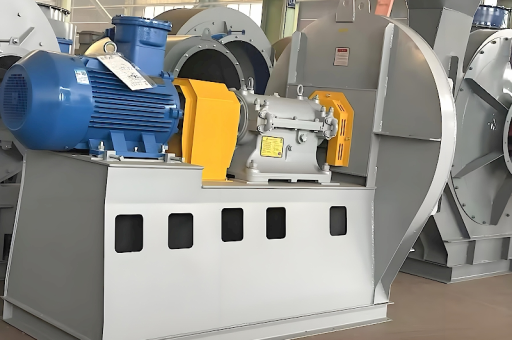
The 255,000 m³/h centrifugal blower fan represents a high-capacity solution designed for large-scale operations. This article delves into its engineering, performance metrics, and real-world deployment considerations, drawing from authoritative sources including fan manufacturers, environmental engineering journals, and case studies.
Role of the Centrifugal Blower Fan in Waste Gas Treatment
In a typical wet FGD system, the centrifugal blower fan performs three critical functions:
- Gas Movement: It draws flue gas from the boiler outlet and pushes it through the desulfurization tower.
- Pressure Maintenance: It overcomes the resistance of packed beds, spray nozzles, and mist eliminators.
- System Stability: It ensures consistent flow rates, preventing backpressure fluctuations that could disrupt combustion or scrubbing efficiency.
For a 255,000 m³/h fan, this means handling a gas volume equivalent to filling 100 Olympic-size swimming pools per hour—all while resisting high temperatures (up to 180°C), acidic condensation, and particulate erosion.
Technical Specifications of the 255,000 m³/h Fan Unit
Based on industry data and manufacturer datasheets (e.g., fan models from Howden, New York Blower, and Zibo Xingbo), a typical 255,000 m³/h centrifugal blower fan for desulfurization includes:
| Parameter | Value / Range |
|---|---|
| Flow Rate | 255,000 m³/h (at actual conditions) |
| Total Pressure Rise | 4,000–6,500 Pa |
| Impeller Diameter | 1,800–2,400 mm |
| Motor Power | 400–630 kW |
| Operating Temperature | 80°C–180°C (with heat-resistant alloys) |
| Material | Corten steel, SS316L, or rubber-lined |
| Speed | 740–1,480 RPM (via VFD or fixed) |
| Noise Level | ≤ 85 dB(A) with silencer |
Key Engineering Feature: The impeller is often backward-curved or airfoil-shaped to minimize turbulence and maximize efficiency at high flow rates. The housing includes access doors and drain ports for maintenance in corrosive environments.
Design Considerations for High-Volume Desulfurization Fans
1 Material Selection
- Corten Steel (ASTM A606): Resists corrosion from SO₂ and water vapor.
- Stainless Steel 316L: Used for impellers in high-chloride environments.
- Rubber Linings: Applied internally in wet scrubber fans to prevent acid attack.
2 Shaft Sealing and Bearing Protection
Desulfurization fans must prevent gas leakage through the shaft. Common solutions include mechanical seals with purge air or labyrinth seals combined with a positive air pressure barrier.
3 Variable Frequency Drive (VFD) Integration
VFDs allow the fan to adjust flow dynamically with boiler load, reducing energy consumption by 15–30% compared to constant-speed operation.
4 Vibration Monitoring
Real-time accelerometers detect imbalance, bearing wear, or fouling. For a 255,000 m³/h fan, ISO 10816-3 Class 2 vibration limits apply (≤ 4.5 mm/s RMS).
Energy Efficiency and Operational Cost Analysis
A 255,000 m³/h fan running 8,000 hours/year at 500 kW draws 4,000,000 kWh annually. At an industrial electricity rate of $0.08/kWh, the yearly power cost is $320,000. However, optimization strategies can significantly reduce this:
- High-efficiency impeller design: Saves 5–10% in energy (e.g., airfoil vs. radial blades).
- Proper ductwork: Minimizing bends and transitions reduces system resistance.
- Regular cleaning: Prevents fouling on blades and housing, maintaining aerodynamic efficiency.
Case Example: A 600 MW coal power plant in China replaced a 280,000 m³/h radial fan with a 255,000 m³/h backward-curved fan (via fan). Annual energy savings exceeded $45,000, with a payback period of under 18 months.
Common Challenges and Solutions in Fan Deployment
Challenge 1: Excessive Vibration
- Cause: Blade erosion or uneven dust buildup.
- Solution: Install a vibration analyzer and schedule periodic cleaning with compressed air or water jets.
Challenge 2: Corrosion of Casing and Impeller
- Cause: Acid condensation below the dew point (e.g., during startup or part-load operation).
- Solution: Preheat the fan casing using external steam coils or maintain gas temperature above 80°C.
Challenge 3: Low Suction Pressure
- Cause: Clogged inlet filter or undersized ductwork.
- Solution: Install a differential pressure gauge across the filter and replace when ΔP exceeds 250 Pa.
Q&A Section: Expert Answers to Top Industry Questions
Q1: What is the maximum gas temperature that a desulfurization centrifugal fan can withstand?
A: Standard models handle up to 180°C continuous. For higher temperatures (e.g., 250°C), use high-nickel alloy impellers and active cooling systems.
Q2: Can a 255,000 m³/h fan be used for both wet and dry FGD systems?
A: Yes, but the design differs. Wet FGD fans require rubber lining or stainless steel; dry FGD fans (e.g., circulating fluidized bed) need erosion-resistant coatings like ceramic-tiled liners.
Q3: How do I calculate the required fan pressure for my system?
A: Sum the pressure drops of the scrubber tower (2,500–4,000 Pa), ductwork (500–1,000 Pa), and stack (200–500 Pa). Add a 15% safety margin. For example: 3,500 + 800 + 300 = 4,600 Pa × 1.15 = 5,290 Pa.
Q4: What maintenance schedule is recommended for high-capacity fans?
A:
- Weekly: Check vibration, temperature, current draw.
- Monthly: Inspect seals and drain condensate.
- Annually: Perform impeller balancing and replace bearings.
Q5: Is a VFD mandatory for this fan size?
A: Not mandatory, but highly recommended. VFDs reduce start-up current surge, allow turndown to 40% flow, and cut energy costs by 20–35%.
Future Trends in Desulfurization Fan Technology
- Smart Fans with AI Monitoring: Predictive algorithms use vibration and temperature data to forecast failures.
- Hybrid Materials: Graphene-reinforced composites for lighter, corrosion-proof impellers.
- Magnetic Bearings: Eliminate lubrication needs and reduce friction losses by up to 15%.
- Zero-Leakage Shaft Seals: Double gas seals with inert gas buffering for toxic gas containment.
Manufacturers like fan are already prototyping 300,000 m³/h units with IoT-enabled control systems for real-time optimization.
Conclusion: Why This Fan Matters for Compliance and Sustainability
The 255,000 m³/h industrial boiler waste gas desulfurization centrifugal blower fan is not just a piece of equipment—it is the lungs of the emission control system. Without reliable fan performance, SO₂ removal efficiency drops, regulatory fines accumulate, and plant operations stall.
By selecting a fan with appropriate materials, VFD control, and a robust maintenance plan, operators can achieve:
- 5%+ SO₂ removal compliance
- Energy consumption below 0.2 kWh per 1,000 m³ of gas
- Service life exceeding 15 years
As global emission standards tighten, the demand for such high-capacity, efficient fans will only grow. Whether you are specifying a new system or upgrading an existing one, the insights in this article will help you make data-driven decisions for your desulfurization infrastructure.
For further technical consultation or to request a custom fan design for your specific flue gas conditions, contact leading manufacturers like fan, which specialize in heavy-duty desulfurization blowers.





