
Article Title: Alloy Steel AC Motor Industrial Centrifugal Fans with Explosion Protection: Safety, Design, and Application Guide
Table of Contents
- Introduction: The Critical Role of Explosion-Proof Fans in Hazardous Environments
- Why Alloy Steel is the Material of Choice for Explosion-Proof Centrifugal Fans
- How AC Motors Are Adapted for Explosion Protection
- Key Design Features of Industrial Centrifugal Fans for Hazardous Zones
- Common Applications Across Industries
- Frequently Asked Questions (FAQ)
- Conclusion: Ensuring Safety and Efficiency in High-Risk Settings
Introduction: The Critical Role of Explosion-Proof Fans in Hazardous Environments
In industries such as oil and gas, chemical processing, mining, and pharmaceuticals, the presence of flammable gases, vapors, or combustible dust is a daily reality. In such environments, standard ventilation equipment can become an ignition source, leading to catastrophic explosions. This is where Alloy Steel AC Motor Industrial Centrifugal Fans with Explosion Protection come into play.
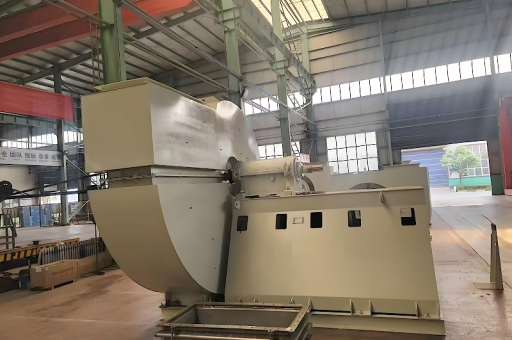
These fans are engineered to move large volumes of air or gas while containing any potential spark, flame, or heat within the motor or fan housing. By combining corrosion-resistant alloy steel construction, robust AC motors, and certified explosion protection mechanisms, they offer a reliable solution for hazardous locations classified as Zone 1, Zone 2, Class I, or Class II under international standards like ATEX, IECEx, and NEC.
Why Alloy Steel is the Material of Choice for Explosion-Proof Centrifugal Fans
Alloy steel is not just a structural choice; it is a safety-critical material. Standard carbon steel can corrode quickly in aggressive chemical atmospheres, while aluminum or plastic may not withstand high temperatures or mechanical stress. Alloy steel provides the following advantages:
- High tensile strength – withstands pressure spikes from internal explosions.
- Corrosion resistance – critical in environments with acids, alkalis, or salt.
- Spark resistance – certain alloy blends (e.g., non-sparking alloys) reduce friction-generated sparks.
- Thermal stability – maintains integrity under continuous high-temperature operation.
Most explosion-proof fan impellers, housings, and shaft components are made from stainless steel (304 or 316) or other low-alloy steels that meet the mechanical and chemical resistance demands of the application.
Did you know? Many explosion-proof fans use non-sparking alloy steel impellers, which are tested to ensure they do not produce ignition-capable sparks even when rubbing against the fan housing.
How AC Motors Are Adapted for Explosion Protection
The AC motor is the heart of any industrial fan. For explosion-proof applications, the motor itself must be designed to contain an internal explosion or to prevent ignition from reaching the external atmosphere. Key adaptations include:
- Totally Enclosed Fan-Cooled (TEFC) construction – prevents gas or dust ingress.
- Flameproof (Ex d) enclosures – joints are machined to tight tolerances to cool escaping gases below ignition temperature.
- Increased safety (Ex e) – prevents sparks, arcs, or high temperatures during normal operation.
- Thermal overload protection – built-in PTC thermistors or thermostats.
- Ingress Protection (IP54, IP55, or higher) – seals against dust and moisture.
Motors used in centrifugal fans for hazardous areas also undergo stringent testing for surface temperature rise, insulation class, and bearing protection.
Key Design Features of Industrial Centrifugal Fans for Hazardous Zones
An explosion-proof centrifugal fan must integrate multiple safety features into its mechanical design. Below are the critical elements engineers focus on:
| Feature | Purpose |
|---|---|
| Alloy steel impeller | High strength, corrosion resistance, and non-sparking properties |
| Reinforced housing | Contains internal explosions without rupture |
| Spark-resistant seals | Prevent friction-generated sparks between rotating and stationary parts |
| Shaft grounding | Eliminates electrostatic discharge |
| Drain holes with flame arrestors | Allow condensation removal while blocking flame propagation |
| Bearing isolation | Prevents lubricant vapor ingress into hazardous zones |
Additionally, the fan must comply with ATEX 2014/34/EU, IEC 60079, or NEC 500 standards depending on the region. These certifications require third-party testing and periodic audits.
Safety Note: Even with a certified fan, proper installation, grounding, and maintenance are essential to maintain the explosion-proof integrity.
Common Applications Across Industries
Explosion-proof alloy steel centrifugal fans are used in a wide variety of critical processes, including:
- Chemical plants – handling corrosive gases like chlorine, ammonia, or hydrogen.
- Oil refineries – venting flammable hydrocarbons from storage tanks.
- Pharmaceutical manufacturing – moving volatile solvents in cleanrooms.
- Grain handling facilities – extracting combustible dust from elevators and silos.
- Mining operations – ventilating underground tunnels with methane gas.
- Paint spray booths – exhausting flammable solvent vapors.
In each case, the fan must be sized according to air volume (CFM), static pressure, and gas composition, while the motor must match the required RPM and power.
Frequently Asked Questions (FAQ)
Q1: What is the difference between an explosion-proof fan and a standard industrial fan?
A: An explosion-proof fan is designed with a reinforced housing, non-sparking materials (like alloy steel), and certified motor enclosures to prevent an internal ignition from escaping to the external hazardous atmosphere. Standard fans lack these safety features.
Q2: Can I use an ordinary AC motor with an explosion-proof fan?
A: No. The AC motor itself must be explosion-proof certified (e.g., Ex d, Ex e, or Ex nA) and matched to the fan's hazardous zone classification. Using a standard motor voids safety certification.
Q3: What is the best alloy steel grade for corrosive environments?
A: For highly corrosive gases, 316L stainless steel is recommended due to its molybdenum content. For less acidic environments, 304 stainless steel offers a cost-effective balance of strength and corrosion resistance.
Q4: How often should an explosion-proof centrifugal fan be inspected?
A: At least annually, or more frequently if the environment is corrosive or dusty. Inspections should include seal integrity, temperature rise tests, bearing condition, and grounding resistance checks.
Q5: Can explosion-proof fans be used for both gas and dust hazards?
A: Yes, but the fan must be certified for both gas (Group II) and dust (Group III) environments. Dual-certified fans often feature additional dust-tight seals and higher IP ratings.
Q6: Is alloy steel mandatory for explosion-proof fans?
A: Not in all cases, but it is highly recommended for high-temperature, corrosive, or high-pressure applications. Aluminum can be used in non-corrosive zones, but it has lower strength and melting point.
Conclusion: Ensuring Safety and Efficiency in High-Risk Settings
Alloy Steel AC Motor Industrial Centrifugal Fans with Explosion Protection are indispensable for maintaining safe working conditions in hazardous environments. Their robust material selection, precision-engineered motor enclosures, and rigorous certification make them the gold standard for ventilation in explosive atmospheres.
When selecting a fan, consider factors such as zone classification, gas or dust type, temperature class, and corrosion potential. Partnering with certified manufacturers ensures that your equipment meets all safety regulations and delivers long-term reliability.
Remember: Safety is not an accessory; it is the foundation of every explosion-proof fan design. Invest in quality, follow maintenance schedules, and train your team to recognize potential hazards.
For more detailed technical information, always refer to the fan's manufacturer manual and consult with certified explosion protection engineers.





