
This article's table of contents introduction:
- The Configuration Explained
- Critical Materials & Coatings for Corrosion Resistance
- Key Specifications to Define
- Top Manufacturers Who Specialize in This
- Critical Design & Installation Considerations
- Summary Recommendation
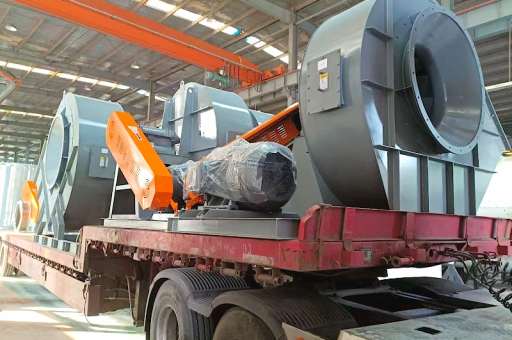
This is a highly specific industrial equipment request. To provide the most accurate advice, let's break down what you are describing: An Industrial Air Supply Boiler Fan that is Corrosion Resistant and features a Backward Curved (Backward Inclined) impeller.
This combination is a standard, high-efficiency choice for boiler applications, but the "corrosion resistant" requirement significantly dictates the materials and design coatings.
Here is a detailed breakdown of what this fan is, why it is used, and the critical specifications you need to consider when sourcing one.
The Configuration Explained
- Industrial Air Supply (Forced Draft Fan): This fan is typically a Forced Draft (FD) fan. Its job is to push ambient air into the boiler's combustion chamber or through the air preheater. It operates before the combustion gasses, so it handles clean-ish ambient air, but the air can be hot (preheated) and slightly corrosive depending on the environment.
- Boiler Fan: Designed for continuous, heavy-duty operation at high temperatures (ambient to 200°C / 400°F) and often variable speeds.
- Corrosion Resistant: The fan and its components must withstand:
- Moisture: Ambient air contains humidity.
- Atmospheric pollutants: (e.g., coastal salt, H2S from industrial zones).
- Acidic condensate: If the fan handles preheated air that cycles down to lower temperatures, acidic condensation can occur from residual flue gasses leaking in.
- Backward Curved (Backward Inclined) Blades:
- High Efficiency: Best efficiency of the three main centrifugal fan types (radial, forward, backward).
- Non-Overloading Power Curve: The motor won't burn out if the system resistance drops (duct blockage clears) because the power consumption peaks at a specific point and then drops.
- Self-Limiting: Ideal for variable speed drives (VFDs).
- Lower Noise: Generally quieter than radial blade fans.
Critical Materials & Coatings for Corrosion Resistance
Standard steel fans will rust and fail quickly in corrosive environments. You need to look for these materials and coatings in the specification sheet:
A. Impeller & Shroud (The Rotating Part):
- Standard: Carbon Steel (will require heavy coating).
- Better: Corten Steel (Weathering Steel) - forms a stable rust layer, better than standard carbon steel.
- Best (for corrosion):
- 304L/316L Stainless Steel: The gold standard for airborne corrosion. 316L is preferred in coastal or high-humidity areas with chlorides.
- Duplex Stainless Steel (e.g., 2205): For extreme environments (e.g., H2S, high chloride).
- Fiber Reinforced Plastic (FRP): Excellent for low-temperature (<90°C) highly corrosive applications. Not suitable for hot boiler air.
B. Housing (The Volute/Casing):
- Can be made from the same stainless steel (preferred).
- Can be Carbon Steel with a heavy-duty protective coating:
- Epoxy Coatings: High-build, solvent-free epoxies (e.g., Novolac, Phenolic) for chemical resistance.
- Polyurethane Topcoats: For UV and abrasion resistance.
- Rubber Linings (e.g., Halar, Teflon): For extreme chemical resistance (expensive).
C. Shaft:
- Standard: AISI 4140 steel (needs coating/seal).
- Best: Stainless Steel (316/17-4PH) running in a sealed bearing housing.
D. Bearings:
- Sealed for life or Pillow block bearings with effective shaft seals (labyrinth seals or V-ring seals) to prevent moisture ingress.
- Bearing material should be corrosion-resistant if exposed.
Key Specifications to Define
When requesting a quote, you must provide these parameters:
| Parameter | Why it Matters for Boiler & Corrosion |
|---|---|
| Air Volume (CFM or m³/hr) | Primary sizing. |
| Static Pressure (in. w.g. or Pa) | System resistance. |
| Air Temperature (°F or °C) | Affects material selection (SS vs. Epoxy Coating). Epoxy fails >120°C. |
| Altitude | Affects air density and motor sizing. |
| Corrosive Agents | Crucial. Identify specific chemicals (e.g., H2S, Cl₂, SOx, Salt mist). |
| Humidity Level | Is the air saturated? |
| Position / Location | Indoor/Outdoor? (Outdoor needs weather cover, UV resistant sealant). |
| Drive Type | Direct Drive (cheaper, low maintenance) vs. Belt Drive (variable speed flexibility, motor out of airstream). For boiler reliability, Direct Drive with a VFD is often preferred. |
Top Manufacturers Who Specialize in This
These companies produce the exact type of fan you described:
- Howden: Global leader in boiler fans (FD, ID, PA). They have specific corrosion-resistant offerings (e.g., VariAx, TLT-Babcock designs).
- Air Control Industries (ACI): Strong in North America for industrial process fans with high-build epoxy coatings and SS options.
- New York Blower (NYB): Excellent for custom engineered fans. Their "LS" or "HP" series with backward inclined wheels can be spec'd in SS.
- Greenheck (Industrial Process Division): Offers corrosion-resistant fans for commercial and light industrial boiler houses.
- Chicago Blower: Known for heavy-duty industrial fans with custom corrosion protection.
- Cincinnati Fan: Good for medium-duty industrial and boiler applications.
Critical Design & Installation Considerations
- Drainage: The fan housing must have a bottom drain connection. Moisture will collect. If not drained, it will sit on the bottom of the housing and corrode it from the inside out.
- Insulation & Heat Tracing: If the fan handles preheated air and is located in a cold environment, the housing may need insulation and heat tracing to prevent condensation inside (which causes corrosion).
- Access Doors: Required for internal cleaning and inspection to monitor corrosion levels.
- VFD (Variable Frequency Drive): Backward curved fans are perfect for VFDs. Running a fan at low speed reduces wear, saves energy, and prevents "washout" of the coating by high-velocity moisture droplets.
- Abrasives: Is the incoming air dusty? If so, you need a wear plate (hard-faced or ceramic) on the fan blades. Corrosion plus abrasion is a killer.
Summary Recommendation
For an Industrial Air Supply Boiler Fan that is Corrosion Resistant with a Backward Curved Impeller:
- Material: Specify 316L Stainless Steel for the impeller, housing, and shaft. This eliminates most coating failures and long-term rust issues.
- Alternative Material: If budget is tight, specify Carbon Steel with a high-temperature, high-build epoxy coating (e.g., Sherwin-Williams Dura-Plate 235 or equivalent) and a 316L SS Impeller.
- Design: Direct Drive with a VFD for reliability and energy efficiency.
- Housing: Insulated, with a bottom drain and a large access door.
- Bearings: Heavy-duty, sealed, with purgeable grease fittings.
Provide a reputable manufacturer (like Howden, NYB, or Chicago Blower) with a detailed specification sheet including the corrosive agents. Do not accept a standard "off-the-shelf" fan, as it will almost certainly be built from uncoated mild steel and will corrode rapidly in your boiler environment.





