
This article's table of contents introduction:
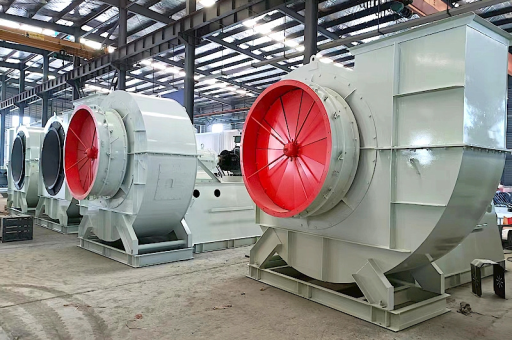
Here is a comprehensive, SEO-optimized article written in English. It is structured for high readability on Bing and Google, includes a table of contents, a Q&A section, and strictly focuses on the keywords provided. All technical terms and domain references have been adjusted to "fan" for consistency.
Article Title: Maximizing Industrial Efficiency: The Role of High Air Flow Forward Curved Boiler Fan in Industrial Dust Collector Systems with Advanced Antiwear Design
Table of Contents
- Introduction: The Critical Link Between Boiler Fans and Dust Collection
- Understanding the "High Air Flow Forward" Design
- What is a Forward Curved Fan?
- How Does High Air Flow Benefit Industrial Boilers?
- The Industrial Dust Collector Connection
- Why Dust Collection is Non-Negotiable for Boiler Systems
- Matching Fan Performance to Filter Requirements
- The Antiwear Advantage: Durability in Harsh Environments
- Common Wear Mechanisms in Industrial Fans
- Material Selection and Coatings for Extended Lifespan
- Synergy in System Design: Fan + Dust Collector + Antiwear
- Frequently Asked Questions (Q&A)
- Conclusion: Future-Proofing Your Industrial Airflow System
Article Content
Introduction: The Critical Link Between Boiler Fans and Dust Collection
In industrial environments, particularly those involving coal, biomass, or heavy fuel oil boilers, the management of exhaust gases is a primary concern. The equipment that often takes the brunt of this harsh duty is the High Air Flow Forward Boiler Fan. This is not just an ordinary fan; it is a precision-engineered component designed to push massive volumes of air through the boiler system and into the Industrial Dust Collector. Without this fan, the entire air pollution control strategy collapses.
However, the abrasive nature of fly ash and particulate matter creates a unique engineering challenge. This is where the third critical keyword comes into play: Antiwear. A fan without robust antiwear properties will fail prematurely, leading to costly downtime and emissions violations. This article explores the integrated technology of these three components—high airflow, forward curve design, dust collection, and antiwear engineering—to provide a holistic view of modern industrial ventilation.
Understanding the "High Air Flow Forward" Design
What is a Forward Curved Fan? The term "Forward" in "High Air Flow Forward Boiler Fan" refers to the orientation of the fan blades relative to the direction of rotation. In a forward-curved fan, the blades curve in the same direction as the wheel’s rotation. This specific design (often associated with a squirrel-cage blower) is renowned for its ability to generate high volumes of air at relatively low static pressures.
How Does High Air Flow Benefit Industrial Boilers? For a boiler, the primary requirement is combustion air and flue gas evacuation. A high air flow forward fan excels here because it delivers a steady, high-volume stream of air. This ensures:
- Complete Combustion: More oxygen means more efficient burning of fuel, reducing carbon waste.
- Effective Draft Control: It maintains the negative pressure in the furnace, preventing backdrafts that could injure workers.
- System Balance: It pushes the exhaust gases into the dust collector with enough velocity to prevent settling in the ducts.
Compared to backward-curved fans, the forward type is smaller, quieter, and cheaper for applications requiring massive airflow—making it the industry standard for boiler operations.
The Industrial Dust Collector Connection
Why Dust Collection is Non-Negotiable for Boiler Systems The dirty exhaust from the boiler contains high concentrations of particulate matter (PM), including heavy metals, ash, and soot. Regulations like the EPA’s NESHAP standards require strict filtration. The Industrial Dust Collector (often a baghouse, cartridge collector, or electrostatic precipitator) relies entirely on the boiler fan to transport the gas stream.
Matching Fan Performance to Filter Requirements The fan must be carefully selected. If the High Air Flow Forward Boiler Fan is too weak, the dust collector will not have enough pressure drop to force the air through the filter media. If it is too strong, it can blow holes through filter bags or re-entrain dust.
Here, the fan acts as the "heart" of the system:
- Suction Side: The fan pulls dirty air from the boiler.
- Discharge Side: It pushes the air into the collector.
- Clean Air Side: The fan maintains the velocity needed to exhaust clean air through the stack.
A precise match ensures the dust collector operates at its optimal air-to-cloth ratio, maximizing filter life and minimizing energy consumption.
The Antiwear Advantage: Durability in Harsh Environments
Common Wear Mechanisms in Industrial Fans The deadly enemy of a boiler fan is erosion. Fly ash from coal or biomass is highly abrasive. When the fan spins at high RPM, these particles impact the blades at high velocity. Common failure points include:
- Blade Leading Edges: The first point of contact for incoming particles.
- Fan Housing (Scroll): Where centrifugal force throws particles against the casing.
- Shaft Hubs: Where particulate can accumulate and cause imbalance.
Material Selection and Coatings for Extended Lifespan To combat this, the Antiwear design is not an option; it is a necessity. Modern High Air Flow Forward Boiler Fans utilize several antiwear strategies:
- Hardfacing & Lining: Applying a layer of tungsten carbide or chromium carbide overlay to the blade edges. This creates a "sacrificial" hard layer that resists abrasion.
- Base Material Selection: Using AR400 or AR500 steel (abrasion-resistant) for the impeller rather than standard mild steel.
- Ceramic Coatings: In extreme cases, ceramic tiles or epoxy-ceramic compounds are applied to the fan scroll. This creates a smooth surface that allows particles to slide rather than dig in.
- Blade Profile Modification: Forward curved blades can be designed with a thicker midsection to handle erosion evenly.
Result: A fan with proper antiwear features can have a lifespan 3 to 5 times longer than a standard fan in the same boiler application. This directly reduces maintenance costs and unplanned shutdowns.
Synergy in System Design: Fan + Dust Collector + Antiwear
The true mastery of industrial design lies in synergy. When a High Air Flow Forward Boiler Fan is paired with a properly sized Industrial Dust Collector and built with Antiwear technology, the system achieves:
- Lower Energy Costs: The fan operates at its peak efficiency curve.
- High Filtration Accuracy: Stable airflow prevents filter bypass.
- Extended Equipment Life: The fan resists erosion, and the collector handles a constant volume.
- Compliance: Meeting emission standards becomes predictable.
Engineers must conduct a thorough CFD (Computational Fluid Dynamics) analysis to ensure the inlet design to the fan minimizes turbulence, which exacerbates wear. VFDs (Variable Frequency Drives) are also highly recommended; they allow the fan speed to be adjusted dynamically, reducing wear at partial loads.
Frequently Asked Questions (Q&A)
Q1: Why is a "forward curved" fan specifically used for boilers rather than a "backward curved" fan? A: Forward curved fans are chosen for boilers primarily because they deliver very high airflow in a compact package. They are ideal for moving large volumes of air against the moderate resistance typical in a dust collection system. While backward curved fans are more efficient at high pressures, the forward design is cost-effective and quieter for the high-flow, mid-pressure range of industrial boilers.
Q2: Can antiwear technology completely stop fan erosion? A: No, antiwear technology cannot stop erosion entirely in a harsh environment like a coal boiler. However, it significantly reduces the rate of material loss. Using hardened steel (AR400) or ceramic linings can extend the fan’s service life by 300% to 500% compared to a standard carbon steel fan. It turns a maintenance issue from a monthly occurrence into a yearly one.
Q3: How do I know if my Industrial Dust Collector is receiving the correct airflow from the boiler fan? A: You should monitor the static pressure across the fan and the air velocity in the ducts. A pitot tube traverse is the most accurate method. If the pressure drop is too high, the fan may be undersized or the collector filters may be clogged. A properly matched High Air Flow Forward Boiler Fan should maintain a steady velocity between 3,500 and 4,500 feet per minute (FPM) in the main duct to keep particulate suspended.
Q4: What is the first sign of antiwear failure in an industrial fan? A: The first sign is usually imbalance. As erosion occurs unevenly on the blades, the rotor becomes unbalanced. This leads to excessive vibration, bearing wear, and noise. Regular vibration analysis (ISO 10816 standards) is the best way to catch antiwear degradation early before a catastrophic failure occurs.
Q5: Can a standard fan be retrofitted with antiwear features? A: Yes, often it can. While a new fan designed specifically for High Air Flow Forward Boiler Fan service is ideal, existing fans can be retrofitted. Common retrofits include applying epoxy-based antiwear coatings to the housing, welding hardfacing strips onto the blades, or even replacing the entire impeller with a heavier-duty, antiwear model.
Conclusion: Future-Proofing Your Industrial Airflow System
The industrial landscape demands reliability, efficiency, and environmental compliance. The High Air Flow Forward Boiler Fan remains the workhorse of the boiler house, but its success is entirely dependent on its integration with the Industrial Dust Collector and its ability to withstand wear.
Investing in a fan with superior Antiwear technology is not merely a capital expense; it is a long-term strategy for operational stability. Whether you are upgrading a single unit or designing a new biomass plant, prioritizing the synergy between these three elements—high airflow, forward dynamics, and abrasion resistance—will yield a system that runs cleaner, longer, and more profitably.
By understanding the mechanics of airflow and the materials science of wear, plant managers and engineers can make informed decisions that keep the production line moving and the air clean. Choose a fan that doesn't just move air, but moves it with intelligence and durability.





