
This article's table of contents introduction:
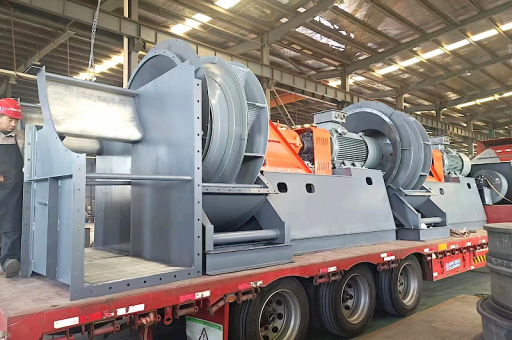
- The Fan as a Conveyor of Process Emissions (The Primary Risk)
- The Fan as a Source of Harmful Emissions (Direct Failure Modes)
- The Fan as an Exacerbator of Harmful Reactions (The "Chemical Reactor" Effect)
- Summary Table: Sources of Harmful Emissions from HPHT Fans
- How to Mitigate & Control These Emissions (Design & Operational Best Practices)
This is an excellent and highly specific technical question. The short answer is yes, a High Pressure High Temperature (HPHT) centrifugal fan can be a source of harmful air emissions, but the fan itself is usually not the generator of the pollution.
Instead, the fan acts as a conveyor, concentrator, and potential exacerbator of harmful emissions that originate from the process it serves.
Here is a detailed breakdown of how an HPHT centrifugal fan relates to harmful air emissions, categorized by the source of the harm.
The Fan as a Conveyor of Process Emissions (The Primary Risk)
This is the most common and dangerous scenario. The fan is designed to move hot, high-pressure gases from an industrial process. If that process generates harmful substances, the fan will move them.
- Examples:
- Cement Kilns: Moves hot exhaust containing dust, heavy metals (mercury, thallium), SOx, NOx, and dioxins.
- Waste Incineration: Moves flue gas containing acid gases (HCl, HF), heavy metals, dioxins/furans, and particulate matter.
- Chemical Processing: Moves process off-gases containing VOCs (Volatile Organic Compounds), H₂S (hydrogen sulfide), phosgene, or chlorine.
- Metallurgy (Smelters): Moves fume containing arsenic, lead, zinc oxides, and SO₂.
- Biomass/Gasification: Moves syngas containing tars, particulates, and CO.
Key Concept: The fan is a critical component of the air pollution control system (e.g., pulling gas through a scrubber, baghouse, or electrostatic precipitator). If the fan fails or leaks, these untreated, harmful emissions are released directly into the atmosphere.
The Fan as a Source of Harmful Emissions (Direct Failure Modes)
The fan itself can generate or release harmful emissions through mechanical or design failures, even if the process gas is clean.
-
A. Seal Leakage (The most common direct emission source)
- Problem: HPHT fans often use dynamic shaft seals (e.g., labyrinth, carbon rings, mechanical seals). Under high pressure and temperature, these seals can degrade, warp, or fail.
- Result: The process gas (which may be toxic, carcinogenic, or corrosive) leaks directly into the atmosphere at the shaft penetration point. On a large HPHT fan, this can be a significant fugitive emission source.
- Mitigation: Use of double mechanical seals with a barrier fluid system, or purge air/gas systems to prevent outward leakage.
-
B. Casing Degradation & Leaks
- Problem: Constant exposure to high temperature causes thermal expansion and creep. Corrosion or erosion from abrasive particles in the gas stream thins the fan casing and ductwork.
- Result: Pinhole leaks, stress cracks, or catastrophic rupture of the fan casing, releasing the high-pressure, hot, harmful gas directly. This is a major safety and emission hazard.
-
C. Material Shedding (Particulate Generation)
- Problem: High temperatures can cause the fan impeller and casing liners to oxidize (scaling) or corrode. The fan's own wear can generate metallic particulate.
- Result: Fine metal oxide particles are added to the gas stream. While the gas should be filtered downstream, these particles contribute to the overall particulate loading. If the fan is the final component (e.g., an ID fan before a stack), these particles are emitted.
The Fan as an Exacerbator of Harmful Reactions (The "Chemical Reactor" Effect)
The fan's environment (high temperature, high pressure, turbulence, contact with metal surfaces) can unintentionally create new harmful emissions.
-
A. Thermal Decomposition (Cracking)
- Problem: If the process gas contains VOCs or complex hydrocarbons, the high temperature and pressure inside the fan can cause thermal cracking. Large molecules break down into smaller, potentially more harmful ones (e.g., lighter VOCs, reactive olefins, or even CO).
- Result: The emission leaving the fan is chemically different and potentially more toxic than the gas entering it.
-
B. Catalytic Reactions (Metal Fuming)
- Problem: The fan impeller is often made of stainless steel or high-nickel alloys (Hastelloy, Inconel). These metals can act as catalysts at high temperatures.
- Result: They can catalyze unwanted reactions, such as the formation of NOx (from N₂ and O₂ in the air) or the conversion of SO₂ to SO₃ (which forms corrosive sulfuric acid mist). This is more common in oxygen-rich environments.
Summary Table: Sources of Harmful Emissions from HPHT Fans
| Source Category | Specific Mechanism | Harmful Emission Example | Fan's Role |
|---|---|---|---|
| Process Conveyance | Moving untreated flue gas from the process. | Dioxins, HCl, Heavy Metals, SO₂ | Passive conveyor. The source is the process upstream. |
| Mechanical Failure | Shaft seal failure. | Toxic gas leak (e.g., H₂S, Phosgene, CO) | Active source of fugitive emissions. |
| Mechanical Failure | Casing erosion/corrosion/rupture. | High-pressure release of process gases. | Active source of point source emissions (and safety hazard). |
| Material Shedding | Impeller/casing oxidation & wear. | Fine metallic particulate (Cr, Ni, Fe oxides). | Generator of primary particulate pollution. |
| Chemical Reaction | Thermal cracking of organics. | Lighter VOCs, CO, reactive hydrocarbons. | Reactor that changes the chemical composition of emissions. |
| Chemical Reaction | Metal-catalyzed reactions (e.g., NOx formation). | NOx, SO₃ mist. | Catalyst promoting new pollutant formation. |
How to Mitigate & Control These Emissions (Design & Operational Best Practices)
- Material Selection: Choose fan materials that resist corrosion, erosion, and oxidation at the specific gas composition and temperature (e.g., duplex stainless steels, high-nickel alloys, ceramic linings).
- Advanced Sealing: Use gas-purged labyrinth seals or double mechanical seals with a pressurized barrier fluid to ensure zero fugitive emissions at the shaft.
- Casing Integrity: Design for the maximum potential pressure and temperature (including upset conditions). Use expansion joints and robust supports. Perform regular NDT (Non-Destructive Testing) like ultrasonic thickness testing.
- Process Control: Ensure the fan is the final component in the pollution control train. Place scrubbers, baghouses, or ESPs upstream of the fan to treat the gas before it enters the fan.
- Temperature Control: If cracking is a concern, consider gas cooling before the fan (e.g., using a quench duct or heat exchanger).
- Monitoring: Install continuous emissions monitoring (CEMs) on the fan outlet. Also, install leak detection systems (e.g., gas sensors, acoustic sensors) around the fan casing and seals.
Final Conclusion: An HPHT centrifugal fan is not inherently a clean or dirty device. Its impact on harmful air emissions depends entirely on the process gas it handles and its own mechanical integrity. It is a high-risk asset where failure can lead to catastrophic and uncontrolled releases. Proper design, material selection, and maintenance are critical to preventing it from becoming a major source of harmful air pollution.





