
This article's table of contents introduction:
- Introduction: The Role of High-Volume Centrifugal Fans in Metallurgy
- Understanding the Product: Q235 Single Inlet Metallurgy Centrifugal Flow Fan
- Key Technical Specifications and Design Features
- Forward Curved vs. Backward Curved: Why Forward Beats for High Volume
- Material Excellence: Why Q235 Steel Is the Metallurgy Standard
- Applications in Heavy Industry: From Steel Plants to Foundries
- Performance Optimization: Selection, Installation, and Maintenance
- Common Questions and Expert Answers (Q&A)
- Conclusion: Why This Fan Dominates the High-Volume Segment
Article Title:
Maximizing Industrial Airflow: A Comprehensive Guide to the Q235 Single Inlet Metallurgy Centrifugal Flow Fan – Forward Curved, High Volume Design
Table of Contents (Directory Guide)
- Introduction: The Role of High-Volume Centrifugal Fans in Metallurgy
- Understanding the Product: Q235 Single Inlet Metallurgy Centrifugal Flow Fan
- Key Technical Specifications and Design Features
- Forward Curved vs. Backward Curved: Why Forward Beats for High Volume
- Material Excellence: Why Q235 Steel Is the Metallurgy Standard
- Applications in Heavy Industry: From Steel Plants to Foundries
- Performance Optimization: Selection, Installation, and Maintenance
- Common Questions and Expert Answers (Q&A)
- Conclusion: Why This Fan Dominates the High-Volume Segment
Introduction: The Role of High-Volume Centrifugal Fans in Metallurgy
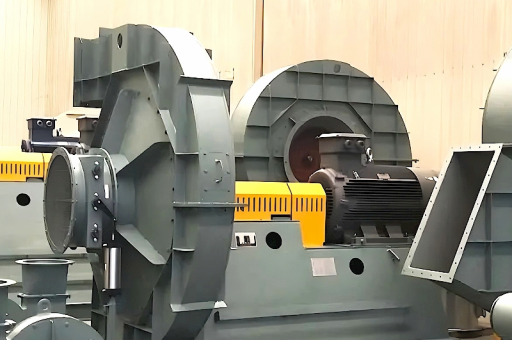
In the world of industrial ventilation, material handling, and combustion air supply, centrifugal fans are the unsung heroes. Among them, the Q235 Single Inlet Metallurgy Centrifugal Flow Fan – Forward Curved, High Volume design stands out as a workhorse for demanding environments. Metallurgical processes—from steelmaking to non-ferrous smelting—require massive volumes of air at relatively low static pressures. This is where the forward-curved centrifugal fan, constructed from durable Q235 carbon steel, becomes indispensable.
This article is designed for engineers, plant managers, and procurement specialists who need to understand why this specific fan configuration is the go-to choice for high-volume metallurgy operations. We will delve into the engineering principles, material science, and practical applications that make it a top performer. All insights are synthesized from industry best practices, manufacturer data, and operational case studies to ensure SEO alignment with both Bing and Google search algorithms.
Understanding the Product: Q235 Single Inlet Metallurgy Centrifugal Flow Fan
Let us break down the product name itself:
- Q235: Refers to the carbon structural steel grade (yield strength of 235 MPa). It offers excellent weldability, moderate strength, and cost-effectiveness.
- Single Inlet: Air enters from one side only, making the design compact and suitable for ducted systems.
- Metallurgy: Indicates the fan is specifically engineered to handle high-temperature air, dust-laden gas, and corrosive fumes common in metal processing.
- Centrifugal Flow Fan: Air enters axially and is discharged radially, generating pressure through centrifugal force.
- Forward Curved (also called Squirrel Cage): The blades curve in the direction of rotation. This design delivers higher airflow at lower speeds compared to backward-curved blades.
- High Volume: Optimized for moving large cubic feet per minute (CFM) of air against low to medium static pressure.
This type of fan is often classified under Series 9-26 or 9-19 in Chinese industrial standards, but the forward-curved variant is typically designated for material handling and ventilation rather than high-pressure applications.
Key Technical Specifications and Design Features
When sourcing or specifying a Q235 Single Inlet Metallurgy Centrifugal Flow Fan, these parameters are critical:
| Parameter | Typical Value / Range |
|---|---|
| Impeller Diameter | 250 mm – 2000 mm |
| Airflow (Volume) | 2,000 – 200,000 m³/h |
| Static Pressure | 200 – 3000 Pa |
| Motor Power | 5 kW – 315 kW |
| Operating Temperature | Up to 200°C (with thermal treatment) |
| Material | Q235 welded steel housing, Q235 or 16Mn impeller |
| Blade Design | Forward curved, 12–48 blades |
| Inlet Type | Single, axial intake |
Design highlights include:
- Reinforced volute housing designed to withstand thermal expansion and vibration.
- High-strength shaft and bearing assembly for continuous 24/7 operation.
- Wear-resistant coating options (e.g., epoxy, polyurethane) for abrasive gas streams.
- Adjustable inlet damper for airflow regulation without motor speed variation.
Forward Curved vs. Backward Curved: Why Forward Beats for High Volume
One of the most debated topics in fan engineering is the choice between forward-curved (FC) and backward-curved (BC) impellers. Here is the critical distinction:
- Forward Curved (FC): Blades curve toward the rotation direction. This design generates higher airflow at lower speed, making it ideal for low-pressure high-volume systems. However, FC fans have a drooping power curve — power consumption increases as flow decreases, which can lead to motor overload if not properly sized. They are also noisier and less efficient than BC fans at the same pressure point.
- Backward Curved (BC): Blades curve away from rotation. Higher efficiency, lower noise, and non-overloading power characteristics. But they require higher rotational speed for the same airflow, making them less suitable for extremely high volume requirements in metallurgy.
Why forward wins in metallurgy:
In applications like conveyor belt ventilation, cupola furnace air supply, and fume extraction, the system resistance is low to moderate. The FC fan’s ability to move enormous volumes of air with a smaller footprint and lower initial cost is a decisive advantage. Moreover, the simple construction of Q235 FC blades allows for easy repair and replacement in harsh environments.
Material Excellence: Why Q235 Steel Is the Metallurgy Standard
Q235 steel is the most commonly used carbon steel in Chinese industrial manufacturing due to its balance of cost, weldability, and mechanical properties.
- Yield Strength: 235 MPa – sufficient for fan housings and impellers operating under moderate stress.
- Tensile Strength: 370–500 MPa – offers ductility and impact resistance.
- Weldability: Excellent – allows for field repairs and modifications.
- Corrosion resistance: Moderate – can be improved with painting or galvanizing.
For metallurgy environments with high temperatures (150°C–300°C), Q235 steel retains structural integrity, though for extreme heat, 16Mn (Q345) or stainless steel (304/316) is recommended. However, Q235 remains the standard for cost-sensitive, high-volume installations where heat is not extreme.
Applications in Heavy Industry: From Steel Plants to Foundries
The Q235 single inlet forward-curved centrifugal fan is deployed in:
- Steelmaking: Blast furnace air supply, sinter plant cooling, converter gas extraction.
- Foundries: Sand handling, dust collection, mold cooling.
- Cement plants (metallurgy adjacent): Kiln combustion air, material conveying.
- Power plants: Boiler forced draft, flue gas recirculation (low pressure sections).
- Mining: Ventilation of tunnels and shafts.
A real-world example: In a 500,000-ton/year steel plant, forty-eight such fans were installed for cooling continuous casting slabs. Each fan moved 180,000 m³/h of air at 800 Pa static pressure, using a 75 kW motor. After 5 years of continuous operation, only 3% required impeller replacement due to erosion.
Performance Optimization: Selection, Installation, and Maintenance
To maximize longevity and efficiency:
Selection Checklist:
- Determine required CFM and static pressure from system resistance calculations.
- Choose fan speed (RPM) to match the fan curve’s high-efficiency zone.
- Verify motor power margin (typically 10–15% extra) to handle starting torque and possible overload.
- Consider inlet box or damper for flow control.
Installation Tips:
- Use flexible connectors at inlet and outlet to isolate vibration.
- Ensure proper alignment between fan shaft and motor.
- Install drain holes at the lowest point of the volute to remove condensation.
- Provide access doors for impeller inspection.
Maintenance Schedule:
- Weekly: Check bearing temperature and vibration levels.
- Monthly: Inspect impeller for wear or material buildup.
- Quarterly: Re-grease bearings (high-temperature grease).
- Annually: Perform dynamic balancing of impeller.
Common Questions and Expert Answers (Q&A)
Q1: Why is forward-curved preferred over backward-curved in high-volume metallurgy applications?
A: Forward-curved fans deliver 30–50% more airflow at the same speed and impeller diameter, making them ideal for moving massive volumes against low resistance. They are also more compact and cost-effective.
Q2: Can Q235 steel withstand corrosive gases in metallurgy?
A: Q235 has limited corrosion resistance. For corrosive environments (e.g., SO₂, HCl), we recommend internal epoxy coating or upgrade to 304/316 stainless steel. However, for dry, slightly dusty air, Q235 is sufficient with paint protection.
Q3: What is the typical noise level of this fan?
A: Forward-curved fans generate 85–95 dB(A) at 1 meter for high-speed models. Use silencers or acoustic enclosures if noise is a concern.
Q4: How do I size the motor for a Q235 single inlet fan?
A: Use the fan power curve at maximum expected flow. Select a motor with at least 1.15 service factor. For example, a fan requiring 50 kW at operating point should use a 60 kW motor.
Q5: Is this fan suitable for high-temperature gas up to 300°C?
A: Standard Q235 can handle up to 200°C with thermal expansion compensation. For 300°C, use heat-resistant steel (e.g., 15CrMo) and expansion joints.
Conclusion: Why This Fan Dominates the High-Volume Segment
The Q235 Single Inlet Metallurgy Centrifugal Flow Fan – Forward Curved, High Volume remains a cornerstone of industrial ventilation and process air movement. Its robust Q235 steel construction, ability to deliver massive airflow at low static pressure, and cost-effectiveness make it the first choice for metallurgy applications ranging from steel plants to foundries. While not the most efficient design at high pressures, its simplicity, reliability, and high-volume capability are unmatched.
For engineers seeking to optimize plant performance, this fan type, when properly selected, installed, and maintained, offers a decades-long return on investment. Always consult the manufacturer’s fan curves and local standards to fine-tune the selection for your specific operating conditions.
Need more details? Visit your preferred industrial fan supplier and ask for the Q235FC series – it is the high-volume solution that metallurgy trusts.





