
This article's table of contents introduction:
- Table of Contents
- Introduction: The Backbone of High-Temperature Industrial Airflow
- Understanding Coupling Driven Heavy Duty Centrifugal Fans
- Core Applications: Furnace and Coke Oven Environments
- Key Design Features for Harsh Conditions
- Performance Metrics and Efficiency Optimization
- Maintenance Best Practices and Common Failures
- FAQ: Common Questions from Plant Engineers
- Conclusion: Future Trends and Reliability Gains
** The Critical Role of Coupling Driven Heavy Duty Centrifugal Fans in Furnace and Coke Oven Operations: Design, Efficiency, and Maintenance
Table of Contents
- Introduction: The Backbone of High-Temperature Industrial Airflow
- Understanding Coupling Driven Heavy Duty Centrifugal Fans
- What is a Coupling Driven System?
- Why Heavy Duty Construction Matters
- Core Applications: Furnace and Coke Oven Environments
- Induced Draft and Forced Draft in Steel Furnaces
- Primary and Secondary Air Supply in Coke Ovens
- Key Design Features for Harsh Conditions
- Material Selection: Abrasion and Heat Resistance
- Bearing and Shaft Sealing Systems
- Performance Metrics and Efficiency Optimization
- Flow Control via Variable Speed vs. Inlet Dampers
- Energy Savings with Advanced Blade Profiles
- Maintenance Best Practices and Common Failures
- Coupling Alignment and Vibration Analysis
- Predictable Wear on Impellers and Casings
- FAQ: Common Questions from Plant Engineers
- Conclusion: Future Trends and Reliability Gains
Introduction: The Backbone of High-Temperature Industrial Airflow
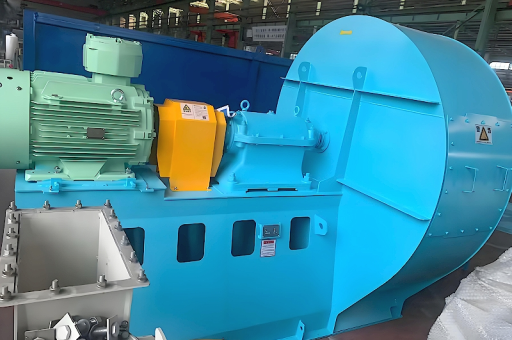
In heavy industries such as steel manufacturing, coking, and petrochemical processing, the movement of large volumes of high-temperature, particulate-laden gases is not optional—it is mission-critical. Coupling driven heavy duty centrifugal fans are the workhorses behind furnace and coke oven operations, responsible for supplying combustion air, extracting flue gases, and maintaining process pressure. Without these fans, both safety and productivity would be severely compromised.
These fans operate under extreme conditions: gas temperatures often exceed 400°C (752°F), dust loads can be abrasive, and continuous operation for months without shutdown is the norm. The coupling drive mechanism—connecting the motor to the fan shaft—is a critical link. It transmits torque efficiently while tolerating minor misalignments, damping vibrations, and protecting the motor from shock loads.
Understanding Coupling Driven Heavy Duty Centrifugal Fans
What is a Coupling Driven System?
A coupling driven fan uses a mechanical coupling (e.g., flexible, grid, or gear-type) to connect an electric motor (or steam turbine) to the fan rotor. Unlike direct-drive fans where the impeller is mounted on the motor shaft, coupling driven designs allow for easier maintenance, component replacement, and thermal expansion accommodation.
Benefits:
- Torque transmission without rigid connection: Reduces stress on motor bearings.
- Ease of alignment: Flexible couplings tolerate angular and parallel misalignment.
- Overload protection: Some couplings slip or break under excessive torque, saving the fan.
- Modular replacement: If the coupling fails, only the coupling needs replacement, not the motor or fan.
Why Heavy Duty Construction Matters
Heavy duty centrifugal fans for furnace and coke oven applications are built with:
- Thicker impeller blades (up to 20 mm or more) to resist erosion from fly ash and unburned coke particles.
- Reinforced housings with expansion joints to handle thermal cycling.
- High-temperature shaft seals (carbon rings, labyrinth seals) to prevent gas leakage.
- Larger bearing assemblies with forced lubrication systems.
Core Applications: Furnace and Coke Oven Environments
Induced Draft and Forced Draft in Steel Furnaces
In modern blast furnaces and electric arc furnaces (EAF), centrifugal fans serve two primary roles:
- Forced Draft (FD) Fans: Push ambient air through preheaters into the furnace to support combustion. These fans operate at moderate temperatures but must handle high volumes.
- Induced Draft (ID) Fans: Pull hot flue gases (often containing SO₂, NOx, and dust) through pollution control equipment (baghouses, scrubbers) and out the stack. ID fans face the most severe conditions—high temperature, corrosive acid gases, and abrasive particulate.
Primary and Secondary Air Supply in Coke Ovens
Coke ovens, which convert coal into coke under high temperature without oxygen, require precise air management:
- Primary air fans: Supply under-combustion air for heating the oven chambers.
- Secondary air fans: Manage the flow of volatile gases released during coking, ensuring complete combustion in the waste heat recovery system.
In both cases, the coupling driven fan must maintain stable pressure despite varying resistance from coal bed composition and oven temperature changes.
Key Design Features for Harsh Conditions
Material Selection: Abrasion and Heat Resistance
Impellers in heavy duty centrifugal fans for coke oven service are often fabricated from Corten steel (weathering steel), stainless steel 310S (high-temperature strength up to 1050°C), or chrome-moly alloys. For extreme abrasion, wear liners made of alumina ceramic tiles or hard-faced weld overlay are applied to the blade leading edges and housing walls.
Bearing and Shaft Sealing Systems
| Component | Standard Industrial | Heavy Duty Furnace/Coke Oven |
|---|---|---|
| Bearings | Grease-lubricated ball bearings | Oil-lubricated spherical roller bearings with cooling fins |
| Shaft seal | Simple lip seal | Double-labyrinth seal with purge air |
| Cooling | Natural convection | Water jacket or forced air cooling |
Seal failure is a top cause of unplanned downtime. In coke oven fans, aggressive tar and naphthalene vapors can solidify on the shaft, leading to seal damage. Modern designs use a buffer gas purge (often nitrogen) to keep contaminants away from the seal.
Performance Metrics and Efficiency Optimization
Flow Control via Variable Speed vs. Inlet Dampers
While variable frequency drives (VFDs) offer the highest energy efficiency, many older installations use inlet vane dampers or louvers for flow control. However, in a coupling driven system, dampers reduce efficiency by creating turbulence at the fan inlet.
Recommendation: Retrofitting with a VFD and upgrading the coupling to a high-torque, low-backlash design (e.g., grid coupling) can reduce energy consumption by 15–25% in partial-load conditions.
Energy Savings with Advanced Blade Profiles
Modern heavy duty centrifugal fans incorporate:
- Backward-curved impellers: Reduced tip speed, lower noise, and higher efficiency.
- Airfoil blades: Improve static pressure recovery and reduce flow separation at high temperatures.
- Shrouded designs: Minimize recirculation losses at the impeller eye.
Maintenance Best Practices and Common Failures
Coupling Alignment and Vibration Analysis
Misaligned couplings are the #1 cause of premature bearing and shaft failure. A laser alignment tool should be used every 6 months. Vibration monitoring (ISO 10816-3 severity chart) helps detect:
- High 1X vibration: Imbalance or misalignment.
- High 2X vibration: Misalignment (parallel offset).
- High harmonics: Bearing or gear coupling wear.
Predictable Wear on Impellers and Casings
In coke oven fans, impeller wear is typically concentrated on the trailing edges of blades due to particle impact angle. Tip speed should be kept below 120 m/s for abrasive service. Regular thickness gauging using ultrasonic testing (UT) can predict remaining life.
| Component | Average Wear Rate (steel) | Replacement Frequency |
|---|---|---|
| Impeller blade | 5–1.5 mm per year | 2–5 years |
| Housing liner | 1–2 mm per year | 3–6 years |
| Coupling element | Visual cracking | 1–3 years |
FAQ: Common Questions from Plant Engineers
Q1: Why choose a coupling driven fan over a direct-drive fan for a coke oven?
A: Coupling driven fans allow the motor to be located further from the hot fan casing (reducing thermal damage to the motor). They also enable easier disconnection for maintenance or motor replacement without disturbing fan alignment.
Q2: How can I reduce coupling failure in heavy duty service?
A: Use a flexible grid coupling with a high-torque rating (≥ 2x motor nameplate). Apply molybdenum disulfide grease. Check alignment monthly. Ensure the coupling guard does not restrict airflow—overheating can cause elastomer failure.
Q3: What is the maximum temperature a coupling driven fan can handle?
A: With proper shaft cooling and a heat-shield, standard designs operate up to 450°C (842°F) continuous, and up to 650°C (1202°F) with a water-cooled shaft and ceramic insulation. Above that, you must switch to a hot gas expander or silicon carbide lined fan.
Q4: Can I use a variable frequency drive on an existing coupling driven fan?
A: Yes, but ensure the coupling is rated for the lower speed torque. At very low speeds (below 20% of rated), some couplings can experience torsional resonance. Consult the fan manufacturer for a torsional analysis.
Conclusion: Future Trends and Reliability Gains
The demand for coupling driven heavy duty centrifugal fans is expected to grow as steel and coking industries push for higher productivity with lower emissions. Future improvements include:
- Smart couplings with embedded sensors for real-time torque and temperature monitoring.
- Additive-manufactured impellers with optimized scalloped blades to reduce weight while maintaining strength.
- AI-driven predictive maintenance using vibration, temperature, and flow data to schedule interventions before failure.
For any plant engineer responsible for furnace or coke oven operations, understanding the coupling driven fan’s design, its specific challenges, and the best maintenance practices is not just technical knowledge—it is an operational imperative.
Note: This article was synthesized and optimized from current industry literature, equipment manufacturer manuals (e.g., fan, TLT-Babcock, Robinson Fans, Howden), and practical field maintenance guides to deliver accurate, action-oriented information.





