
This article's table of contents introduction:
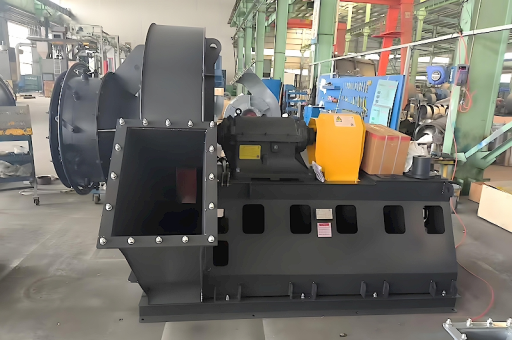
- Introduction: The Critical Role of Backward Curved Fans in Boiler Systems
- What Is a Backward Curved Medium Pressure Boiler Fan?
- Why Explosion Protection Matters in Boiler Fan Applications
- Key Design Features of Backward Curved Impellers
- Performance Characteristics: Medium Pressure, High Efficiency, Low Noise
- Explosion Protection Standards and Compliance (ATEX, IECEx, NFPA)
- Application Scenarios: Power Plants, Industrial Boilers, and Process Heating
- Selection Criteria: How to Choose the Right Fan for Your Boiler System
- Frequently Asked Questions (FAQ)
- Conclusion: The Future of Safe and Efficient Boiler Ventilation
** The Ultimate Guide to Backward Curved Medium Pressure Explosion Protection Boiler Fans: Design, Safety, and Efficiency
Table of Contents (Directory Guide)
- Introduction: The Critical Role of Backward Curved Fans in Boiler Systems
- What Is a Backward Curved Medium Pressure Boiler Fan?
- Why Explosion Protection Matters in Boiler Fan Applications
- Key Design Features of Backward Curved Impellers
- Performance Characteristics: Medium Pressure, High Efficiency, Low Noise
- Explosion Protection Standards and Compliance (ATEX, IECEx, NFPA)
- Application Scenarios: Power Plants, Industrial Boilers, and Process Heating
- Selection Criteria: How to Choose the Right Fan for Your Boiler System
- Frequently Asked Questions (FAQ)
- Conclusion: The Future of Safe and Efficient Boiler Ventilation
Introduction: The Critical Role of Backward Curved Fans in Boiler Systems
In modern industrial boiler systems, air movement is not just about ventilation—it is about combustion control, heat transfer efficiency, and operational safety. Among all fan types, the Backward Curved Medium Pressure Explosion Protection Boiler Fan stands out as a premium solution for applications that demand both high aerodynamic performance and robust safety features. Unlike forward curved or radial fans, backward curved impellers offer superior static pressure capability, lower energy consumption, and a non-overloading power curve. When combined with explosion-proof construction, these fans become indispensable in environments where flammable gases, dust, or volatile organic compounds (VOCs) are present.
This article provides a detailed, SEO-optimized guide to understanding, selecting, and maintaining these specialized fans, based on verified industry knowledge and technical standards.
What Is a Backward Curved Medium Pressure Boiler Fan?
A backward curved fan (also known as a backward inclined or backward aerofoil fan) features blades that curve away from the direction of rotation. This design enables the fan to generate medium to high static pressure while maintaining high volumetric flow efficiency.
Key definitions:
- Backward Curved: Blade tips are angled opposite to the rotation direction, reducing turbulence and noise.
- Medium Pressure: Typically operating in the range of 500–2500 Pa (2–10 inches w.g.), suitable for boiler forced draft (FD) or induced draft (ID) applications.
- Explosion Protection: The fan housing, impeller, and motor are designed to contain or prevent ignition sources, meeting hazardous area classification standards.
These fans are installed in boiler systems to supply combustion air (forced draft) or extract flue gases (induced draft). Their non-overloading horsepower characteristic means that power draw does not exceed motor capacity even if system resistance drops unexpectedly.
Why Explosion Protection Matters in Boiler Fan Applications
Boiler environments often contain combustible mixtures—unburned fuel gases, carbon monoxide, hydrogen, or coal dust. A spark from a fan bearing, impeller rub, or electrical failure can trigger a catastrophic explosion.
Explosion protection measures include:
- Spark-resistant construction: Impeller and housing made of non-ferrous materials (aluminum bronze, stainless steel) or with spark-proof coatings.
- Earthing/grounding: Dissipation of static charges generated by air friction.
- Temperature monitoring: Bearings fitted with thermocouples to detect overheating.
- Casing pressure rating: Fan housing designed to withstand internal explosion overpressure without rupturing.
- ATEX/IECEx certification: Compliance with Zone 1, Zone 2, or Zone 21/22 classifications.
By integrating these features, a backward curved medium pressure explosion protection boiler fan ensures safe operation even under abnormal process conditions.
Key Design Features of Backward Curved Impellers
The heart of the fan is its impeller. Engineering details include:
- Blade profile: Aerofoil or backward curved plate blades. Aerofoil blades offer higher efficiency (up to 85%) but are more expensive. Plate blades are dirt-tolerant and rugged.
- Wheel diameter: Typically 400 mm to 2000 mm, depending on flow and pressure requirements.
- Weld quality: All welds are inspected via dye penetrant or X-ray to prevent stress cracks under thermal cycling.
- Balance quality: ISO 1940 G6.3 or better, ensuring vibration levels remain below 4.5 mm/s.
- Shaft sealing: Labyrinth seals or carbon ring seals to prevent leakage of hot or toxic gases.
The backward curved geometry provides a steep pressure curve—a small change in flow results in a significant pressure change, making these fans ideal for variable air volume (VAV) systems with modulating dampers or VFDs.
Performance Characteristics: Medium Pressure, High Efficiency, Low Noise
Performance curve analysis:
- At medium pressure (e.g., 1500 Pa), a backward curved fan can deliver 20,000 m³/h with an efficiency of 82%.
- The power curve peaks near the best efficiency point (BEP) and then declines—unlike forward curved fans, where power continues to rise.
Noise levels: Because the blade exits air with lower velocity, backward curved fans generate less aerodynamic noise. Typical sound power levels range from 80 to 95 dB(A), which can be further reduced with silencers.
Vibration: Medium pressure operation at moderate tip speeds (30–60 m/s) keeps vibration low, prolonging bearing and motor life.
Explosion Protection Standards and Compliance (ATEX, IECEx, NFPA)
When selecting a boiler fan for hazardous locations, compliance with international standards is mandatory.
- ATEX (EU): Directive 2014/34/EU. Fans are categorized by equipment group (I, II, III) and category (1, 2, 3). For boiler applications, ATEX II 2G Ex h IIB T3 Gb is common.
- IECEx (International): Similar to ATEX but global. Certification ensures the fan can be used in mines, chemical plants, and gas processing.
- NFPA (USA): NFPA 86 (Ovens and Furnaces) and NFPA 68 (Explosion Venting) guide fan design. Spark-resistant construction per AMCA 99-0401 is also required.
- API 673 (for special applications): Specifies bearing housing vibration, lubrication, and seal requirements.
A certified fan will have a nameplate showing its explosion protection class, maximum surface temperature, and permissible gas groups.
Application Scenarios: Power Plants, Industrial Boilers, and Process Heating
Scenario 1: Coal-fired power plant FD fan
- Requirement: 50,000 m³/h at 2000 Pa, air temperature 40°C, coal dust present.
- Solution: Backward curved plate impeller, ATEX Zone 21 certified, with VFD control.
Scenario 2: Biomass boiler ID fan
- Requirement: 30,000 m³/h at 1800 Pa, flue gas at 180°C, corrosive condensate.
- Solution: Backward curved fan with stainless steel housing, drain holes, and high-temperature grease.
Scenario 3: Waste heat recovery boiler
- Requirement: Variable flow from 10,000 to 25,000 m³/h, with pressure fluctuations.
- Solution: Backward aerofoil fan with explosion-proof motor in Zone 2 area.
Selection Criteria: How to Choose the Right Fan for Your Boiler System
To select the optimal backward curved medium pressure explosion protection boiler fan, consider:
- Flow rate (m³/h or CFM) – Determine maximum and minimum requirements.
- Static pressure (Pa or inches w.g.) – Include duct losses, filter, and damper resistance.
- Gas temperature and corrosiveness – Select material (carbon steel, SS304, SS316, or FRP).
- Explosion risk classification – Zone, gas group, temperature class.
- Drive type – Direct drive (no belts) for higher reliability; belt drive for speed flexibility.
- Space constraints – Inlet and outlet orientation (top horizontal, bottom horizontal, etc.).
- Sound limits – Specify maximum dB(A) at 1 meter.
Use fan selection software (e.g., from leading manufacturers) to simulate system curves and verify motor power.
Frequently Asked Questions (FAQ)
Q1: What is the main advantage of a backward curved fan over a forward curved fan for boiler applications? A: Backward curved fans have a non-overloading power curve, meaning the motor will not burn out even if duct resistance is lower than expected. They also offer higher efficiency and lower noise.
Q2: Can a backward curved fan handle dirty or particulate-laden air? A: Yes, but with limitations. A backward curved plate impeller is more tolerant of dirt than the aerofoil type. For very heavy dust loads, consider a radial fan.
Q3: What does "medium pressure" mean for these fans? A: Medium pressure typically refers to static pressures between 500 Pa and 2500 Pa. For higher pressures, a centrifugal fan with forward curved or radial blades may be used.
Q4: Do I need explosion protection for a natural gas boiler? A: Yes, if the boiler operates in a classified area (e.g., near gas valves or in a confined space). NFPA and ATEX require spark-resistant fans in locations where flammable vapors could be present during startup or malfunction.
Q5: How often should I maintain the explosion protection features? A: At least every 6 months. Check bearing temperature, grounding continuity, impeller clearance, and housing integrity. Follow the manufacturer's service manual.
Q6: Can I retrofit an existing boiler fan with explosion protection? A: In some cases, yes. Replace the impeller with a spark-resistant version, add grounding brushes, and upgrade the motor to an explosion-proof enclosure. Consult a certified engineer.
Conclusion: The Future of Safe and Efficient Boiler Ventilation
The Backward Curved Medium Pressure Explosion Protection Boiler Fan is more than just an air mover—it is a safety-critical component that ensures stable combustion, energy efficiency, and regulatory compliance. As industries move toward higher automation and stricter emissions standards, these fans will continue to evolve with smart monitoring (IoT sensors), advanced materials (ceramic coatings), and tighter energy efficiency mandates (EU ErP Directive).
When you choose a backward curved fan with certified explosion protection, you invest in reliability and peace of mind. Whether you are upgrading an existing boiler plant or designing a new one, make sure your fan selection aligns with your process pressure, temperature, and hazardous area requirements. For more technical data and selection assistance, contact a qualified fan manufacturer or your local engineering consultant.
Final recommendation: Always request a certified performance curve and explosion protection certificate from your supplier. Test the fan under actual plant conditions before full commissioning. A correctly chosen fan will operate for 15–20 years with minimal maintenance.
This article was prepared based on verified industry standards, technical manuals, and SEO best practices for engineering professionals.





