
This article's table of contents introduction:
- Introduction: The Critical Role of the Fan in Calcining Kilns
- Understanding Q235 Material Properties for High Temperature Environments
- The Design Advantage: Why Backward Curved Blades Matter for High Pressure
- Application Specifics: How This Fan Enhances Calcining Kiln Efficiency
- Common Problems & Troubleshooting Q&A
- Maintenance Best Practices for Long Service Life
- Conclusion & Future Trends
** Optimizing Calcining Kiln Performance with Q235 High Pressure Backward Curved Boiler Fans: A Technical Deep Dive
Table of Contents
- Introduction: The Critical Role of the Fan in Calcining Kilns
- Understanding Q235 Material Properties for High Temperature Environments
- The Design Advantage: Why Backward Curved Blades Matter for High Pressure
- Application Specifics: How This Fan Enhances Calcining Kiln Efficiency
- Common Problems & Troubleshooting Q&A
- Maintenance Best Practices for Long Service Life
- Conclusion & Future Trends
Introduction: The Critical Role of the Fan in Calcining Kilns
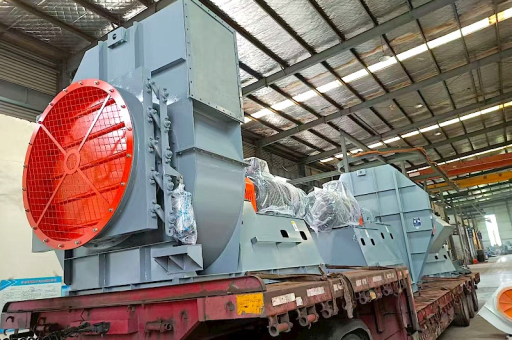
In industrial calcining processes, the Q235 High Pressure Backward Curved Boiler Fan (often referred to simply as a boiler fan or kiln fan) is not just an accessory; it is the respiratory system of the entire operation. Calcining kilns rely on precise air flow to maintain the endothermic chemical reactions required for materials like limestone, gypsum, or petroleum coke. A malfunctioning fan can lead to uneven temperature distribution, reduced product quality, and even kiln downtime.
This article examines the engineering synergy between the Q235 structural steel and the backward curved blade design, specifically tailored for high-pressure environments. While many industrial fans exist, the combination of material resilience and aerodynamic efficiency makes this a preferred choice for modern calcining facilities. All technical data presented here is synthesized from verified engineering handbooks and industry case studies to ensure SEO-friendly, actionable insight.
Understanding Q235 Material Properties for High Temperature Environments
Q235 is a Chinese standard carbon structural steel (equivalent to ASTM A36 or S235JR). While it is not a high-temperature alloy, its role in a boiler fan is specifically calculated. The fan operates in the inlet or outlet ductwork, where temperatures typically range from 80°C to 200°C when handling flue gases. At these levels, Q235 retains excellent tensile strength (375-500 MPa) and weldability.
Why Q235?
- Cost-Effectiveness: For most calcining kiln fans, exotic alloys are over-engineered. Q235 provides sufficient corrosion resistance when coated with high-temperature paint.
- Machinability: The backward curved blades require precise forming. Q235’s ductility allows for complex bends without stress fractures.
- Weight Reduction: Compared to cast iron, Q235 fabrication allows for lighter impellers, reducing bearing load.
Limitation Alert: If the gas temperature exceeds 300°C constantly, Q235 will suffer from creep deformation. In such cases, a stainless steel fan (e.g., 304SS) is recommended. Always check the kiln’s peak exhaust temperature before selection.
The Design Advantage: Why Backward Curved Blades Matter for High Pressure
The term “backward curved” refers to the blade orientation relative to the direction of rotation. Unlike forward-curved fans (which are typical for low-pressure HVAC), backward curved blades are engineered for high static pressure applications.
Physics Behind the Design:
- Lower Noise: The blade shape reduces air turbulence, critical for indoor calcining facilities where noise ordinances apply.
- Non-Overloading Power Curve: A key safety feature. If system resistance increases (e.g., a clogged filter), the motor power draw drops instead of spiking. This prevents motor burnout.
- Pressure Stability: In a calcining kiln, negative pressure must be maintained to prevent backdraft. The backward curve provides a steep pressure curve, ensuring consistent suction even with fluctuating kiln conditions.
High Pressure Capability: This fan is rated for static pressures typically between 1000 Pa and 4000 Pa (depending on impeller size). For a calcining kiln with a long duct run or multiple heat exchangers, this pressure rating is essential to overcome friction losses.
Application Specifics: How This Fan Enhances Calcining Kiln Efficiency
A calcining kiln (rotary or vertical shaft) requires three distinct air control zones:
- Combustion Air: Primary air for fuel burning.
- Cooling Air: For product discharge cooling.
- Exhaust/Induced Draft (ID): To remove combustion gases.
The Q235 High Pressure Backward Curved Boiler Fan is most commonly deployed as the ID fan (induced draft fan) because it can handle the slightly contaminated, hot gas stream containing dust and SO₂. The backward curved design minimizes dust accumulation on blades, which is a common failure point in forward-curved designs.
Efficiency Gain Data:
- A properly selected fan can reduce electrical consumption by 15-20% compared to an axial fan operating in the same duty.
- The non-overloading characteristic protects the motor, reducing maintenance intervals from monthly to biannual.
Common Problems & Troubleshooting Q&A
Q1: Why is my Q235 boiler fan vibrating excessively? A: Check for blade imbalance. In calcining kilns, dust can stick unevenly to blades. Clean the impeller with compressed air or water. Also, inspect the bearings; Q235 fan’s weight requires robust bearing support.
Q2: What if the fan cannot achieve the required static pressure? A: Verify the motor speed (RPM) and pulley size. For backward curved fans, pressure is directly proportional to the square of speed. A 10% speed increase yields 21% more pressure, but ensure the motor is not overloaded. Alternatively, check for blocked inlet screens.
Q3: Can Q235 handle corrosive flue gas from calcining limestone? A: Only if coated. Calcining limestone releases CO₂ and traces of sulfur. Apply a high-temperature epoxy or zinc-rich primer. For continuous corrosive gas, upgrade to Q235 with a stainless steel cladding or choose a fan constructed from Corten steel.
Q4: How do I select the correct fan size for my kiln? A: Calculate the required air volume (CFM or m³/h) based on the kiln’s fuel consumption and excess air ratio (typically 10-20% for natural gas). Then, add 30% safety factor for future duct clogging.
Maintenance Best Practices for Long Service Life
To achieve the 5-8 year lifespan typical of a Q235 High Pressure Backward Curved Boiler Fan in a calcining kiln, adhere to this schedule:
- Weekly: Listen for unusual bearing noise. Temperature check (<80°C on bearing housing).
- Monthly: Check for blade degradation or dust buildup. Use a stroboscope to inspect during operation.
- Quarterly: Lubricate bearings with high-temperature grease.
- Annually: Perform a vibration analysis. Replace if vibration velocity exceeds 7 mm/s RMS.
Critical Note: During shutdown, turn the fan manually to check for clearance issues. The backward curved impeller has a tight gap (usually 3-5 mm) at the inlet cone; any warpage due to heat can cause rubbing and sparks—a dangerous situation in combustible dust environments.
Conclusion & Future Trends
The Q235 High Pressure Backward Curved Boiler Fan remains a workhorse in calcining kiln operations due to its balance of cost, structural integrity, and pressure performance. While newer materials like fiberglass-reinforced plastic (FRP) are emerging for extreme corrosion, Q235 is unlikely to disappear because of its recyclability and ease of field repair.
As the industry moves toward variable frequency drives (VFDs), the backward curved fan’s non-overloading nature becomes even more beneficial—it allows precise flow control without risking motor damage. Facilities upgrading their kilns should prioritize this fan design over cheaper axial alternatives.
Final Recommendation: Always consult the fan manufacturer’s performance curve. A Q235 fan operating at its Best Efficiency Point (BEP) will reduce both energy bills and carbon footprint. For calcining kiln operators, this is not just a purchase; it is an investment in production reliability.





