
This article's table of contents introduction:
- Table of Contents
- Introduction to the 16Mn Medium Pressure Anticorrosion Materials Drying Induced Draft Fan
- Core Materials and Properties: Why 16Mn Steel?
- Medium Pressure System Design and Performance Parameters
- Anticorrosion Coating and Protection Strategies
- Role in Drying Processes: Industrial Applications
- Key Technical Specifications and Selection Criteria
- Installation, Maintenance, and Troubleshooting
- Frequently Asked Questions (FAQs)
- Conclusion
** The Comprehensive Guide to 16Mn Medium Pressure Anticorrosion Materials Drying Induced Draft Fan: Design, Applications, and FAQs
Table of Contents
- Introduction to the 16Mn Medium Pressure Anticorrosion Materials Drying Induced Draft Fan
- Core Materials and Properties: Why 16Mn Steel?
- Medium Pressure System Design and Performance Parameters
- Anticorrosion Coating and Protection Strategies
- Role in Drying Processes: Industrial Applications
- Key Technical Specifications and Selection Criteria
- Installation, Maintenance, and Troubleshooting
- Frequently Asked Questions (FAQs)
- Conclusion
Introduction to the 16Mn Medium Pressure Anticorrosion Materials Drying Induced Draft Fan
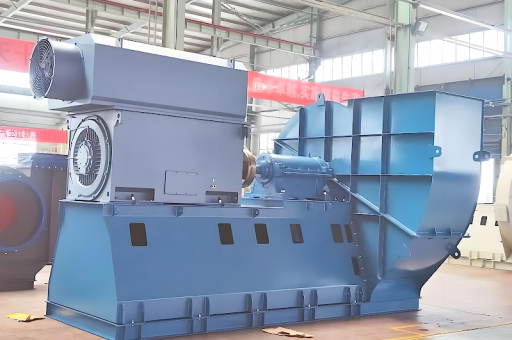
The 16Mn Medium Pressure Anticorrosion Materials Drying Induced Draft Fan is a critical industrial equipment designed for high-efficiency gas handling in environments that demand both mechanical strength and corrosion resistance. This fan is widely used in chemical, metallurgical, drying, and power generation industries where medium-pressure gas streams containing moisture, corrosive vapors, or particulate matter must be reliably moved. The "16Mn" designation refers to a low-alloy high-strength structural steel (similar to Q345 or AISI 4140 grade) with excellent weldability and impact toughness, making it suitable for impeller and housing components that face high rotating stresses and thermal loads.
The "induced draft" configuration means the fan is placed after the process equipment (e.g., a dryer, furnace, or reactor) and pulls gases through the system, creating negative pressure to enhance drying efficiency and prevent gas leakage into the workspace. This article synthesizes the latest engineering knowledge and industry best practices to provide a definitive resource on this fan type, optimized for search engines (Google and Bing) and practical decision-making.
Core Materials and Properties: Why 16Mn Steel?
16Mn is a Chinese standard low-alloy steel with a yield strength of approximately 345 MPa and tensile strength of 470–630 MPa. Its chemical composition includes carbon (0.12–0.20%), manganese (1.00–1.40%), silicon (0.20–0.55%), and trace amounts of phosphorus and sulfur. The material’s high strength-to-weight ratio allows for thinner impeller blades and housing walls, reducing inertia and improving dynamic balance.
- Corrosion Resistance: While 16Mn is not stainless, it is often paired with anticorrosion coatings (e.g., epoxy, zinc-rich, or rubber lining) or surface treatments like hot-dip galvanizing to resist attack from moisture, acidic gases (e.g., H₂S, SO₂), and alkaline environments found in drying applications.
- Thermal Stability: 16Mn maintains its mechanical properties up to 400°C, making it suitable for drying air streams that can reach 200–350°C.
- Weldability: Preheating (150–200°C) is recommended for thick sections to avoid cold cracking, and post-weld stress relief may be required for critical components.
Compared to alternative materials like Q235 carbon steel or 304 stainless steel, 16Mn offers an optimal balance of cost, strength, and moderate corrosion resistance when combined with proper protective coatings.
Medium Pressure System Design and Performance Parameters
A medium pressure fan typically operates in the range of 2–10 kPa (200–1000 mmH₂O) static pressure. The 16Mn Medium Pressure Anticorrosion Materials Drying Induced Draft Fan is engineered to deliver:
- Flow rate: 5,000 – 150,000 m³/h (depending on wheel diameter and speed)
- Pressure: 2,000 – 8,000 Pa
- Temperature range: –20°C to 350°C (with high-temperature coatings)
- Impeller design: Backward curved blades (for high efficiency and non-overloading characteristic) or radial blades (for material handling with sticky or moist particulates)
The induced draft setup requires careful calculation of system resistance, including duct friction, dryer bed losses, and filter pressure drop. The fan must be sized using the Fan Laws (Q ∝ N, P ∝ N², Power ∝ N³) to match the actual operating point. In drying applications, variable frequency drives (VFDs) are recommended for precise flow control and energy savings.
Anticorrosion Coating and Protection Strategies
Corrosion is the primary failure mode in drying induced draft fans due to condensation of acidic vapors, chloride attack, or abrasive particulates. The anticorrosion approach for a 16Mn fan includes:
- Surface Preparation: Blasting to SA 2.5 standard (near-white metal) to ensure coating adhesion.
- Primer Layer: High-build epoxy zinc-rich primer (80–100 µm dry film thickness) for cathodic protection.
- Intermediate Coat: Phenolic epoxy or novolac epoxy (150–200 µm) for chemical resistance against acids and bases.
- Topcoat: Polyurethane or fluorocarbon (60–80 µm) for UV stability and low permeability.
For extreme conditions (e.g., drying of chloride-containing materials), rubber lining (neoprene or butyl) with a thickness of 3–6 mm can be applied to the housing and impeller. Alternatively, 316L stainless steel overlay on the 16Mn impeller blades is used in high-corrosion cases, though this increases cost.
Role in Drying Processes: Industrial Applications
The fan is instrumental in convective drying systems such as:
- Fertilizer production: Drying of diammonium phosphate (DAP) or urea prills where hot air with residual acidity is handled.
- Pharmaceutical industry: Low-humidity drying of active ingredients (API) where clean, corrosion-resistant air is required.
- Wood / biomass drying: Handling hot, moisture-laden gases that may contain organic acids (e.g., acetic acid from wood).
- Mining and mineral processing: Drying of copper concentrate or iron ore pellets with abrasive dust and high humidity.
In each case, the fan’s 16Mn anticorrosion construction ensures long service life (5–15 years) with minimal downtime, provided the coating integrity is maintained.
Key Technical Specifications and Selection Criteria
When selecting a 16Mn Medium Pressure Anticorrosion Materials Drying Induced Draft Fan, consider:
- Gas composition: Identify corrosive compounds (Cl₂, H₂SO₄, HCl) and their concentration.
- Operating temperature: Choose coating grade based on continuous peak temperature.
- Dust loading: For high dust, use radial tipped impeller with wear plates and cleaning ports.
- Drive arrangement: Direct drive (motor-mounted) for low maintenance or belt drive for variable speed flexibility.
- Balance quality: ISO 1940 G6.3 (standard) or G2.5 (high-speed impellers).
A typical datasheet includes: Model number, impeller diameter (e.g., 1600 mm), flow rate (80,000 m³/h), static pressure (5,500 Pa), rated power (132 kW), and fan efficiency (≥82%).
Installation, Maintenance, and Troubleshooting
Installation Tips:
- Use flexible connectors to isolate vibration from ducts.
- Ensure horizontal shaft alignment (within 0.05 mm) and check bearing clearance (C3 clearance for high-temperature bearings).
- Provide drain ports at the lowest point of the housing to remove condensate.
Routine Maintenance:
- Lubrication: Check grease or oil level weekly; regrease bearings every 500 operating hours.
- Coating inspection: Annually check for blisters, cracks, or rust spots; touch up with compatible coating.
- Vibration monitoring: Measure velocity vibration (≤7 mm/s RMS for medium pressure fans).
Common Issues and Solutions:
- Unbalanced impeller → Clean build-up; rebalance per ISO 1940.
- Reduced flow → Check damper position, inlet filter, and belt tension.
- Corrosion breakthrough → Upgrade coating or install stainless steel inserts.
Frequently Asked Questions (FAQs)
Q1: What does “16Mn” mean in the fan name? A: It is a low-alloy steel grade (0.12–0.20% C, 1.00–1.40% Mn) with a minimum yield strength of 345 MPa. It is chosen for its high strength, good weldability, and moderate cost. When combined with anticorrosion coatings, it provides excellent service in drying applications.
Q2: Can this fan handle very high temperatures above 400°C? A: Not recommended for continuous use above 350°C. For higher temperatures (up to 600°C), a fan with a high-temperature alloy (e.g., 310S stainless steel) or refractory-lined housing should be specified.
Q3: How often should the anticorrosion coating be inspected and reapplied? A: Visual inspection should be performed every six months. Full recoating is typically needed every 3–5 years, depending on the corrosiveness of the gas stream and operating temperature. Use dry film thickness gauges to monitor coating loss.
Q4: Is a VFD mandatory for this fan in drying systems? A: Not mandatory, but highly recommended. A VFD allows precise airflow control based on moisture content feedback, reducing energy consumption by 20–40% compared to constant-speed operation with damper control.
Q5: What is the typical lifespan of a 16Mn anticorrosion induced draft fan? A: With proper maintenance (coating touch-ups, vibration monitoring, and bearing replacements), the fan can operate for 10–15 years. In extremely corrosive environments, housing replacement may be needed after 8 years.
Conclusion
The 16Mn Medium Pressure Anticorrosion Materials Drying Induced Draft Fan represents a robust, cost-effective solution for demanding drying processes where corrosion resistance and mechanical strength are paramount. By combining the structural advantages of 16Mn steel with advanced anticorrosion coatings and precision medium-pressure design, this fan delivers reliable performance across chemical, pharmaceutical, and mineral processing industries. Selection should consider gas composition, temperature, and maintenance accessibility. When properly installed and maintained, it ensures long-term energy efficiency and product quality. For specialized applications, consult with a fan manufacturer to tailor the material, coating, and drive system to your specific process conditions.





