
This article's table of contents introduction:
- The Core Application: Flue Gas Centrifugal Fan
- The Drive System: Carbon Steel Coupling
- The "Anti-fraying" Requirement
- The "Heat Dissipation" Requirement
- Summary: The Recommended Configuration
- Is there a specific problem you are trying to solve?
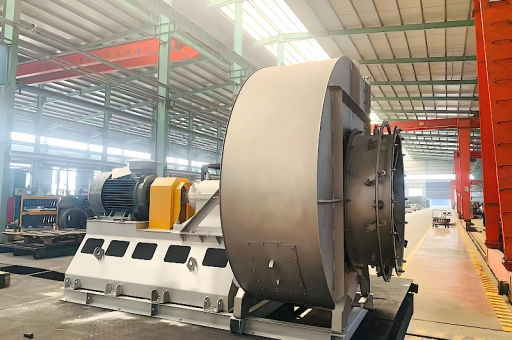
It sounds like you are describing a Centrifugal Fan used for Flue Gas applications, which is driven by a motor connected via a Carbon Steel Coupling, and you have specific requirements for Anti-fraying and Heat Dissipation.
Here is a breakdown of how these components work together, along with considerations for the "Anti-fraying" (likely related to belt drives or shaft packing/seals) and "Heat Dissipation" (cooling).
The Core Application: Flue Gas Centrifugal Fan
- Purpose: Moves hot, corrosive, and particulate-laden exhaust gases from boilers, furnaces, or kilns to the atmosphere or pollution control systems (scrubbers, baghouses).
- Challenge: High temperatures (250°F to 600°F+), corrosive acids (sulfuric, hydrochloric if condensing), and abrasive fly ash.
- Design: Typically a radial or paddle wheel design (not airfoil) to handle particulates.
The Drive System: Carbon Steel Coupling
- Meaning: A rigid or flexible coupling made of carbon steel used to connect the motor shaft to the fan shaft.
- Why Carbon Steel? It is strong, cost-effective, and can handle high torque. For high-temperature flue gas fans, it is common to use a spacer coupling (a long distance piece) to keep the motor away from the hot fan shaft. Carbon steel is standard unless the shaft is stainless (avoid galvanic corrosion).
- Anti-fraying here: If the coupling is gear-type or has a grid, "fraying" usually refers to the wear of the lubricant or the metallic mesh. Solution: Use a continuous sleeve or disc coupling (no sliding contact) rather than a grid coupling to eliminate fraying of lubricant retainers.
The "Anti-fraying" Requirement
This is the most specific element. "Fraying" likely refers to one of three things:
-
A. Belt Drive Fraying (if not direct drive):
- Problem: V-belts fray and snap due to heat from the shaft, misalignment, or high heat from the flue gas bearing housing.
- Solution: Use Bandless (Raw Edge) V-Belts or Notched V-Belts which dissipate heat better and resist fraying. Ensure proper pulley alignment.
-
B. Shaft Seal Fraying (the most common failure point):
- Problem: The shaft where it passes through the fan housing has packing or a lip seal. Heat dries out the packing, causing it to fray and leak air or gas.
- Solution:
- Labyrinth Seal: Non-contacting; no fraying.
- Carbon Ring Seal: Self-lubricating, high-temp.
- Thermal Barrier: A cooling disc or air purge between the hot gas and the seal to lower the temperature below the seal's fraying point.
-
C. Wire Mesh on Inlet Screen/Bearing Housing:
- Problem: Wire mesh (for safety or filtration) frays due to vibration or corrosion.
- Solution: Use perforated metal sheet instead of woven wire mesh, or use stainless steel woven mesh with heavy-duty welded edges.
The "Heat Dissipation" Requirement
A flue gas fan handles heat in two ways: Heat from the gas and Heat from the bearings.
-
Heat from the Flue Gas:
- The fan must be designed with a cooling shaft (a shaft that extends out of the housing and a fan wheel on the "cold" side blows air over it) or insulated housing.
- Heat Dissipation Coupling: If using a rigid coupling, heat travels down the shaft into the motor bearings. Solution: Use a spacer coupling with a heat slinger (a small disc on the coupling that throws air) to cool the shaft before it reaches the motor.
-
Heat from the Bearings:
- Heat Dissipation Tips:
- Liquid Cooled Bearing Housing: Water jacket around the bearing bracket (only if the gas temp is >300°C / 572°F).
- Oil Mist Lubrication: Carries heat away better than grease.
- Finned Bearing Housing: Like a heatsink on electronics; increases surface area for natural convection.
- Heat Dissipation Tips:
Summary: The Recommended Configuration
For a Carbon Steel Coupling Driving Anti-fraying Heat Dissipation Flue Gas Centrifugal Fan, the optimal engineering solution is:
| Feature | Recommendation | Why |
|---|---|---|
| Fan Design | Radial / Paddle Wheel | Handles fly ash and particulates. |
| Shaft | Extended / Cooled | Prevents heat from reaching motor. |
| Coupling | Spacer Coupling (Carbon Steel, Flexible Disc Type) | Anti-fraying: No moving parts to fray. Heat Dissipation: Spacer length creates a heat break. |
| Seals | Labyrinth or Purged Carbon Ring | Anti-fraying: No friction; no fraying. |
| Lubrication | Oil Mist or High-Temp Grease | Heat Dissipation: Carries heat away from bearing. |
| Belt (if used) | Notched, Bandless V-Belt | Anti-fraying: Won't shed fibers. Heat Dissipation: Runs cooler. |
Is there a specific problem you are trying to solve?
If you are experiencing fraying (of belts, packing, or mesh) or overheating (of the motor bearing), knowing which component is failing will help narrow down the exact solution.





