
This article's table of contents introduction:
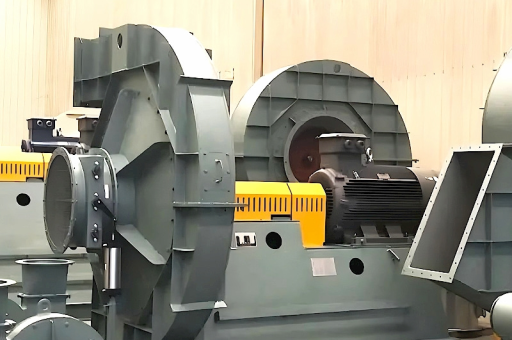
- The Core Concept: A System for Moving Hazardous Air
- The Fan: Stainless Steel Centrifugal Fan
- The Critical Component: The Dynamic Balanced Impeller
- Practical Applications (Examples of Harmful Emissions Handled)
- Summary: The "Safe System" Equation
Here is a detailed breakdown of the relationship between harmful air emissions, stainless steel centrifugal fans, and dynamic balanced impellers, focusing on how these components work together in industrial and environmental applications.
The Core Concept: A System for Moving Hazardous Air
You are describing a critical piece of equipment used in industrial ventilation, fume extraction, and air pollution control. The system is designed to safely move air that contains harmful contaminants.
- Harmful Air Emissions: The problem to be solved. This includes corrosive gases (acid vapors, chlorine), flammable vapors (solvents, methane), particulate matter (dust, metal oxides), or toxic fumes (hydrogen sulfide, hydrochloric acid).
- Stainless Steel Centrifugal Fan: The solution. The fan is the "engine" that creates the airflow (pressure and volume) to capture, convey, and exhaust these emissions. Stainless steel is chosen for its material properties.
- Dynamic Balanced Impeller: The critical component inside the fan. The impeller is the rotating wheel that does the actual work of accelerating the air. "Dynamic balancing" is the precise process of ensuring this wheel spins without vibration, which is paramount for reliability, safety, and performance.
The Fan: Stainless Steel Centrifugal Fan
A centrifugal fan works by drawing air into the center of a rotating impeller and then flinging it outwards radially using centrifugal force. This changes the direction of airflow (usually by 90 degrees) and increases pressure.
Why Stainless Steel is Essential for Harmful Emissions:
Stainless steel is not a single material but a family of alloys (e.g., 304, 316, 316L, 2205 Duplex). They are chosen over standard carbon steel for several critical reasons:
- Corrosion Resistance: This is the primary reason. Harmful emissions often contain moisture, acids, alkalis, or salts.
- 304 SS: Good general corrosion resistance. Suitable for many organic vapors and mildly aggressive environments.
- 316 / 316L SS: Contains molybdenum, offering superior resistance to chlorides and sulfuric acid. Essential for chemical plants, wastewater treatment, and coastal environments.
- Spark Resistance (Non-Sparking): When handling flammable vapors or explosive dusts, a spark from a fan can be catastrophic. While SS is not perfectly non-sparking like bronze, it is less likely to produce a high-energy spark upon impact compared to carbon steel. This is a key safety feature in ATEX (explosive atmosphere) rated fans.
- High-Temperature Capability: Certain stainless steels can withstand higher temperatures than carbon steel without losing strength or corroding prematurely. This is vital for exhaust from ovens, dryers, or combustion processes.
- Hygiene & Cleanability: In pharmaceutical, food, or cleanroom exhaust, the smooth, non-porous surface of SS is easy to clean and does not promote bacterial growth or contamination.
The Critical Component: The Dynamic Balanced Impeller
The impeller (the rotating wheel with blades) is the heart of the fan. If it fails, the entire system stops.
What is Dynamic Balancing?
Dynamic balancing is a precision manufacturing process performed on a specialized balancing machine. An unbalance (heavy spot) in the impeller creates centrifugal forces that cause vibration, noise, and premature bearing failure.
- Process: The impeller is spun at its operating speed. Sensors measure the vibration at the bearings. The machine calculates exactly where and how much weight is needed (either by adding weight or removing material) to cancel out the unbalance.
- Grade (e.g., G2.5, G6.3): Standards like ISO 1940 define permissible residual unbalance. For fans handling harmful emissions, a higher balance grade (lower G number) is crucial.
Why Dynamic Balancing is Non-Negotiable for Harmful Emissions:
The consequences of an unbalanced impeller in a hazardous system are severe:
- Catastrophic Failure: Vibration can cause the impeller to fatigue and crack. In a high-speed centrifugal fan, a broken blade can destroy the fan housing, ductwork, and potentially cause injury or ignite an explosive atmosphere.
- Bearing & Seal Failure: Excessive vibration rapidly destroys the fan's bearings and shaft seals. Leaks from failed seals directly release harmful emissions into the environment or the workplace, defeating the whole purpose of the fume extraction system.
- Loss of Performance: An unbalanced impeller creates turbulent airflow, reducing the fan's efficiency. This can lower the capture velocity at the emission source, allowing dangerous fumes to escape.
- Unacceptable Noise: High vibration levels produce significant noise, creating a hazardous or uncomfortable working environment.
The Synergy: How They Work Together for Safety
- The Fan Housing & Impeller Material (Stainless Steel) provides the chemical resistance and structural integrity to contain the harmful emission.
- The Dynamic Balanced Impeller ensures the fan operates smoothly and reliably.
- The Shaft Seal (e.g., mechanical seal, packing gland) prevents the emission from escaping along the rotating shaft.
Practical Applications (Examples of Harmful Emissions Handled)
| Industry | Emission Type | Fan Material Choice | Key Impeller Design |
|---|---|---|---|
| Chemical Processing | HCl, Cl₂, H₂SO₄ vapors | 316L or Duplex SS | Closed, radial-blade (non-clogging) |
| Wastewater Treatment | H₂S (hydrogen sulfide), moist air | 316 SS with epoxy coating | Backward-inclined (energy efficient) |
| Pharmaceutical | Organic solvent vapors | 316L SS (smooth finish) | Airfoil or backward-curved (high efficiency) |
| Semiconductor Fab | NF₃, SiH₄, corrosive gases | High-alloy SS (e.g., Hastelloy C) | Special bulb or dedicated toxic gas design |
| Metal Plating | Chrome mist, cyanide vapors | PVC-lined SS or 316L SS | Open, radial-tip (for droplet handling) |
| Food Processing (Exhaust) | Exhaust from ovens, fryers | 304 SS (hygienic) | Backward-inclined (easy to clean) |
Summary: The "Safe System" Equation
For reliably and safely handling harmful air emissions, the components must work in concert:
Dynamic Balanced Impeller + Corrosion-Resistant Stainless Steel Housing + Effective Shaft Seal + Proper Ductwork & Controls = Safe & Reliable Emission Control
Key takeaway for an engineer or buyer: You cannot have a high-performance, safe system for toxic or corrosive gases without a precisely dynamic balanced impeller inside a corrosion-resistant stainless steel housing. They are inherently linked. The dynamic balance ensures the fan lasts long enough to utilize the corrosion resistance of the stainless steel, and the stainless steel ensures the fan can safely contain the harmful emissions that the moving impeller is tasked with transporting.





