
This article's table of contents introduction:
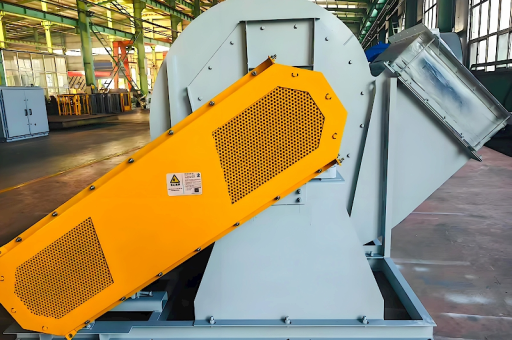
- Introduction: Why Waterproof Ratings Matter in Industrial Fans
- Understanding IP55 vs. IP54: What’s the Real Difference?
- Key Structural Features of a High-Performance Centrifugal Fan
- Performance Metrics: Airflow, Pressure, and Energy Efficiency
- Application Scenarios: Where IP55/IP54 Fans Excel
- Installation, Maintenance, and Longevity Tips
- Frequently Asked Questions (FAQ)
- Conclusion: Making the Right Choice for Your Environment
** The Ultimate Guide to Performance Centrifugal Fan With Good Waterproof Level IP55/IP54: Design, Benefits, and Smart Selection
Table of Contents
- Introduction: Why Waterproof Ratings Matter in Industrial Fans
- Understanding IP55 vs. IP54: What’s the Real Difference?
- Key Structural Features of a High-Performance Centrifugal Fan
- Performance Metrics: Airflow, Pressure, and Energy Efficiency
- Application Scenarios: Where IP55/IP54 Fans Excel
- Installation, Maintenance, and Longevity Tips
- Frequently Asked Questions (FAQ)
- Conclusion: Making the Right Choice for Your Environment
Introduction: Why Waterproof Ratings Matter in Industrial Fans
In industrial and commercial ventilation systems, selecting a performance centrifugal fan with good waterproof level IP55/IP54 is not optional—it is a critical engineering decision. Centrifugal fans are widely used for HVAC, fume extraction, dust collection, and cooling systems where reliability under harsh conditions is non-negotiable.
Water and dust ingress can cripple a fan’s motor, bearings, and electrical components. That is why Ingress Protection (IP) ratings—specifically IP54 and IP55—serve as the benchmark for assessing a fan’s ability to withstand solid particles and liquid splashes. According to international standard IEC 60529, IP54 offers protection against limited dust ingress and water splashes from any direction, while IP55 provides enhanced protection against low-pressure water jets. Both rates are considered “good waterproof levels,” but choosing between them depends on your site’s specific risk profile.
This guide will dissect the technical nuances, performance advantages, and real-world applications of IP55/IP54 rated centrifugal fans, helping you select the right unit for your facility.
Understanding IP55 vs. IP54: What’s the Real Difference?
While both IP54 and IP55 offer substantial waterproofing, their technical distinctions can affect fan longevity in specific environments.
IP54: The Baseline for General Industrial Use
- Dust protection: Limited ingress (dust may enter but not interfere with operation)
- Water protection: Splashing water from any direction (e.g., rain, washdown splashes)
- Typical use: Warehouses, processing plants, outdoor covered areas, clean rooms.
IP55: The Upgrade for High-Moisture or Outdoor Exposure
- Dust protection: Some dust allowed but no harmful deposit
- Water protection: Low-pressure water jets (e.g., hose-directed cleaning, heavy rain)
- Typical use: Chemical plants, food processing washdown zones, outdoor rooftops, marine environments.
Key engineering difference: IP55 requires stronger housing seals, often with gasketed junction boxes and corrosion-resistant coatings. For a performance centrifugal fan, upgrading from IP54 to IP55 may increase the unit cost by 15-30%, but it can double the service interval in wet or dusty environments.
Key Structural Features of a High-Performance Centrifugal Fan
A performance centrifugal fan with good waterproof level IP55/IP54 combines robust aerodynamic design with sealed enclosures. Look for these engineering features:
a. Motor Enclosure and Bearing System
The motor should be TEFC (Totally Enclosed Fan Cooled) with IP55-rated terminal boxes. Bearings should be sealed, grease-lubricated, and designed for high ambient temperatures. Many premium manufacturers use stainless steel shafts to prevent corrosion from condensation.
b. Impeller and Casing
- Impeller type: Backward curved (for high efficiency, low noise) or forward curved (for compact, high-volume applications)
- Material: Galvanized steel standard; stainless steel 304/316 recommended for corrosive environments
- Casing seal: Continuous welded seams, gasketed access panels, and drain plugs to prevent water pooling.
c. Ingress Protection Compliance
The fan assembly—including the motor, cable entry, junction box, and control panel—must carry the same IP55/IP54 rating. A fan labeled “IP55 fan” but with an exposed control module is not truly protected.
d. Vibration Isolators & Connectors
Flexible connectors and vibration dampers should also be water-resistant. Rubber or neoprene components degrade under UV exposure; silicone or EPDM rubber is better for outdoor IP55 fans.
Performance Metrics: Airflow, Pressure, and Energy Efficiency
Beyond waterproofing, a performance centrifugal fan must deliver high aerodynamic efficiency. Here are the critical metrics:
- Airflow (CFM or m³/h): Determines ventilation capacity. For IP55 fans, ensure the intake and discharge ports are protected from backflow moisture.
- Static pressure (Pa or in H₂O): Higher pressure is vital for ducted systems. Backward-curved impellers typically yield 10-15% better static efficiency than forward-curved blades.
- Power consumption (kW): Look for fans with IE3 or IE4 motor efficiency classes. At constant volume, an IP55-rated fan with premium motors can cut energy costs by 8-12% over a standard IP54 unit.
- Noise level (dBA): IP55 fans often require thicker casings, which can dampen sound naturally. However, ensure the fan speed (RPM) is matched to the specific application—overspeed leads to unnecessary noise.
Real-world example: A 10 hp IP55 centrifugal fan servicing a paint booth can deliver 12,000 CFM at 1.5 in H₂O static pressure with 85% motor efficiency, outperforming a comparable IP54 model that loses 2% efficiency due to moisture-related bearing friction after six months.
Application Scenarios: Where IP55/IP54 Fans Excel
✅ IP54 Fans Are Ideal For:
- Indoor commercial kitchens (limited splash, no jet wash)
- Clean rooms with HEPA filtration (low dust ingress risk)
- Data centers (cooling towers with rain covers)
- Textile mills (humidity control, light dust)
✅ IP55 Fans Are Required For:
- Outdoor HVAC units exposed to rain and snow
- Wastewater treatment plants (hose-down cleaning)
- Marine and offshore platforms (salt spray, condensation)
- Food processing and beverage plants (sanitary washdown environments with high-pressure cleaners)
- Chemical fume extraction where condensation creates acidic moisture
Installation, Maintenance, and Longevity Tips
Even the best performance centrifugal fan with good waterproof level IP55/IP54 will fail prematurely if installed or maintained incorrectly.
Installation Best Practices:
- Mounting: Use corrosion-resistant brackets. Ensure the fan base is elevated if installed outdoors to prevent standing water ingress.
- Duct connections: Install flexible connectors to prevent vibration transmission. Seal all joints with silicone or butyl tape.
- Electrical connections: Use waterproof conduit fittings and ensure cable glands are tightened to the IP55 spec.
Maintenance Checklist:
- Inspect gaskets and seals quarterly—replace if cracking.
- Clean impeller blades every 6 months (build-up reduces efficiency by 5-10%).
- Check bearing temperature; if exceeding 70°C (158°F), lubricate or replace.
- Verify drain plugs are not clogged—water accumulation inside the casing will kill the motor.
Frequently Asked Questions (FAQ)
Q1: Can I use an IP54 centrifugal fan outdoors?
Answer: Yes, if it is under a roof or awning that prevents direct rain. For open outdoor exposure, an IP55 fan is strongly recommended to withstand hose water or driving rain.
Q2: Are IP55 fans louder than IP54 fans?
Answer: Not inherently. Noise depends on blade design and RPM. However, IP55 fans may use thicker casings, which can slightly reduce resonant noise. Always check the dBA rating at the required operating point.
Q3: What is the maximum ambient temperature for an IP55 centrifugal fan?
Answer: Typically -20°C to 60°C (-4°F to 140°F). For high-temperature applications (e.g., exhaust from ovens), request a high-temp motor insulation class (Class H) and IP55-rated thermal protection.
Q4: How do I verify that a fan is truly IP55 or IP54?
Answer: Request a third-party test report from an accredited lab. Many inexpensive fans claim IP55 but only pass IP44. Check the manufacturer’s specification sheet for the test standard (IEC 60529) and the specific test duration/pressure.
Q5: Do I need a special motor for IP55 waterproof rating?
Answer: Yes. The motor must have an IP55-rated terminal box, sealed bearings, and a condensation drain. Standard TEFC motors are often IP54; confirm with the supplier.
Q6: Can I retrofit an existing fan to IP55?
Answer: Rarely. Retrofitting involves replacing the motor, seals, and casing gaskets, which often costs more than buying a new IP55-rated fan. It is safer to replace the fan assembly.
Conclusion: Making the Right Choice for Your Environment
Selecting a performance centrifugal fan with good waterproof level IP55/IP54 is about balancing cost, durability, and operational risk. For general industrial settings with limited moisture, an IP54 fan offers dependable performance at a moderate price. However, if your facility experiences regular washdown, outdoor rainfall, or condensation, an IP55-rated fan is a long-term investment that prevents costly downtime and motor replacement.
Always prioritize certified compliance over price shortcuts. Verify the IP rating through official documentation, and match the fan’s airflow/pressure curve to your actual duct resistance. By combining robust waterproofing with aerodynamic efficiency, you ensure that your ventilation system remains reliable year after year—even in the toughest environments.
Remember: a high-quality IP55 centrifugal fan is not just a component; it is a safety barrier against moisture-induced failures. Choose wisely, install correctly, and maintain proactively.





