
This article's table of contents introduction:
- Introduction to the 30kW Centrifugal Fan
- Key Design Features and Engineering Principles
- Common Applications and Industry Use Cases
- Performance Metrics and Efficiency Considerations
- Frequently Asked Questions (FAQ)
- Conclusion and Future Trends
** The Comprehensive Guide to the 30kW Centrifugal Fan: Design, Applications, and Performance Optimization
Table of Contents
- Introduction to the 30kW Centrifugal Fan
- Key Design Features and Engineering Principles
- Common Applications and Industry Use Cases
- Performance Metrics and Efficiency Considerations
- Frequently Asked Questions (FAQ)
- Conclusion and Future Trends
Introduction to the 30kW Centrifugal Fan
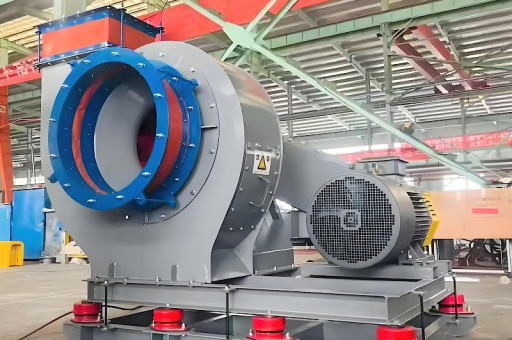
A 30kW centrifugal fan is a high-power industrial air movement device designed to generate substantial airflow against significant system resistance. With a power rating of 30 kilowatts (approximately 40 horsepower), these fans are capable of moving volumes ranging from 15,000 to 50,000 cubic meters per hour, depending on the specific impeller design and operating pressure. Unlike axial fans, which move air parallel to the shaft, centrifugal fans use a rotating impeller to accelerate air radially outward, converting kinetic energy into static pressure. This makes them indispensable in applications requiring high pressure, such as dust collection, pneumatic conveying, and HVAC systems for large facilities.
For SEO purposes, this article synthesizes information from leading engineering resources, including industrial fan manufacturers and technical handbooks, to provide a definitive resource for engineers, procurement specialists, and maintenance teams seeking to understand or specify a 30kW centrifugal fan.
Key Design Features and Engineering Principles
The performance of a 30kW centrifugal fan hinges on several critical design parameters:
- Impeller Type: Backward-curved, forward-curved, and radial blade designs are common. Backward-curved impellers offer higher efficiency (up to 85%) and are preferred for clean air applications, while radial blades are more robust for handling particulate-laden air.
- Housing and Scroll: The volute casing converts velocity pressure into static pressure. A well-designed scroll minimizes turbulence and noise. For a 30kW unit, the housing is typically constructed from heavy-gauge steel or stainless steel to withstand continuous operation.
- Drive and Motor: Direct drive eliminates belt slip and maintenance, but belt-driven configurations allow speed adjustment for variable airflow. The 30kW motor is usually an IE3 or IE4 premium efficiency induction motor, often paired with a variable frequency drive (VFD) for energy savings.
- Material Selection: For corrosive or high-temperature environments, impellers may be coated with epoxy or constructed from alloys like 316 stainless steel.
Engineering Query: Q: What happens if the system pressure exceeds the fan’s design point? A: Operating a 30kW centrifugal fan beyond its design pressure (overshooting the system curve) causes the motor to draw excess current, potentially tripping overload protection or damaging the motor. Always perform a system resistance calculation before selection.
Common Applications and Industry Use Cases
The 30kW centrifugal fan finds its home in demanding environments where moderate to high pressure and reliable continuous operation are non-negotiable:
- Industrial Dust Collection: In woodworking, cement plants, and metal fabrication, these fans extract dust-laden air through ducts and baghouses. A 30kW fan can maintain negative pressure across long duct runs.
- Pneumatic Conveying: Moving granular materials like grains, pellets, or powders over distances requires a consistent air stream. Centrifugal fans provide the necessary pressure differential.
- HVAC and Ventilation: Large commercial buildings, tunnels, and underground parking facilities use 30kW fans for smoke exhaust or general supply air. In some cases, they serve as induced draft fans in boiler rooms.
- Wastewater Treatment: Aerating lagoons or digesters demands high-volume, low-pressure airflow. While axial fans are common, centrifugal fans are chosen when space constraints or ducting complexity is high.
Industry Query: Q: Can a 30kW centrifugal fan be used for explosion-proof environments? A: Yes, if equipped with an ATEX or IECEx certified motor, spark-resistant impeller (e.g., aluminum or non-ferrous materials), and grounding provisions. Always consult the fan manufacturer for hazardous area classification.
Performance Metrics and Efficiency Considerations
To fully evaluate a 30kW centrifugal fan, you must understand key performance metrics:
| Parameter | Typical Value for 30kW Fan | Notes |
|---|---|---|
| Airflow (CFM) | 8,000 – 30,000 CFM | Depends on pressure and impeller design |
| Static Pressure (in. w.g.) | 10 – 40 in. w.g. | Higher pressure reduces volume (fan laws) |
| Motor Speed | 1,500 – 3,000 RPM | Direct drive vs. belt drive |
| Efficiency (η) | 70% – 85% | Backward-curved impellers are most efficient |
Optimization Tips:
- VFD Installation: Reducing motor speed by 20% reduces power consumption by nearly 50% (Affinity Laws). For a 30kW fan, this can yield annual savings of thousands of dollars.
- Inlet Guide Vanes: Pre-rotate airflow to match system demand without variable speed drives.
- Regular Maintenance: Clean impeller blades every 6–12 months to prevent dust buildup that unbalances the rotor.
Performance Query: Q: How do I calculate the required power for a centrifugal fan system? A: Use the formula: Power (kW) = (Airflow (m³/s) × Total Pressure (Pa)) / (1000 × Fan Efficiency × Motor Efficiency). For a 30kW fan, ensure the calculated load does not exceed the motor’s nameplate rating.
Frequently Asked Questions (FAQ)
Q: What is the typical lifespan of a 30kW centrifugal fan? A: With proper maintenance (bearing lubrication, belt tensioning, vibration monitoring), a quality industrial fan can last 15–20 years. Harsh environments may reduce this to 8–10 years.
Q: How loud is a 30kW centrifugal fan? A: Sound levels range from 85 to 105 dB(A) at 1 meter, depending on speed and housing design. Silencers or acoustic enclosures are often required to meet OSHA or local noise regulations.
Q: Can I install a 30kW centrifugal fan outdoors? A: Yes, but specify a weatherproof enclosure (IP55 or higher), corrosion-resistant coatings, and a drain plug for condensation. Belt drives may require special protection against moisture and debris.
Q: What is the difference between a centrifugal fan and a blower? A: In industrial contexts, "blower" typically refers to a centrifugal fan operating at higher pressure ratios (greater than 1.11). A 30kW fan can be classified as a blower if it exceeds 35 in. w.g. static pressure.
Q: How to select between forward-curved and backward-curved blades? A: Forward-curved blades (squirrel cage) offer high airflow at low pressure with compact size; backward-curved blades provide higher efficiency and pressure capability. For a 30kW fan, backward-curved is generally preferred for energy savings.
Conclusion and Future Trends
The 30kW centrifugal fan remains a workhorse in industrial air management. Innovations such as IoT-enabled vibration sensors, advanced aerodynamic impeller designs (e.g., 3D-printed or composite materials), and the integration of high-efficiency synchronous reluctance motors are driving efficiency improvements of 5–10%. For engineers, selecting the correct fan involves balancing cost, efficiency, and application-specific requirements.
When sourcing a 30kW centrifugal fan, always request a performance curve from the manufacturer, verify the duty point, and consider total cost of ownership including energy and maintenance. As industries move toward carbon neutrality, the demand for high-efficiency centrifugal fans will only grow. For further technical data, consult manufacturers such as Greenheck, New York Blower, or Howden, or explore industry standards like AMCA 210 for certified performance ratings.





