
This article's table of contents introduction:
- What does "1500 Pa" Mean?
- Key Characteristics of a 1500 Pa Centrifugal Fan
- Common Applications (Why you need 1500 Pa)
- How to Select a 1500 Pa Centrifugal Fan (The Fan Curve)
- Example Specifications
- Important Considerations
- Summary: Do you need a 1500 Pa fan?
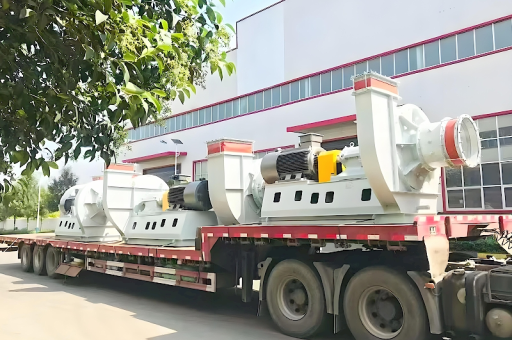
Here is a comprehensive breakdown of what a 1500 Pa centrifugal fan is, its applications, key characteristics, and how to select one. The "1500 Pa" refers to the fan's static pressure rating.
What does "1500 Pa" Mean?
- Pascal (Pa): The SI unit of pressure. In fan engineering, it measures the static pressure the fan can generate against resistance in a duct system.
- 1500 Pa (1.5 kPa): This is considered medium to high pressure. For context:
- A standard household box fan: ~20-50 Pa
- A typical bathroom exhaust fan: ~50-150 Pa
- A light commercial HVAC fan: ~200-600 Pa
- A 1500 Pa centrifugal fan: Industrial / heavy commercial duty.
A fan with a 1500 Pa rating can push air through long duct runs, dense filters (like HEPA), drying systems, or pneumatic conveying lines.
Key Characteristics of a 1500 Pa Centrifugal Fan
- High Static Pressure: It can overcome significant system resistance (backpressure).
- Lower Airflow (CFM/m³/h) at High Pressure: Compared to axial fans, centrifugal fans generate higher pressure but typically move less volume for a given motor size.
- Wheel Type: The impeller design determines performance. For 1500 Pa, common types are:
- Backward Inclined (BI) / Backward Curved (BC): Efficient, non-overloading power curve. Best for clean air and HVAC.
- Forward Curved (FC) / Squirrel Cage: Lower cost, higher airflow at lower pressure, but less efficient. Not ideal for sustained 1500 Pa.
- Radial / Paddlewheel: Very rugged, handles dust and debris. Less efficient but reliable for dirty air.
- Airfoil: Highest efficiency, but more expensive. Used in premium industrial HVAC systems.
Common Applications (Why you need 1500 Pa)
A fan of this pressure class is used when you need to force air through restrictive systems:
- Industrial Dust Collection: Moving air through filter bags, cartridges, and long ductwork in woodworking, metalworking, or powder processing.
- Pneumatic Conveying: Moving granular materials (grain, pellets, plastic chips) through a pipeline.
- Boiler / Furnace Combustion Air: Providing a strong, consistent air supply for forced draft burners.
- Spray Booths & Paint Booths: Ensuring airflow through floor grates and exhaust filters.
- HEPA & Baghouse Filtration Systems: Overcoming the high pressure drop of clean and dirty filters.
- Drying Systems (Ovens, Kilns): Forcing hot air through products (textiles, lumber, food).
- Tunnel Ventilation: Supplementary or jet fan use in specific high-resistance sections.
How to Select a 1500 Pa Centrifugal Fan (The Fan Curve)
You cannot just buy a "1500 Pa fan". You must match it to your required airflow (CFM or m³/h) .
The Fan Curve is the selection tool.
- X-Axis: Airflow (Volume) - CFM (ft³/min) or m³/h
- Y-Axis: Static Pressure - Pa or in. wg (inches of water gauge). Note: 1500 Pa ≈ 6 in. wg (6.02 in. wg)
- The Curve: The fan's performance line. As airflow increases, available static pressure drops.
Selection Rule: You must find a fan where the Operating Point (Your required CFM @ 1500 Pa) lies on or just below the fan's performance curve.
Example Fan Curve: The red dot represents the required operating point (e.g., 2000 CFM @ 1500 Pa). A fan whose curve passes through or above this point is the correct selection.
Example Specifications
A typical 1500 Pa centrifugal fan might look like this:
| Parameter | Example Value (Imperial) | Example Value (Metric) |
|---|---|---|
| Static Pressure | 02 in. wg | 1500 Pa |
| Airflow | 2,000 CFM | 3,400 m³/h |
| Wheel Type | Backward Inclined | Backward Inclined |
| Motor Power | 5 HP | 7 kW |
| Inlet Diameter | 12 inches | 300 mm |
| Speed (RPM) | 2,500 RPM | 2,500 RPM |
Note: Power, RPM, and size are highly dependent on the specific airflow requirement. A fan moving 500 CFM @ 1500 Pa will be much smaller and use less power than one moving 10,000 CFM @ 1500 Pa.
Important Considerations
- System Resistance (Total Static Pressure): Calculate this accurately. Include losses from ducts, elbows, dampers, filters, and the machine inlet/outlet. Do not oversize the pressure, or you will have high velocity, high noise, and wasted energy.
- Air Density & Temperature: A fan designed for 1500 Pa at 20°C (68°F) will generate less pressure at a higher temperature (air is thinner). If your process is, e.g., 200°C (392°F), you must adjust the calculation.
- Efficiency: For continuous operation at 1500 Pa, choose a Backward Inclined or Airfoil wheel. Forward Curved wheels are less efficient and may overheat the motor at this pressure level.
- Noise: A 1500 Pa fan will be noisy. Use a sound enclosure or silencer (duct silencer) if noise is a concern.
- Drive Type:
- Direct Drive: Motor spins the fan wheel at same speed. Good for stable, continuous operation.
- Belt Drive: Allows RPM changes (via pulley swap) to adjust CFM/Pressure. More flexible for varying systems.
Summary: Do you need a 1500 Pa fan?
- YES, if: You are pushing air through long, small-diameter ducts, heavy filters, or conveying solid material.
- NO, if: You need a quiet, low-cost fan for a short, open hood system (like a simple kitchen exhaust). That would be overpowered.
Recommendation: Contact a fan manufacturer (e.g., Greenheck, Twin City, Cincinnati Fan, New York Blower, or a regional industrial fan supplier) with your required CFM and system static pressure calculation. They will use their selection software to find the most efficient and cost-effective model for 1500 Pa operation.





