
This article's table of contents introduction:
- What is a "4000 Pa Centrifugal Fan"?
- Key Characteristics & How It Works
- Typical Applications (Where you find them)
- How to Select the Right 4000 Pa Centrifugal Fan
- Comparison with Other Fan Types
- Important Considerations
- Summary
Here is a comprehensive breakdown of what a 4000 Pa centrifugal fan is, its characteristics, typical applications, and how it compares to other fans.
What is a "4000 Pa Centrifugal Fan"?
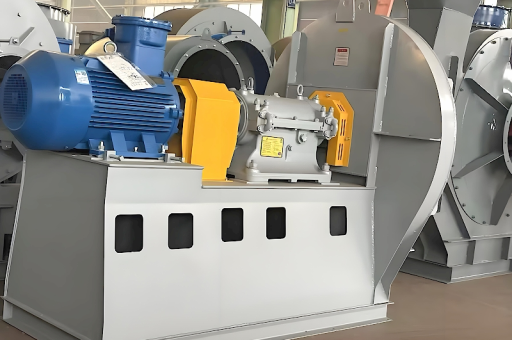
At its core, this is a centrifugal fan (also called a blower) designed to generate a static pressure of 4000 Pascals (Pa) at its rated operating point.
- Pascal (Pa) is the unit of pressure. 4000 Pa is equivalent to ~0.58 PSI or ~16 inches of water gauge (inH₂O).
- Centrifugal means the air is drawn into the center of a rotating impeller and thrown outward at a 90-degree angle by centrifugal force.
Key Takeaway: A 4000 Pa fan is a high-pressure, medium-to-high-flow device. It is not a standard household fan. It is an industrial or commercial-grade piece of equipment designed to overcome significant resistance in ductwork, filters, or process equipment.
Key Characteristics & How It Works
- High Static Pressure: The primary feature. This allows the fan to push air through long, narrow, or complex duct runs and dense filters (like HEPA or baghouse filters).
- Centrifugal Impeller Design: The impeller (wheel) design is crucial for achieving this pressure.
- Forward-Curved (Squirrel Cage): Good for high flow at moderate pressure (typically up to ~2000 Pa). Not ideal for 4000 Pa.
- Backward-Inclined / Backward-Curved: Much more efficient for high pressure. These are the most common type for 4000 Pa applications. They have non-overloading horsepower characteristics.
- Radial (Paddle Wheel): The highest pressure design but lowest efficiency. Used for material handling or applications with extreme pressure needs. Can easily handle 4000 Pa and much higher.
- Power Consumption: A motor powering a 4000 Pa fan will be significant. For example, moving 500 CFM (Cubic Feet per Minute) at 4000 Pa requires approximately 3-4 HP (2.2-3 kW) .
- Noise: High-pressure centrifugal fans are significantly louder than axial fans. The sound is a distinct "roar" or "whine" due to the high tip speeds of the impeller and the turbulent air compression.
Typical Applications (Where you find them)
You will find 4000 Pa centrifugal fans in situations where air must be forced through resistance.
| Industry / Setting | Specific Application | Why 4000 Pa is Needed |
|---|---|---|
| HVAC (Commercial/Industrial) | VAV (Variable Air Volume) systems, high-rise building exhaust, laboratory fume hood exhaust. | To overcome pressure loss in long, complex ductwork and control dampers. |
| Cleanrooms / Pharmaceuticals | HEPA/ULPA filter housings. | To push air through the extremely dense, high-resistance final filters. |
| Dust Collection | Central vacuum systems, baghouse dust collectors, woodworking shops. | To draw dust-laden air through long ducts, cyclones, and filter bags/cartridges. |
| Material Handling / Pneumatic Conveying | Moving pellets, powders, chips, or granular materials through pipes. | The pressure is needed to suspend and transport the solid material in the airstream. |
| Process Cooling | Cooling electronic enclosures, ovens, or welding equipment. | To force cooling air through tight, finned heat sinks or enclosed cabinets. |
| Grow Rooms / Indoor Agriculture | Large-scale indoor farms with long duct runs to multiple rooms. | To move air through carbon filters and long runs of ducting. |
How to Select the Right 4000 Pa Centrifugal Fan
You cannot simply order a "4000 Pa fan." You need a fan that can deliver 4000 Pa at a specific airflow rate. This is defined by the Fan Curve.
The Fan Curve (Crucial Concept)
A fan curve is a graph that shows the relationship between the airflow (CFM or m³/h) and the static pressure (Pa) .
Pressure (Pa)
| * (Shut-off / No Flow)
| \
| \ * (Operating Point - e.g., 4000 Pa @ 1500 CFM) | \
| * (Free Air / No Resistance) +-----------------------------> Flow (CFM)`
- To select correctly, you must know:
- Required Airflow (CFM or m³/h): How much air volume needs to be moved?
- System Resistance (Pa or inH₂O): What is the total pressure drop of your ducts, filters, and equipment at that airflow? This must equal 4000 Pa.
Example Selection: If your system needs 1500 CFM (2550 m³/h) and your system resistance is 4000 Pa, you need a fan whose curve shows that it can deliver 1500 CFM at 4000 Pa.
Comparison with Other Fan Types
| Feature | 4000 Pa Centrifugal Fan | Standard Axial Fan (e.g., Wall Fan) | High-Pressure Axial Fan (e.g., Tubeaxial) |
|---|---|---|---|
| Static Pressure | Very High (4000 Pa) | Very Low (< 200 Pa) | Medium (up to ~1000 Pa) |
| Airflow (CFM) | Medium to High | Very High | High |
| Best For | Ductwork, filters, pneumatic conveying | General ventilation, moving air freely | Moving air through short ducts |
| Efficiency at High Pressure | High | Very Low (will stall) | Low to Medium |
| Noise | High | Low to Medium | Medium to High |
| Physical Size | Larger, heavier for given CFM | Smaller, lighter | Similar to centrifugal for given pressure |
Important Considerations
- Motor Type: Most 4000 Pa industrial fans use three-phase motors for efficiency and reliability. Single-phase options are available but limited to smaller sizes.
- Speed Control: Speed control (using a VFD - Variable Frequency Drive) is common to adjust the airflow and pressure to match the exact system demand, saving energy.
- Material: For corrosive environments, the fan must be made of stainless steel or coated steel. For material handling, a radial paddle wheel with a wear plate is needed.
- Certification: Look for AMCA (Air Movement and Control Association) certification for guaranteed performance. For cleanrooms, the fan might be UL listed or ISO compliant.
Summary
A 4000 Pa centrifugal fan is a powerful, industrial-grade air mover designed for high-resistance systems. It is not a simple fan; it is a critical component for applications in HVAC, cleanrooms, dust collection, and material handling. Selection must be based on a fan curve that pairs the 4000 Pa pressure with your required airflow (CFM). Always consult with a fan manufacturer or engineer to specify the correct model for your specific system.





