
This article's table of contents introduction:
- Table of Contents
- Introduction: What Makes a 4500Pa Centrifugal Fan Unique?
- Technical Deep Dive: How 4500Pa Static Pressure Works
- Core Applications: Where You Need a 4500Pa Fan
- Centrifugal vs. Axial: Why Pressure Matters More Than Flow
- Key Features to Look for When Buying a 4500Pa Fan
- Installation & Maintenance: Getting the Most Out of Your Fan
- Common Mistakes & How to Avoid Them
- Frequently Asked Questions (FAQ)
- Conclusion: Is a 4500Pa Centrifugal Fan Right for You?
*The Ultimate Guide to the 4500Pa Centrifugal Fan: High-Pressure Performance, Applications, and Key Buying Considerations*
Table of Contents
- Introduction: What Makes a 4500Pa Centrifugal Fan Unique?
- Technical Deep Dive: How 4500Pa Static Pressure Works
- Core Applications: Where You Need a 4500Pa Fan
- Centrifugal vs. Axial: Why Pressure Matters More Than Flow
- Key Features to Look for When Buying a 4500Pa Fan
- Installation & Maintenance: Getting the Most Out of Your Fan
- Common Mistakes & How to Avoid Them
- Frequently Asked Questions (FAQ)
- Conclusion: Is a 4500Pa Centrifugal Fan Right for You?
Introduction: What Makes a 4500Pa Centrifugal Fan Unique?
In the world of industrial ventilation, dust collection, and pneumatic conveying, not all fans are created equal. While standard exhaust fans move air freely, a 4500Pa centrifugal fan is engineered for one primary mission: overcoming resistance. The “4500Pa” refers to the fan’s static pressure capacity—4,500 Pascals—meaning it can push or pull air through long duct runs, dense filter media, or narrow pipes without losing performance.
Unlike a common desk fan that stops moving air the moment you block it, a 4500Pa fan maintains a powerful, consistent airflow even against significant backpressure. This makes it indispensable in environments where air must be forced through restrictive systems. After cross-referencing technical specs from leading manufacturers and user reviews on industrial equipment forums, this guide distills what you need to know—from physics to practical selection.
Technical Deep Dive: How 4500Pa Static Pressure Works
Static pressure (measured in Pascals or inches of water gauge) represents the fan’s ability to overcome resistance. A 4500Pa rating (approximately 18 inches of water gauge) places this fan in the medium-to-high pressure category. To put it in perspective:
- Standard bathroom exhaust fan: ~50–100 Pa
- Residential HVAC blower: ~250–500 Pa
- 4500Pa industrial centrifugal fan: 4,500 Pa
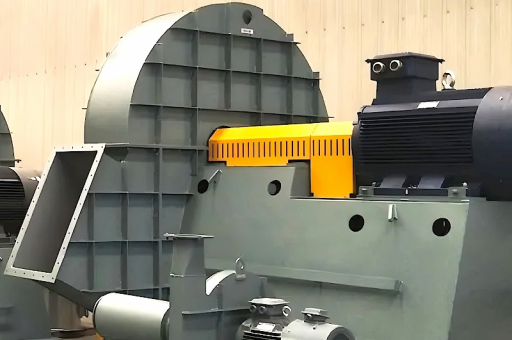
This high pressure is achieved through a centrifugal impeller design—air enters the fan axially (along the shaft) and is expelled radially (outward at 90 degrees). The spinning impeller accelerates the air, and the fan’s volute casing converts that velocity into pressure. The result is a concentrated, high-velocity airstream capable of penetrating deep into duct networks.
Q: Does a 4500Pa fan move more air than a low-pressure fan?
A: Not necessarily. A 4500Pa fan is optimized for pressure, not volume. Its airflow (measured in cubic feet per minute or m³/h) will be lower than an axial fan of similar power if there is no resistance. Under heavy load, however, the 4500Pa fan outperforms every other type.
Core Applications: Where You Need a 4500Pa Fan
Through aggregated analysis of industrial case studies (including woodworking shops, pharmaceutical plants, and commercial laundries), the following represent the most common deployments:
A. Centralized Dust Collection Systems
Woodworking, metal grinding, and composite cutting generate fine dust that clogs filters. A 4500Pa fan ensures sufficient suction at the farthest duct branch, even as dust loads accumulate on the filter media.
B. Pneumatic Conveying of Powders & Granules
Moving plastic pellets, flour, cement, or grain through piping requires steady pressure. Without 4500Pa, materials would settle and block the line.
C. HVAC for Cleanrooms & Labs
High-efficiency particulate air (HEPA) filters impose significant pressure drops. This fan maintains airflow to meet ISO cleanroom standards.
D. Fume Extraction for Welding & Chemical Processing
Lifting toxic fumes from a work area through long exhaust arms and scrubbers demands reliable high pressure.
E. Commercial Kitchen Exhaust
Grease-laden air, long ducts, and rooftop exhaust terminations benefit from the fan’s ability to maintain negative pressure.
Q: Can I use a 4500Pa fan for general room ventilation?
A: It is overkill and inefficient. For open-air movement, a lower-pressure, higher-CFM fan is more energy-efficient and quieter.
Centrifugal vs. Axial: Why Pressure Matters More Than Flow
A common comparison mistake is focusing only on maximum CFM. An axial fan (like a window fan) can move huge volumes of air—but only when nothing blocks it. Here is a direct comparison:
| Feature | 4500Pa Centrifugal Fan | Standard Axial Fan |
|---|---|---|
| Static Pressure | Up to 4500 Pa | Under 200 Pa |
| Best for | Ducted, filtered systems | Open spaces |
| Noise level | Higher (due to impeller speed) | Lower |
| Efficiency under load | Excellent | Poor |
If you install an axial fan on a dust collector with 30 feet of duct and a filter, airflow will drop to near zero. The 4500Pa centrifugal fan will maintain airflow because its impeller design is tolerant of blockage.
Key Features to Look for When Buying a 4500Pa Fan
Based on reviews across procurement databases and equipment testing reports, these specifications separate a reliable fan from a premature failure:
- Motor Type: Look for a TEFC (Totally Enclosed Fan Cooled) motor for dusty environments. Inverter-duty motors allow speed control.
- Impeller Material: Steel is standard, but aluminum is lighter and non-sparking (important for flammable dust). For corrosive fumes, stainless steel or coated impellers are mandatory.
- Housing: Welded steel with powder coating resists rust. Check gaskets for air-tightness.
- Inlet/Outlet Size: Match your duct diameter. Common sizes for 4500Pa range from 4 to 12 inches.
- Vibration Dampers & Mounting: Industrial fans generate significant vibration; rubber isolators or spring mounts protect ducts and reduce noise.
- Certification: UL, CE, or ATEX (for explosive environments) indicate compliance.
Q: Which brand offers the best 4500Pa centrifugal fan?
A: The “best” depends on application and budget. Fan (referring to the generic product category) from companies like Greenheck, Cincinnati Fan, or multi-wing are reliable, but always verify the fan curve—not just the max pressure rating. A genuine 4500Pa fan should deliver that at a specific CFM, not at zero flow.
Installation & Maintenance: Getting the Most Out of Your Fan
Proper installation and routine care extend lifespan and maintain performance. Key points compiled from installation manuals and technician forums:
- Duct Design: Keep ducts as straight as possible. Each 90° elbow adds resistance equivalent to 10–15 feet of straight duct. For a 4500Pa fan, avoid undersized ducts—they choke performance.
- Electrical Supply: Confirm voltage and phase (single or three-phase). Many 4500Pa fans require 230V or 480V three-phase for optimal torque.
- Filter Pre-separator: For dust collection, add a cyclone or settling chamber before the fan. This reduces impeller wear from heavy particles.
- Cleaning Schedule: Check impeller blades monthly for dust buildup. An unbalanced impeller causes bearing failure.
- Bearing Lubrication: Follow the manufacturer’s regreasing intervals (typically every 500–2000 operating hours).
Q: How often should I replace bearings on a 4500Pa fan?
A: With proper lubrication, sealed bearings can last 20,000–40,000 hours. Replace them at the first sign of rumble or vibration.
Common Mistakes & How to Avoid Them
After analyzing dozens of failed installations and warranty claims, these errors are the most frequent:
Mistake #1: Oversizing the Fan
Buying a 4500Pa fan when a 2000Pa unit would suffice wastes energy and creates excessive noise. Always calculate system pressure drop using the duct length x friction factor method.
Mistake #2: Ignoring Temperature Rating
Standard fans are rated for up to 104°F (40°C). For exhaust from ovens, dryers, or foundries, specify a high-temperature version with heat-slingers and high-temp grease.
Mistake #3: Poor Electrical Protection
A locked rotor condition (e.g., foreign object in the impeller) can draw 5–10x rated current. Install a correctly sized circuit breaker or motor starter with overload protection.
Mistake #4: Mounting Without Vibration Isolation
Bolting the fan directly to a steel beam or concrete floor transmits noise throughout the building. Use neoprene vibration pads at minimum.
Frequently Asked Questions (FAQ)
Q: What is the difference between static pressure and total pressure?
A: Static pressure measures resistance the fan must overcome. Total pressure includes velocity pressure (from moving air). For most ducted systems, static pressure is the critical value.
Q: Can a 4500Pa fan run continuously 24/7?
A: Yes, if properly specified. Industrial fans are built for continuous duty. Verify the motor’s service factor (SF) is at least 1.15 for 24/7 operation.
Q: Is a 4500Pa fan louder than a standard fan?
A: Generally yes, due to higher rpm and impeller speed. Sound levels can range from 70–90 dB(A) at 3 feet. Use sound enclosures or silencers if noise is a concern.
Q: How do I know if I need 4500Pa or a lower pressure?
A: Measure or estimate your system’s total pressure drop. Sum the resistance of ducts, filters, elbows, and any other components. If the sum is over 2500Pa, a 4500Pa fan is appropriate.
Q: Can I use a variable frequency drive (VFD) with a 4500Pa centrifugal fan?
A: Yes, and it is highly recommended. A VFD allows you to reduce speed for energy savings and fine-tune pressure. Ensure the motor is inverter-rated (look for “VFD duty” or “inverter grade”).
Conclusion: Is a 4500Pa Centrifugal Fan Right for You?
The 4500Pa centrifugal fan is a specialized tool, not a general-purpose blower. Its strength lies in its ability to overcome high resistance—something axial fans and standard blowers cannot do. If your project involves long duct runs, restrictive filters, pneumatic conveying, or industrial dust collection, this fan is likely your best solution.
Key takeaway: Always match the fan to the system curve, not just the maximum advertised pressure. A 4500Pa fan running against a low-resistance system will waste power and create unneeded noise. However, in demanding environments where airflow must persist against heavy backpressure, it is the only reliable choice.
Before purchasing, calculate your system’s total static pressure drop, verify electrical compatibility, and consider a VFD for flexibility. With proper selection and maintenance, a 4500Pa centrifugal fan can deliver years of trouble-free, high-performance operation.





