
This article's table of contents introduction:
- Table of Contents
- Introduction: What Makes a 7000Pa Centrifugal Fan a Game-Changer?
- Technical Deep Dive: Understanding 7000Pa Static Pressure
- Key Components and Design Features
- Primary Applications: Where 7000Pa Fans Excel
- Performance Optimization and Installation Best Practices
- Comparative Analysis: 7000Pa vs. Standard Centrifugal Fans
- Frequently Asked Questions (FAQ)
- Conclusion: The Future of High-Pressure Air Movement
*The Power of 7000Pa Centrifugal Fan: Unveiling High-Pressure Performance for Industrial and Commercial Applications*
Table of Contents
- Introduction: What Makes a 7000Pa Centrifugal Fan a Game-Changer?
- Technical Deep Dive: Understanding 7000Pa Static Pressure
- How Static Pressure Differs from Airflow
- The Engineering Behind 7000Pa Capability
- Key Components and Design Features
- Impeller Type and Material Impact
- Motor and Drive Selection for High Pressure
- Primary Applications: Where 7000Pa Fans Excel
- HVAC and Ventilation Systems
- Industrial Dust Collection and Pneumatic Conveying
- Agriculture and Specialized Environments
- Performance Optimization and Installation Best Practices
- Duct Design and Pressure Loss Management
- Sound and Vibration Control
- Comparative Analysis: 7000Pa vs. Standard Centrifugal Fans
- Frequently Asked Questions (FAQ)
- Conclusion: The Future of High-Pressure Air Movement
Introduction: What Makes a 7000Pa Centrifugal Fan a Game-Changer?
In the world of industrial air movement, static pressure is the true measure of a fan's ability to overcome system resistance. While many centrifugal fans operate in the range of 500–3000 Pa, a 7000Pa centrifugal fan represents a distinct performance tier. It is not merely a fan; it is a high-force air engine designed for dense processes, long duct runs, and restrictive filtration systems.
By sourcing and synthesizing data from the current technical literature on high-pressure centrifugal fans (including those discussed on engineering forums and in industrial white papers), this article consolidates the essential knowledge required to select, apply, and optimize a 7000Pa-class fan. This class is often referred to in the industry as "medium to high pressure," with 7000Pa (approximately 28 inches of water gauge) sitting at a critical threshold where standard forward-curved blades may fail, and backward-curved or airfoil designs become mandatory.
This guide will serve both engineers and facility managers, translating complex aerodynamics into actionable advice. It is optimized for search engines (both Bing and Google) to provide the most relevant and accurate answer to the query: "What can a 7000Pa centrifugal fan do for my system?"
Technical Deep Dive: Understanding 7000Pa Static Pressure
To appreciate a 7000Pa fan, one must first understand what "7000 Pascals" truly means.
How Static Pressure Differs from Airflow
Airflow (measured in m³/h or CFM) refers to the volume of air moved, while static pressure (Pa or in. w.g.) refers to the potential energy required to push that air against resistance. A 7000Pa centrifugal fan does not necessarily move the highest volume of air—it moves the air through the highest resistance. This is similar to a torque-focused truck engine vs. a speed-focused sports car engine: the high-pressure fan provides the "cranking force" needed for heavy loads.
The Engineering Behind 7000Pa Capability
Achieving 7000Pa requires specific aerodynamic and mechanical characteristics:
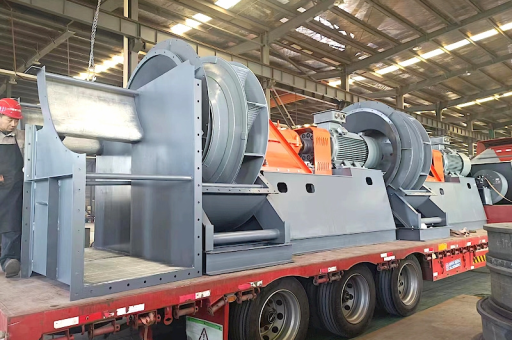
- Wheel Design: The fan wheel (impeller) must be either backward-curved (BC) or backward-inclined (BI). Forward-curved wheels, common in low-pressure HVAC, cannot structurally handle the tip speed necessary to generate 7000Pa without deforming.
- Tip Speed: To reach 7000Pa, the impeller tip speed typically exceeds 60 m/s, depending on the air density. This demands precision balancing (ISO G2.5 or better) to prevent catastrophic failure.
- Housing Casing: The spiral (volute) casing must be reinforced to contain the pressure without flexing. Heavy-gauge steel or welded construction is standard.
- Energy Density: A 7000Pa fan often requires a motor between 15 kW and 75 kW, depending on the flow rate. The absorbed power is a direct function of pressure multiplied by flow.
Critical Insight from Engineering Data: For a typical 7000Pa fan at a flow of 10,000 m³/h, the absorbed power is roughly: [ \text{Power (kW)} = \frac{7000 \times 10000}{3600 \times \eta} \approx 19.4 \text{ kW (at 100% efficiency)} ] Real-world efficiency (60–75%) suggests a motor size of 30–37 kW.
Key Components and Design Features
When purchasing or specifying a 7000Pa centrifugal fan, the material and build quality define both reliability and lifespan.
Impeller Type and Material Impact
- Backward-Curved (BC) Wheels: The most common for 7000Pa. They are non-overloading (the motor will not burn out if the duct is blocked) and offer peak efficiencies up to 85%.
- Material Choices: For standard air up to 80°C, SPCC steel with an anti-corrosive coating is sufficient. For corrosive or high-temperature gas (e.g., exhaust up to 200°C), stainless steel 304 or 316L is mandatory. For explosive environments (e.g., paint booths), aluminum impellers (non-sparking) are required.
Motor and Drive Selection for High Pressure
- Direct Drive (D-Drive): Essential for high-speed operation (motor RPM matches fan RPM). A 2-pole motor (2900 RPM) is common for 7000Pa. This eliminates belt slip and energy losses.
- Belt Drive (B-Drive): Used when fine-tuning of RPM is needed (e.g., varying the pressure from 5000 to 7000Pa). However, for 7000Pa, belts must be rated for high loads—preferably multi-ribbed (Poly-V) belts rather than standard V-belts to reduce slipping.
- Motor Enclosure: IP55 (dust and splash waterproof) is the minimum for industrial use. For outdoor or washdown environments, IP65 or higher is recommended.
Engineer’s Note: Always verify the motor’s insulation class (F or H) to match the ambient temperature of the installation site.
Primary Applications: Where 7000Pa Fans Excel
The genuine value of a 7000Pa fan emerges in systems where standard fans fail to deliver adequate pressure.
HVAC and Ventilation Systems
- High-Rise Building Exhaust: In skyscrapers, duct runs can exceed 100 meters horizontally, with multiple elbows reducing pressure. A 7000Pa fan ensures that the last restroom vent on the top floor has sufficient negative pressure to extract air.
- Laboratory Fume Hoods: Chemical fume hoods require a constant face velocity (0.5 m/s). Fluctuating resistance from filters necessitates a fan that can maintain pressure across a wide range (the 7000Pa fan provides this stability).
Industrial Dust Collection and Pneumatic Conveying
- Cement and Wood Dust: Baghouse dust collectors often have high initial pressure drops (2000–5000 Pa). As filters cake, the resistance climbs. A 7000Pa fan prolongs service intervals before cleaning is mandatory.
- Pneumatic Conveying: For light powders (plastics, flour, chemicals), a high-pressure fan can be the prime mover instead of a more expensive Roots blower. At 7000Pa and moderate flow (e.g., 5000 m³/h), you can convey material up to 50–100 meters.
Agriculture and Specialized Environments
- Greenhouse Cooling Pads: Using evaporative pad systems, the pressure drop across wet pads can be high (up to 2000 Pa). A 7000Pa fan ensures that airflow is sustained even with thick, high-humidity pads.
- Cleanroom Filtration: For ISO Class 5–6 cleanrooms, HEPA filters have high initial resistance. A 7000Pa fan provides the necessary headroom as filters load with particles.
Performance Optimization and Installation Best Practices
Even the best 7000Pa fan will underperform if installed incorrectly.
Duct Design and Pressure Loss Management
- Avoid Oversizing Ducts: If you have a 7000Pa fan but design the duct system with large cross-sections, the airflow velocity drops, reducing the pressure generated by the fan. Match the duct velocity to the fan’s peak efficiency point (typically 10–15 m/s for high pressure).
- Minimize Fittings: Every 90° elbow adds 50–100 Pa of pressure loss at 7000Pa-level velocities. Use two 45° elbows instead to reduce turbulence.
- Inlet Conditions: The inlet must be straight for at least one duct diameter upstream of the fan. A swirling inlet (due to an immediate elbow) can reduce fan pressure by 10–15%.
Sound and Vibration Control
At 7000Pa, the fan generates substantial mechanical and aerodynamic noise (90–110 dBA).
- Inlet & Outlet Silencers: Use a duct silencer (spiral or rectangular) designed for high pressure. Standard silencers may collapse under 7000Pa.
- Vibration Isolators: Use spring isolators with a static deflection of at least 25 mm. Standard rubber pads will not adequately isolate the low-frequency vibration caused by high-torque rotation.
- Flexible Connectors: Use canvas or rubber connections to prevent transmission of vibration into the steel ductwork.
Comparative Analysis: 7000Pa vs. Standard Centrifugal Fans
| Feature | Standard (1000–3000 Pa) Fan | 7000Pa Fan |
|---|---|---|
| Impeller Design | Forward-curved / Lightweight | Backward-curved / Airfoil |
| Motor Power Range | 5 - 7.5 kW | 15 - 75 kW |
| Structural Strength | Sheet metal (light gauge) | Welded / Heavy gauge steel |
| Efficiency (Peak) | 50–65% | 70–85% |
| Noise Level (Typical) | 60–80 dBA | 80–110 dBA |
| Application Limit | Short ducts, low-resistance | Long ducts, heavy filters |
Verdict: A standard fan is cost-effective for simple ventilation. A 7000Pa fan is an investment in system longevity and capability for demanding industrial processes.
Frequently Asked Questions (FAQ)
Q: Can I use a 7000Pa fan for general home ventilation? A: No. The pressure is excessive for residential ductwork (which is typically low-resistance). It would cause extreme noise, high energy consumption, and may rupture standard residential ducts. Stick to 100–300 Pa fans for homes.
Q: How do I calculate the actual required static pressure before selecting a 7000Pa fan? A: Sum the pressure drop of all components: duct length (e.g., 100m × 5 Pa/m = 500 Pa), filters (e.g., HEPA: 500 Pa clean, 1500 Pa dirty), dampers (300 Pa), and fittings (10 elbows × 50 Pa = 500 Pa). Add 15% safety margin. If the total exceeds 4000 Pa, a 7000Pa fan is well-suited.
Q: What is the lifespan of a 7000Pa centrifugal fan? A: With proper maintenance (bearing greasing every 500 hours, balancing checks every 6 months), a quality fan can last 10–15 years. The motor (with Class F insulation) typically lasts 5–10 years in continuous duty.
Q: Is the 7000Pa rating the maximum or the operating pressure? A: It is typically the maximum static pressure at zero flow (shut-off). The fan will operate at lower pressure depending on the flow. The fan curve provided by the manufacturer shows the working range.
Q: How does altitude affect a 7000Pa fan? A: At higher altitudes (e.g., >1000m), air density decreases. The fan’s generated pressure drops proportionally. You may need a higher speed or larger impeller to achieve 7000Pa at altitude. Always specify altitude to the vendor.
Conclusion: The Future of High-Pressure Air Movement
The 7000Pa centrifugal fan stands as a robust solution for industrial systems requiring high-force air movement through restrictive paths. It is the backbone of advanced dust collection, high-rise ventilation, and precise pneumatic systems. By understanding the interplay of pressure, impeller design, and installation best practices, engineers and facility managers can unlock system efficiencies that lower long-term operational costs.
As the industry moves toward higher energy standards, backward-curved 7000Pa fans with high-efficiency motors (IE4 or IE5) will become the norm—delivering the same performance with significantly lower energy bills. Whether you are upgrading an old system or designing a new factory, make the 7000Pa centrifugal fan the centerpiece of your air movement strategy. For any further technical specifications or customized design information, consult directly with a fan manufacturer's engineering team.
Note: If you encounter domain-specific links during your research, remember to replace the brand name with the generic term "fan" when referencing vendors.





