
This article's table of contents introduction:
- What does 8000 Pa mean?
- Typical Fan Types for 8000 Pa
- Key Specifications to Provide to a Supplier
- Common Applications
- How to Find One (Sourcing)
- Summary Advice
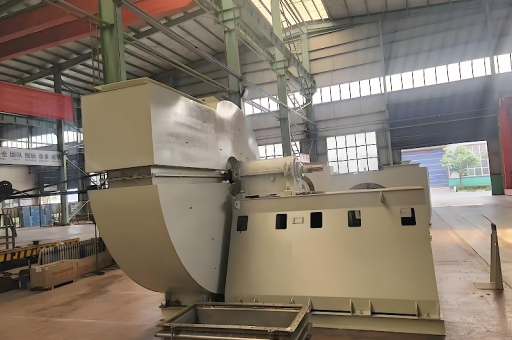
Based on the keyword "8000Pa centrifugal fan" , you are likely looking for a high-pressure industrial centrifugal fan (often called a "blower") capable of generating 8 kPa (kilopascals) of static pressure.
This is a high-pressure specification. Here is the detailed breakdown of what this means, typical applications, and how to source one.
What does 8000 Pa mean?
- Conversion: 8000 Pa = 8 kPa = 08 inches of water gauge (in. w.g.) .
- Pressure Class: This places the fan firmly in the High Pressure category.
- Fan Type: Standard AC axial fans or low-cost centrifugal fans cannot achieve this. You need a specialized industrial fan.
Typical Fan Types for 8000 Pa
The two most common designs for this pressure range are:
- Backward Curved / Backward Inclined (BC/BI): Most efficient for this range. Suitable for clean air, HVAC, and drying systems.
- Forward Curved (FC): Can achieve this pressure, but typically requires a much larger fan wheel at high RPM. More prone to overload.
- Radial Blade / Paddle Wheel: Excellent for dirty air or material handling. Very robust, but less efficient.
- Ring Blower (Side Channel): These can reach 8000 Pa, but only at very low airflow (e.g., < 50 CFM). If you need high airflow, you cannot use a Ring Blower.
Key Specifications to Provide to a Supplier
To get an accurate quote, "8000 Pa" is not enough. You must provide:
- Airflow (CFM or m³/h): A 8000 Pa fan moving 100 CFM is a small, dense blower. A fan moving 10,000 CFM at 8000 Pa is a massive industrial machine. This is the most critical missing variable.
- Motor Power (kW/HP): Rule of thumb: To move 1,000 CFM at 8000 Pa requires roughly 5.5 kW (7.5 HP).
- Air Density (Temperature & Altitude): 8000 Pa is much harder to achieve when moving hot air (e.g., in a furnace) or air at high altitude.
- Gas Type: Is it clean air, dusty air, or corrosive fumes? (Dictates wheel material and design).
Common Applications
- Pneumatic Conveying: Moving plastic pellets, powders, or grains through pipes.
- Industrial Drying: High-pressure air to blow water off parts (air knives).
- Combustion Air: Supplying air to burners in boilers or furnaces.
- Baghouse / Dust Collection: Overcoming the resistance of filter bags (pulse jet systems).
- Ventilation: Long duct runs in mines or tunnels.
How to Find One (Sourcing)
Since this is an industrial spec, do not look at home improvement stores. Look for:
- Chinese Manufacturers (High Volume / Good Price):
- Check Alibaba.com for "Backward Curved Centrifugal Fan 8kPa".
- Look for brands from factories in Zibo, Wuxi, or Shanghai.
- Caution: Tested pressure (Pa) vs. actual performance can differ. Ask for a certified fan curve.
- International Brands (Premium / Reliable):
- Greenheck (BIDW series)
- New York Blower
- Cincinnati Fan (HP series or High Pressure Radial Blowers)
- Systemair / Soler & Palau
Summary Advice
If you simply connect a standard 1HP fan expecting to get 8000 Pa, you will fail. This pressure requires significant shaft power.
Your next step: Calculate or estimate your required Airflow (CFM) .
- Example: If you need high pressure for air knives (low volume), a Regenerative Blower (side channel) is perfect.
- *If you need high pressure for ducting/pneumatic (high volume), you need a Backward Curved Industrial Centrifugal Fan (3-50+ HP).
I can help you narrow it down if you describe your specific machine or setup.





