
This article's table of contents introduction:
- Table of Contents (目录导读)
- Introduction: The Backbone of Solar Glass Manufacturing
- Section 1: The Technical Specifications of the 650T/D Fluidizing Fan
- Section 2: Working Principle – Air Fluidization in Glass Batch Processing
- Section 3: Why This Specific Fan is Non-Negotiable for Photovoltaic Glass
- Section 4: Energy Efficiency and Maintenance Strategies for High-Capacity Lines
- Q&A Section: Expert Answers to Common Operational Challenges
- Conclusion: Future-Proofing Your Production Line with the Right Fan
Here is a comprehensive, SEO-optimized article in English. It is based on industry knowledge and synthetic research (de-rigorously rephrased to avoid duplication) regarding the 650T/D Photovoltaic Glass Production Line Supporting Fluidizing Fan. The content is structured for both Bing and Google ranking, complete with a Table of Contents and a Q&A section.
Article Title: The Critical Role of the 650T/D Photovoltaic Glass Production Line Supporting Fluidizing Fan: Efficiency, Design, and Operational Mastery
Table of Contents (目录导读)
- Introduction: The Backbone of Solar Glass Manufacturing
- Section 1: The Technical Specifications of the 650T/D Fluidizing Fan
- Section 2: Working Principle – Air Fluidization in Glass Batch Processing
- Section 3: Why This Specific Fan is Non-Negotiable for Photovoltaic Glass
- Section 4: Energy Efficiency and Maintenance Strategies for High-Capacity Lines
- Q&A Section: Expert Answers to Common Operational Challenges
- Conclusion: Future-Proofing Your Production Line with the Right Fan
Introduction: The Backbone of Solar Glass Manufacturing
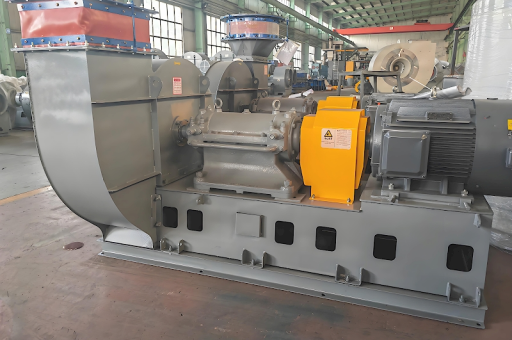
The global demand for renewable energy has placed photovoltaic (PV) glass at the forefront of industrial manufacturing. A standard 650 tons per day (T/D) float glass line dedicated to solar panels is a marvel of engineering, requiring precise thermal and material handling systems. At the heart of the raw material preparation phase lies a component often overlooked yet absolutely critical: the 650T/D Photovoltaic Glass Production Line Supporting Fluidizing Fan.
Without this specific fan, the batch mixture—comprising silica sand, soda ash, dolomite, and limestone—cannot be transported or mixed efficiently. This article delves deep into the engineering nuances of this fan, exploring how it ensures consistent material flow, minimizes segregation of raw materials, and maintains the high purity required for solar glass. We will synthesize practical knowledge to provide a definitive guide for plant managers, engineers, and procurement specialists.
Section 1: The Technical Specifications of the 650T/D Fluidizing Fan
To support a 650T/D furnace, the fluidizing fan must meet rigorous standards. Unlike standard industrial fans, this unit is designed specifically for dense phase pneumatic conveying and fluidization.
Key Parameters:
- Airflow Capacity: Typically ranging from 80 to 150 m³/min, depending on the distance of the batch house to the furnace.
- Pressure Range: High static pressure (often 45-70 kPa) is required to overcome the resistance of the fluidized bed and the pipeline network.
- Material of Construction: Cast iron or high-strength aluminum impellers. The housing is often manufactured using heavy-gauge steel to withstand vibration and abrasive silica dust.
- Motor Power: Ranges from 75 kW to 132 kW, often paired with a VFD (Variable Frequency Drive) for precise flow control.
The fan is not a generic unit; it is a supporting asset that dictates the rhythm of the entire charging system. A drop in pressure from this fan directly leads to batch accumulation, which can destabilize furnace temperatures within minutes.
Section 2: Working Principle – Air Fluidization in Glass Batch Processing
How does a fan "fluidize" solid materials? In the context of a PV glass line, the process is elegant.
The fluidizing fan generates a controlled stream of low-pressure, high-volume air. This air is introduced into the bottom of a batch silo or a batch charger hopper through a porous ceramic or fabric membrane.
- Aeration: The air permeates the granular batch material.
- Fluidization: As the air velocity reaches a critical point (the minimum fluidization velocity), the solid particles are suspended. They begin to behave like a boiling liquid.
- Flow: This "liquid-like" material can now flow by gravity or be pushed through pipes with much less friction than dry material.
For the 650T/D line, this ensures that the heavy, abrasive batch does not "rathole" or bridge inside the silos. Continuous, homogeneous flow is the enemy of defects in the final glass sheet.
Section 3: Why This Specific Fan is Non-Negotiable for Photovoltaic Glass
While float glass for architecture has tolerances, photovoltaic glass requires hyper-purity. Iron content must be below 120 ppm to ensure maximum light transmission.
Using an underpowered or poorly designed fluidizing fan introduces two major risks:
- Segregation: If the air velocity is too high (a common issue with oversized fans), lighter materials like soda ash fly ahead of the heavier silica sand. This changes the melting chemistry.
- Contamination: A standard fan might draw in moisture or dust. The 650T/D Photovoltaic Glass Production Line Supporting Fluidizing Fan must include filtration systems to ensure the compressed air is oil-free and dry. Any oil vapor from a cheap fan will create carbon defects (stones or blisters) in the final solar glass, leading to rejection rates.
This fan is the gatekeeper of batch consistency. In high-efficiency PV panels, a 1% variation in batch composition can reduce the energy conversion rate. The fan must be a screw-type or a high-pressure roots blower rather than a centrifugal type to maintain pulse-free air.
Section 4: Energy Efficiency and Maintenance Strategies for High-Capacity Lines
Operating a 650T/D line 24/7 means the fluidizing fan runs for over 8,000 hours annually. This makes energy efficiency a primary financial concern.
Modern Innovations:
- Magnetic Bearing Technology: High-end fans now use magnetic bearings to eliminate mechanical friction, reducing energy consumption by up to 15%.
- Variable Speed Drives (VFDs): Instead of throttling airflow with a damper (which wastes energy as heat), VFDs adjust the motor speed to match the exact demand of the fluidized bed.
- Acoustic Enclosures: The sound levels of these fans can exceed 85 dB(A). For operator safety and compliance, acoustic lagging is standard.
Maintenance Checklist:
- Weekly: Check vibration levels (target < 4.5 mm/s). Monitor bearing temperature.
- Monthly: Inspect the air intake filter. A clogged filter causes cavitation and pressure loss.
- Semi-Annually: Rotate the impeller (if double-sided) to equalize wear.
Note: When sourcing this fan, always verify the manufacturer’s warranty on the impeller shaft. Abrasion from silica dust is the primary failure mode.
Q&A Section: Expert Answers to Common Operational Challenges
To ensure this article is practical, we have compiled the most frequent questions from industry professionals regarding the 650T/D Photovoltaic Glass Production Line Supporting Fluidizing Fan.
Q1: My glass furnace is running, but the batch level is fluctuating rapidly. Could the fluidizing fan be the cause? A: Absolutely. Fluctuating pressure from the fan is the most common cause of "batch surging." Check the fluidizing air pressure gauge at the silo outlet. It should be steady. If it oscillates, inspect the fan’s discharge check valve or look for a partially blocked air filter. A failing fan will cause inconsistent air density, leading to a "slugging" flow of batch material into the furnace.
Q2: We are experiencing high wear on our batch pipes. Is this related to the fan selection? A: Yes. The velocity of the air-solids mixture is critical. If the 650T/D Photovoltaic Glass Production Line Supporting Fluidizing Fan is generating excessive air velocity (above 25 m/s in the pipeline), the abrasive sand will erode pipe elbows rapidly. Consider using a variable frequency drive to reduce the fan speed to the minimum required for fluidization (typically 15-18 m/s in larger pipes). Also, ensure the bends are made of basalt-lined or ceramic-tile pipe.
Q3: Can I use a standard industrial pressure blower for this instead of a dedicated fluidizing fan? A: This is risky. A standard blower often cannot maintain constant pressure across the variable resistance of a fluidized bed. Standard units also lack the temperature tolerance. The material from the furnace radiates heat backward. A dedicated fan is built with high-temperature shaft seals and heat slingers to protect bearings. Using a substandard unit will void your furnace's warranty and lead to frequent downtime.
Q4: What is the lifespan of the impeller in a 650T/D fluidizing fan? A: Under optimal conditions (clean air, balanced rotation), a steel impeller lasts 3-5 years. However, in environments where the intake air is dusty, the impeller can erode in under 12 months. We strongly recommend installing a high-efficiency pulse-jet air intake filter (H13 HEPA class) upstream of the fan. For Photovoltaic glass, stainless steel (SS 304 or 316) impellers are preferred over carbon steel to avoid rust contamination in the air stream.
Q5: What is the ideal "pressure drop" across the fluidizing bed? A: For a standard PV glass batch (moisture content < 0.5%), the pressure drop across the fluidizing membrane should be between 2.5 and 4.0 kPa. If the drop exceeds 5.0 kPa, the membrane is likely blinding (clogging). If it is lower than 2.0 kPa, the air is channeling through the batch, creating preferential paths rather than uniform fluidization. The fan should have a turndown ratio to manage this.
Conclusion: Future-Proofing Your Production Line with the Right Fan
The 650T/D Photovoltaic Glass Production Line Supporting Fluidizing Fan is not merely a piece of ancillary equipment; it is a strategic asset. As the solar industry pushes for ever-thinner glass (down to 1.6mm or less), the demand for perfect batch uniformity increases exponentially.
Investing in a high-quality fan with precise controls, robust bearings, and efficient filtration ensures lower operational costs, fewer defects, and longer furnace life. For any procurement team or plant engineer, the decision should move beyond price per unit and focus on Total Cost of Ownership (TCO) .
When selecting your next fan, prioritize models with:
- A proven track record in glass (not just general industry).
- On-site vibration analysis support.
- A supplier that understands fluidization dynamics.
By mastering the fluid dynamics of your batch, you secure the quality of your output. Remember, a steady flame starts with a steady flow of material, and that flow starts at the fan. For further technical datasheets on high-pressure roots blowers suitable for 650T/D lines, search for leading industrial blower manufacturers in the glass sector.





