
This article's table of contents introduction:
- Table of Contents
- Introduction: The Role of G4-73 and Y4-73 Fans in Industrial Boiler Systems
- Structural Design and Key Components
- Working Principle of the Centrifugal ID Fan with Rolling Bearings
- Performance Characteristics and Efficiency Benchmarks
- Industrial Applications and System Integration
- Comparison: G4-73 vs. Y4-73 – Which Fan for Which Duty?
- Rolling Bearing Type: Why It Matters for Reliability and Longevity
- Installation Best Practices and Common Pitfalls
- Preventive Maintenance and Troubleshooting for Bearing Systems
- Frequently Asked Questions (FAQ)
- Conclusion and Expert Recommendations
The Complete Technical Guide to G4-73 and Y4-73 Boiler Ventilating Industrial ID Fans with Rolling Bearing Type: Design, Applications, and Maintenance**
Table of Contents
- Introduction: The Role of G4-73 and Y4-73 Fans in Industrial Boiler Systems
- Structural Design and Key Components
- Working Principle of the Centrifugal ID Fan with Rolling Bearings
- Performance Characteristics and Efficiency Benchmarks
- Industrial Applications and System Integration
- Comparison: G4-73 vs. Y4-73 – Which Fan for Which Duty?
- Rolling Bearing Type: Why It Matters for Reliability and Longevity
- Installation Best Practices and Common Pitfalls
- Preventive Maintenance and Troubleshooting for Bearing Systems
- Frequently Asked Questions (FAQ)
- Conclusion and Expert Recommendations
Introduction: The Role of G4-73 and Y4-73 Fans in Industrial Boiler Systems
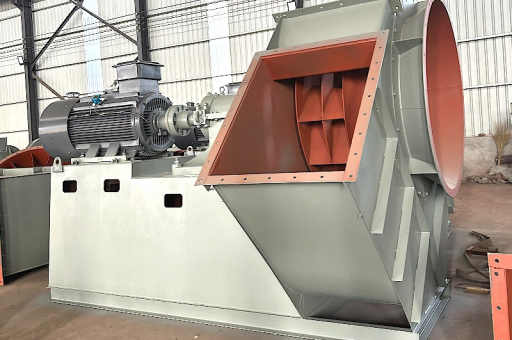
In modern industrial boiler operations, efficient air and gas handling are critical to maintaining combustion stability, thermal efficiency, and emission control. The G4-73 and Y4-73 boiler ventilating industrial ID fan with rolling bearing type represents a specialized centrifugal fan series designed specifically for forced draft (FD) and induced draft (ID) applications. These fans are widely employed in power plants, chemical processing facilities, and large-scale heating systems where high-temperature flue gas extraction is required.
The G4-73 is typically configured as a forced draft fan (supplying air to the boiler), while the Y4-73 is optimized as an induced draft fan (extracting flue gases). Both series share a robust rolling bearing housing design, which significantly reduces maintenance frequency and extends operational lifespan compared to sleeve-bearing alternatives.
Why Rolling Bearings?
Unlike traditional plain bearings, rolling bearings (such as spherical roller bearings or deep-groove ball bearings) provide lower friction, better tolerance for misalignment, and superior performance under varying thermal loads. This makes the rolling bearing type indispensable for continuous-duty boiler ventilation where ambient and flue gas temperatures can exceed 300°C (572°F).
Structural Design and Key Components
The G4-73 and Y4-73 fans share a modular construction principle, but with material and aerodynamic variations suited to their respective duties.
Impeller:
- G4-73: Forward-curved blades for higher pressure generation at moderate flow rates.
- Y4-73: Backward-inclined blades (often with wear-resistant liners) designed to handle abrasive particulate-laden flue gases.
Housing:
- Welded steel plate construction with reinforced volute geometry.
- Access doors for internal inspection and cleaning.
Shaft and Bearing Assembly:
- The rolling bearing type consists of a bearing housing with two spherical roller bearings (double-row) mounted on a precision-machined shaft.
- Grease or oil lubrication systems are available. A labyrinth seal or shaft seal prevents dust ingress.
Base Frame and Dampers:
- Heavy-duty structural steel base with vibration dampers.
- Inlet vanes or outlet louver dampers for flow control.
Working Principle of the Centrifugal ID Fan with Rolling Bearings
The working cycle of a Y4-73 ID fan begins when hot, corrosive flue gases exit the boiler economizer or air preheater. The fan draws these gases through a duct system, accelerates them via the rotating impeller, and discharges them into the chimney or emission control system.
Step-by-step flow:
- Gas enters the fan axially through the inlet.
- The backward-inclined impeller imparts kinetic energy.
- Centrifugal force pushes gas outward, increasing static pressure.
- High-velocity gas exits the volute tangentially.
- Critical point: The rolling bearing assembly supports the shaft, maintaining alignment despite thermal expansion and dynamic loads.
Why Rolling Bearings Excel in ID Service:
- High radial and axial load capacity.
- Self-aligning capability compensates for minor shaft deflection.
- Reduced heat generation compared to plain bearings in high-temperature applications.
Performance Characteristics and Efficiency Benchmarks
Both G4-73 and Y4-73 fans are designed to meet ISO 5801 and AMCA standards for aerodynamic performance.
| Parameter | G4-73 (FD Fan) | Y4-73 (ID Fan) |
|---|---|---|
| Flow range | 20,000 – 400,000 m³/h | 15,000 – 500,000 m³/h |
| Pressure range | 1,500 – 6,000 Pa | 1,200 – 5,500 Pa |
| Operating temperature | ≤ 80°C (ambient air) | ≤ 350°C (with cooling shaft) |
| Efficiency peak | 82% – 86% | 78% – 83% |
| Bearing type | Spherical roller (double row) | Spherical roller (high-temp) |
Efficiency factor:
Advanced impeller design in the Y4-73 reduces flow separation and friction loss, achieving up to 5% efficiency improvement over older ID fan designs.
Industrial Applications and System Integration
G4-73 FD Fan Use Cases:
- Coal-fired and biomass boilers (primary air supply).
- Fluidized bed combustion systems.
- Heat recovery steam generators (HRSG).
Y4-73 ID Fan Use Cases:
- Pulverized coal boiler exhaust extraction.
- Municipal waste incineration flue gas handling.
- Cement kiln and steel furnace ventilation.
System Integration Tips:
- Install a variable frequency drive (VFD) for energy savings up to 30%.
- Use expansion joints and flexible connections to absorb thermal movement.
- Place the rolling bearing housing on a vibration isolator foundation.
Comparison: G4-73 vs. Y4-73 – Which Fan for Which Duty?
| Aspect | G4-73 | Y4-73 |
|---|---|---|
| Primary function | Supply clean, cold air | Extract hot, dirty flue gas |
| Blade design | Forward-curved (high pressure) | Backward-inclined (self-cleaning) |
| Material requirement | Mild steel / aluminum | Corten steel / high-alloy steel |
| Temperature tolerance | Low (ambient to 80°C) | High (up to 350°C with cooling) |
| Bearing cooling | Not typically required | Optional jacket water cooling |
Decision rule:
Use the G4-73 for air intake; use the Y4-73 for gas extraction. Mixing the two can cause premature bearing failure due to heat or contamination.
Rolling Bearing Type: Why It Matters for Reliability and Longevity
The rolling bearing type in these fans is engineered for demanding industrial cycles. Key advantages include:
- Self-alignment: Compensates for housing deformation due to temperature gradients.
- Low starting torque: Reduces motor stress during cold starts.
- Extended relubrication interval: Up to 6,000 hours under normal conditions.
- Sealed options: Prevents fly ash contamination in ID fans.
Real-world data:
Plant operators report that replacing plain bearings with rolling bearings extends fan overhaul intervals from 12 months to 36–48 months, with only periodic grease replenishment required.
Installation Best Practices and Common Pitfalls
Do’s:
✓ Mount the fan on a rigid concrete base with anti-vibration pads.
✓ Align shaft and motor coupling within 0.05 mm tolerance.
✓ Pre-grease bearings with NLGI 2 or 3 lithium-based grease.
✓ Install a thermocouple or RTD on the bearing housing for condition monitoring.
Don’ts:
✗ Operate the fan without proper inlet screen (debris can destroy impeller balance).
✗ Over-grease bearings – it causes overheating and seal rupture.
✗ Ignore vibration readings – bearing failure often shows early via increased RMS velocity.
Preventive Maintenance and Troubleshooting for Bearing Systems
Routine Maintenance Schedule (based on 8,000 hours/year):
- Weekly: Check bearing temperature (should be < 80°C above ambient).
- Monthly: Inspect grease condition, add if low.
- Quarterly: Check shaft alignment with laser tool.
- Annually: Replace grease completely; inspect bearing races for spalling.
Troubleshooting Common Issues:
| Symptom | Likely Cause | Solution |
|---|---|---|
| Running temperature > 100°C | Insufficient grease or misalignment | Re-lubricate and realign shaft |
| High vibration (> 4.5 mm/s) | Unbalanced impeller or bearing wear | Clean impeller; replace bearing if worn |
| Contaminated grease | Seal failure, dust ingress | Replace seal and bearing assembly |
Frequently Asked Questions (FAQ)
Q1: Can the Y4-73 ID fan handle high sulfur content in flue gas?
Yes, but only if the impeller and casing are constructed from Corten A steel or stainless steel 316L. Standard Y4-73 material may corrode prematurely in acidic environments.
Q2: How do you cool the rolling bearings in an ID fan handling 300°C gas?
We recommend a jacketed bearing housing with circulating water cooling (flow rate 5–10 L/min). Alternatively, a cooling fan on the shaft extension can reduce ambient temperature near the bearings.
Q3: What is the maximum radial load capacity of the rolling bearing assembly in a G4-73 No. 16D fan?
The double-row spherical roller bearing in a No. 16 frame supports up to 45 kN radial load at 1,500 RPM, with a safety factor of 1.5.
Q4: Is it possible to retrofit an existing sleeve-bearing fan with rolling bearings?
Yes, but it requires a new bearing housing, shaft modification, and rebalancing. Contact the original fan manufacturer for a retrofit kit.
Conclusion and Expert Recommendations
The G4-73 and Y4-73 boiler ventilating industrial ID fan with rolling bearing type remains the industry benchmark for reliability in flue gas handling and forced air supply. By choosing the correct duty-specific design (G4-73 for FD, Y4-73 for ID) and adhering to best practices in installation, bearing lubrication, and temperature monitoring, operators can achieve over 20 years of operational life with minimal downtime.
Final expert tips:
- Always specify a temperature-monitoring probe on bearing housings.
- Use synthetic grease for high-temperature ID fan bearings.
- Partner with a certified fan service provider for annual vibration testing and alignment checks.
By combining robust rolling bearing technology with proper maintenance, your boiler ventilation system will deliver peak efficiency and extended service life, ensuring compliance with both emission regulations and production uptime goals.
For detailed technical drawings or OEM specifications, please consult the manufacturer’s documentation for your specific fan model and frame size.





