
This article's table of contents introduction:
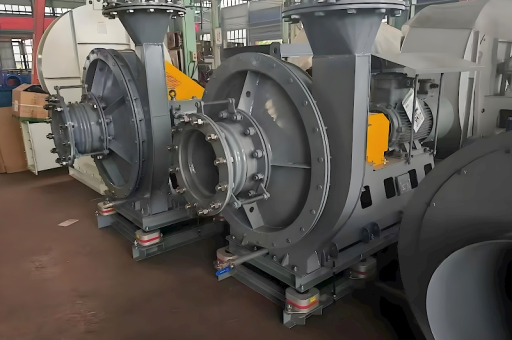
- What is the Secondary Fan in a CFB Boiler?
- Core Functions in a Cogeneration CFB Boiler
- Key Design and Selection Parameters for Cogeneration
- How it Differs from a Standard Boiler Fan
- Typical Challenges & Maintenance
- Selection Considerations for a Specific Site (Example)
- Summary Table: Primary vs. Secondary Fan in a CFB Boiler for Cogeneration
- Conclusion
This is a specific and technical piece of equipment. Here is a detailed breakdown of the Secondary Fan (Blower) used in a Cogeneration Circulating Fluidized Bed (CFB) Boiler, covering its function, design considerations, and selection criteria.
What is the Secondary Fan in a CFB Boiler?
In a CFB boiler, air is introduced at two primary stages:
- Primary Air (PA): Introduced through the distributor plate at the bottom. It fluidizes the bed of fuel and sand.
- Secondary Air (SA): Introduced through nozzles located higher up on the furnace walls. This is where the Secondary Fan plays its role.
The Secondary Fan is a high-pressure, forced-draft fan that supplies combustion air (Secondary Air) into the upper furnace region.
Core Functions in a Cogeneration CFB Boiler
- Staged Combustion for NOx Control: By injecting air above the fuel-rich bed, the fan creates a staged combustion zone. This reduces peak flame temperatures and limits the formation of Thermal NOx. This is a critical environmental function.
- Complete Combustion: It provides the additional oxygen needed to burn the volatile gases and unburnt char particles that escape the dense bed.
- Mixing and Turbulence: The high-velocity jets from the SA nozzles create intense turbulence in the upper furnace, ensuring good mixing of fuel, air, and bed material. This prevents stratification and improves combustion efficiency.
- Bed Inventory Control: Adjusting the secondary airflow can help influence the solids loading and recirculation rate within the furnace.
- Load Following: In a cogeneration plant (producing both steam/power and heat), the boiler load can fluctuate. The Secondary Fan's variable speed drive (VSD) or inlet vanes allow for rapid adjustment to changing steam and heat demands.
Key Design and Selection Parameters for Cogeneration
Cogeneration plants often run at high capacity factors (e.g., 8,000 hours/year). Reliability and efficiency are paramount.
| Parameter | Specification & Rationale |
|---|---|
| Type | Typically Centrifugal, Backward-Curved (Airfoil) Blades. Preferred for high efficiency, stable operation, and lower noise at high pressures. |
| Pressure | 300 – 600 mmWC (2.9 – 5.9 kPa). Must overcome pressure loss through SA nozzles, ductwork, and the furnace freeboard. Higher pressure than a standard combustion fan. |
| Flow Rate | 30% to 50% of Total Combustion Air. In CFB boilers, SA typically accounts for 50-70% of total air, but the fan is sized for its specific portion. |
| Temperature | Ambient Air (25-40°C). Air is drawn from the atmosphere, not preheated. |
| Control | Variable Frequency Drive (VFD) is standard for cogeneration. Allows precise turndown (30-100%) without energy waste from dampers. |
| Material | Carbon Steel (Impeller & Housing). No special alloys needed unless the ambient air is corrosive. |
| Key Features | High-efficiency impeller, robust bearings (spherical roller), shaft seals to prevent air leakage, access doors for inspection. |
How it Differs from a Standard Boiler Fan
- Not a Primary Air Fan: Unlike the PA fan (which must handle hot, dusty air after the air heater or fluidize the bed), the SA fan handles clean, ambient air.
- High Pressure, Low Volume (relative to PA): PA requires massive volumes at a specific pressure to fluidize; SA requires very high pressure to inject into a pressurized furnace, but at a lower volume.
- Crucial for Emissions: The most critical difference is its role in NOx control. A power-only CFB boiler also uses it for NOx control, but in cogeneration, where operators must meet strict local emissions permits for both power and heat production, its performance is directly tied to regulatory compliance.
Typical Challenges & Maintenance
- Vibration: Due to high speeds (often 1,500 or 1,800 RPM) and large impeller diameters. Unbalance from dust buildup or bearing wear is common.
- Bearing Failure: A leading cause of unplanned outages. Cogeneration plants run 24/7, so bearings (often forced-lubrication) require regular oil analysis and temperature monitoring.
- VFD Harmonics: The VFD can introduce electrical harmonics, requiring filters.
- Duct Leakage: High-pressure ductwork between the fan and boiler is prone to leaks, which reduce SA pressure and combustion efficiency.
- Noise: This is often the loudest fan in the plant due to high tip speeds. Noise enclosures or silencers are frequently installed.
Selection Considerations for a Specific Site (Example)
If you are selecting a fan, you would ask:
- Boiler MCR (Maximum Continuous Rating): What is the total steam flow (e.g., 150 TPH)?
- Required SA Flow: What is the design airflow for the secondary air system (e.g., 80,000 Nm³/h)?
- Static Pressure: What is the pressure drop across the SA ductwork + nozzle + furnace freeboard (e.g., 450 mmWC)?
- Control Range: What is the minimum load for cogeneration? (e.g., 25% for heat recovery).
- Motor: What is the calculated motor power (e.g., 450 kW, 6.6 kV, with VFD)?
Summary Table: Primary vs. Secondary Fan in a CFB Boiler for Cogeneration
| Feature | Primary Air (PA) Fan | Secondary Air (SA) Fan |
|---|---|---|
| Main Purpose | Fluidization & initial combustion | Staged combustion & NOx control |
| Air Source | Often after Air Preheater (hot, ~250°C) | Ambient air (cold, ~30°C) |
| Pressure | Lower (for fluidization) | Higher (for injection) |
| Material | Higher grade (for hot/abrasive air) | Standard carbon steel |
| Power Draw | Typically larger (e.g., 500-800 kW) | Smaller (e.g., 200-400 kW) |
| Impact on Cogen | Bed stability & fuel feed | Emissions compliance & load response |
Conclusion
The Secondary Fan is a high-pressure, forced-draft, centrifugal fan with a VFD. Its primary role in a cogeneration CFB boiler is staged combustion for NOx control and ensuring complete burnout. For a cogeneration plant, the reliability of this fan directly impacts the ability to meet steam and power demands while staying within strict environmental permits. A failure often requires a boiler turndown, reducing both power generation and heat supply to the industrial process.





