
This article's table of contents introduction:
- What Makes This Blower Unique?
- Typical Applications
- Key Technical Parameters You Need to Define
- Typical Design Features of a High-Pressure SS Unit
- How to Source This Product
- Example of a Custom Spec You Might Provide:
- Important Constraints to Keep in Mind
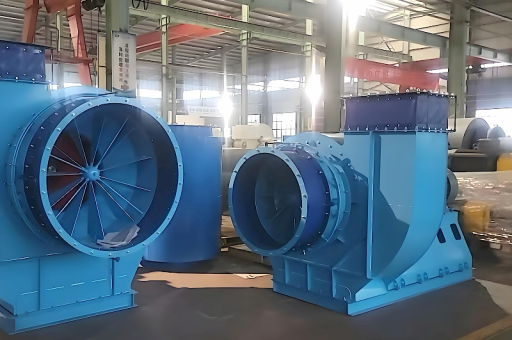
Based on your request for a "High-Pressure Customized Stainless Steel Centrifugal Blower with Adjustable Air Volume," you are likely looking for a robust, corrosion-resistant industrial fan designed for demanding environments where pressure needs are high and flow control is critical.
This is a specific piece of process equipment, not a standard HVAC fan. Here is a detailed breakdown of what you are describing, how it works, and key specifications you would need to define for a quote or manufacturing.
What Makes This Blower Unique?
- High-Pressure: Designed to overcome significant system resistance (static pressure) from ductwork, filters, long pipe runs, or dense materials.
- Stainless Steel: Typically SS304 (for general corrosion resistance, food, or clean environments) or SS316/SS316L (for chemical, marine, or high-chloride environments). This is fully customizable (casing, impeller, shaft).
- Centrifugal: Uses a rotating impeller to accelerate air outward, converting velocity into pressure. For high pressure, a backward-curved or radial (paddlewheel) blade design is most common.
- Customizable: You can specify dimensions, motor power, inlet/outlet orientation, flanges, drain ports, and coatings (like passivation or electropolishing).
- Adjustable Air Volume: Achieved via:
- Variable Frequency Drive (VFD): The most efficient and precise method. You control the motor speed to adjust flow.
- Inlet Guide Vanes: A mechanical assembly at the inlet that pre-swirls the air to reduce load.
- Outlet Damper: A simple, less efficient mechanical restriction (throttling).
Typical Applications
- Chemical Processing: Handling corrosive fumes, vapors, or gases (e.g., acid mist, solvents). All wetted parts in SS.
- Wastewater Treatment: Aeration, odor control (scrubbers), or biogas handling.
- Pharmaceutical & Food: Clean air handling, dust collection in hygienic environments (requires easy-clean, crevice-free design).
- Vacuum Systems: When run in series or with specific impeller designs.
- Pneumatic Conveying: Moving powders, granules, or chips where high pressure is needed.
Key Technical Parameters You Need to Define
To get a proper quote or design, you must provide the following:
- Required Airflow (Volume): In CFM (Cubic Feet per Minute) or m³/hr.
- Required Static Pressure: In Inches of Water Gauge ("W.G.) , kPa, or mmH₂O. High pressure is generally considered > 20" W.G. up to 100"+.
- Gas/Medium: What is the air or gas? Temperature, humidity, presence of particulate, corrosive composition (e.g., HCl, H₂SO₄, Chlorine).
- Material Grade: SS304 or SS316/316L. Do you need a polished finish?
- Power Source: Voltage (e.g., 460V, 3-Phase, 60Hz or 230V, 1-Phase) and frequency (50Hz or 60Hz).
- Mounting: Standard foot-mounted, or do you need a baseplate? (High-pressure units require very rigid mounting).
Typical Design Features of a High-Pressure SS Unit
- Impeller: Backward-curved (for efficiency, non-overloading) or Radial (Paddlewheel) (for highest pressure, handles particulates, but is less efficient).
- Casing: Heavy-gauge stainless steel with continuous welding, reinforced with angle rings or external bracing to prevent flexing under high pressure.
- Shaft: Stainless steel (sometimes 17-4 PH for higher strength), properly sealed with a labyrinth seal or mechanical seal (if the gas is toxic or explosive).
- Motor: TEFC (Totally Enclosed Fan Cooled), premium efficient. Direct coupled (preferred for speed control) or belt-driven (for manual speed changes).
- Inlet/Outlet: Sized for high velocity. Outlet often has a rectangular-to-round transition.
How to Source This Product
This is not an off-the-shelf item. You need to contact a specialized industrial blower manufacturer. Look for companies that specifically advertise:
- "Custom Stainless Steel Blowers"
- "High Static Pressure Fans"
- "Corrosion Resistant Fan Systems"
- "VFD Ready"
Step 1: Define your specs (use the table above). Step 2: Request a "Duty Point" selection from a few vendors (typically 2-3). Step 3: Ask for:
- Performance curve (CFM vs. SP at different RPMs).
- BHP (Brake Horsepower) required.
- Material certificates (Mill Test Reports).
- Weld certifications (if required).
- Noise levels (dBA at 3ft).
Example of a Custom Spec You Might Provide:
"Seeking a high-pressure centrifugal blower. Air volume must be adjustable from 1500 to 3000 CFM. System requires 45 inches W.G. static pressure. Medium is moist chlorine gas at 120°F. All wetted parts must be 316L stainless steel. Prefer a backward-curved impeller with a VFD for speed control. Motor: 30 HP, 460V, 3-Ph, 60Hz, TEFC. Mounting: Rigid baseple with vibration isolators."
Important Constraints to Keep in Mind
- Cost: Fully custom 316L + VFD will be significantly more expensive than a standard mild steel blower.
- Size: High-pressure blowers are physically large and heavy.
- Lead Time: Expect 8-20 weeks depending on complexity and supplier.
- Sound: High-pressure blowers are loud. You will likely need a silencer (inlet or discharge).
Recommendation: If you can provide the specific numbers from the "Key Technical Parameters" section, I can help you further narrow down the impeller type or suggest a specific manufacturer type. Without those, this is the best general guidance I can offer.





