
This article's table of contents introduction:
- Table of Contents
- Introduction: The Critical Role of High-Power Dust Extraction in Industrial Settings
- What Makes the 110kW Industrial Dust Extractor Fan a Game-Changer?
- Technical Specification Breakdown: Power, Airflow, and Filtration
- Key Benefits for Dust Control and Air Purification in Workplaces
- Application Scenarios: Where Does a 110kW Fan Shine?
- Frequently Asked Questions (FAQ): Real Answers for Plant Managers
- Conclusion: Future-Proofing Your Facility with Smart Dust Management
*Maximizing Workplace Safety and Efficiency with 110kW Industrial Dust Extractor Fans: Advanced Dust Control and Air Purification Solutions*
Table of Contents
- Introduction: The Critical Role of High-Power Dust Extraction in Industrial Settings
- What Makes the 110kW Industrial Dust Extractor Fan a Game-Changer?
- Technical Specification Breakdown: Power, Airflow, and Filtration
- Key Benefits for Dust Control and Air Purification in Workplaces
- Application Scenarios: Where Does a 110kW Fan Shine?
- Frequently Asked Questions (FAQ): Real Answers for Plant Managers
- Conclusion: Future-Proofing Your Facility with Smart Dust Management
Introduction: The Critical Role of High-Power Dust Extraction in Industrial Settings
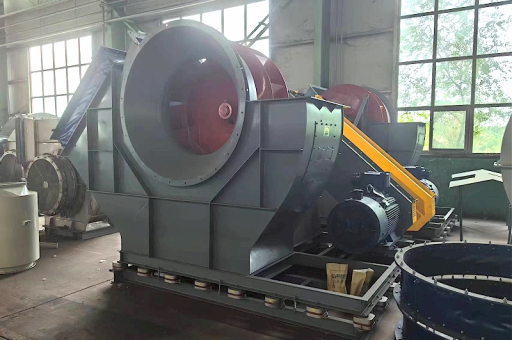
In modern manufacturing, woodworking, metal processing, and bulk material handling facilities, airborne particulate matter is more than a nuisance—it is a serious threat to both worker health and equipment longevity. Regulatory standards such as OSHA’s permissible exposure limits (PELs) and the EU’s ATEX directives require robust solutions for combustible dust and respirable crystalline silica. At the heart of effective dust control lies the 110kW industrial dust extractor fan—a high-static-pressure, high-volume air mover purpose-built to capture, convey, and filter hazardous dust at the source.
Unlike smaller dust collectors that struggle with long duct runs or high-load operations, a 110kW fan system delivers a volumetric airflow rate of approximately 65,000 to 85,000 m³/h (depending on system resistance). This ensures that even the finest dust particles—down to sub-micron levels—are pulled away from worker breathing zones and transported to centralized filtration units.
Why 110kW?
The 110kW (approximately 150 HP) motor rating is a strategic threshold. It provides enough power for medium-to-large facilities to maintain a negative pressure across multiple collection points without excessive energy waste, making it a preferred choice for plant engineers seeking to balance performance with operational cost.
What Makes the 110kW Industrial Dust Extractor Fan a Game-Changer?
Traditional axial fans or low-pressure centrifugal units often fail in high-resistance dust collection systems because they cannot overcome the pressure drop caused by long ducts, cyclones, or bag filters. The 110kW industrial dust extractor fan, however, is typically a backward-inclined or radial-blade centrifugal fan engineered to handle:
- High static pressure: Up to 4,000–5,500 Pa, enabling it to pull air through multiple branches.
- Abrasion resistance: Heavy-duty steel construction or wear-resistant liners prevent erosion from sharp particulates like metal shavings or silica.
- Variable speed capability: Many models now integrate VFD (Variable Frequency Drive) compatibility, allowing operators to adjust airflow dynamically based on real-time dust loads.
Furthermore, these fans are often paired with cartridge filter systems or baghouse collectors that achieve 99.9% filtration efficiency at 0.5 microns, ensuring that discharged air meets or exceeds indoor air quality standards like ASHRAE 62.1.
Technical Specification Breakdown: Power, Airflow, and Filtration
Below is a detailed look at the core parameters that define a 110kW dust extractor fan system:
| Parameter | Typical Range / Value | Why It Matters |
|---|---|---|
| Motor Power | 110 kW (150 HP) | Drives high static pressure for long ducts |
| Airflow Rate | 65,000 – 85,000 m³/h | Captures dust from multiple workstations |
| Static Pressure | 3,500 – 5,500 Pa | Overcomes filter and duct resistance |
| Impeller Diameter | 1,200 – 1,800 mm | Determines flow vs. pressure curve |
| Sound Level (1m) | 85 – 95 dB(A) | May require silencer or enclosure |
| Filtration Efficiency | HEPA H13 or MERV 15–16 (≥99.97% @ 0.3 µm) | Ensures clean exhaust indoors (if recirculated) |
It is important to note that power consumption is not linear. A 110kW fan running at full speed draws roughly 110 kWh per hour. However, with VFD control and smart sensors, actual energy use can be reduced by 30–50% during low-production periods.
Key Benefits for Dust Control and Air Purification in Workplaces
1 Compliance with Occupational Health Standards
Workplaces that generate wood dust, welding fume, or chemical powders face strict limits on respirable particulates. A 110kW fan system can maintain airborne dust levels below 0.5 mg/m³, significantly reducing the risk of occupational asthma, silicosis, or combustible dust explosions.
2 Improved Equipment Reliability
Dust accumulation on motors, bearings, and electrical panels causes overheating and premature failure. By actively pulling dust away from sensitive areas, the extractor fan extends the life of CNC machines, conveyor systems, and lighting.
3 Energy Optimization
Modern 110kW fans with EC (electronically commutated) motors or premium-efficiency IE4/IE5 induction motors can achieve up to 96% motor efficiency. When combined with a triggered cleaning cycle (e.g., pulse-jet filter cleaning), the system only uses full power during peak production, slashing operating costs.
4 Enhanced Employee Morale and Productivity
Clean air directly correlates with better cognitive function and fewer sick days. A study by the Harvard T.H. Chan School of Public Health showed that improved ventilation can boost decision-making performance by up to 61%. In industrial environments, a well-maintained dust extractor fan creates a safer, more pleasant workspace.
Application Scenarios: Where Does a 110kW Fan Shine?
- Woodworking Plants: Large sanders, planers, and CNC routers produce fine wood dust that requires high capture velocity. A 110kW fan can serve 8–12 workstations simultaneously.
- Metal Fabrication: Plasma cutting, grinding, and welding generate metal fume and grinding dust. The fan’s static pressure ensures that fume extraction arms remain effective even when extended 6–8 meters.
- Bulk Material Handling: Cement, grain, and plastic pellet facilities require dust control at transfer points, silos, and bagging stations. The 110kW system can maintain a strong negative draft across 50–80 meters of ductwork.
- Pharmaceutical and Food Processing: For non-combustible but hazardous powders (e.g., lactose, active pharmaceutical ingredients), the fan can be paired with explosion-proof motors and stainless steel construction.
Frequently Asked Questions (FAQ): Real Answers for Plant Managers
Q1: Can a 110kW dust extractor fan run continuously 24/7?
Answer: Yes—provided it is equipped with heavy-duty bearings, thermal overload protection, and a proper lubrication schedule. Most industrial fans designed for this power class are rated for continuous duty (S1) operation. However, we recommend monitoring vibration levels monthly and replacing filters before pressure drop exceeds 1,500 Pa to avoid motor strain.
Q2: How do I calculate the correct duct diameter for a 110kW fan?
Answer: For a fan producing 75,000 m³/h at 4,500 Pa, the main trunk duct should have a diameter of approximately 700–800 mm to keep air velocity between 20–25 m/s. Smaller branches (250–400 mm) can serve individual machines. Use the formula A = Q / v (where A = cross-sectional area in m², Q = flow in m³/s, v = velocity in m/s).
Q3: Is a 110kW fan suitable for combustible dust like aluminum powder?
Answer: Only if the system is ATEX-certified and includes explosion venting, a suppression system, or a rotary valve with flame arrestor. The fan itself must use non-sparking materials (e.g., aluminum-bronze impellers) and have a direct-drive motor placed outside the air stream to prevent ignition. Always consult a certified dust hazard analyst (DHA) before installation.
Q4: What is the typical payback period for upgrading to a 110kW VFD-driven fan?
Answer: With energy savings of 30% and reduced filter replacement costs, most facilities see a payback within 18–24 months. Larger operations may achieve payback in under 12 months if they qualify for energy efficiency rebates from local utilities.
Q5: Can this fan be used for ambient air purification, not just source capture?
Answer: While source capture is the most efficient method, a 110kW fan can also be integrated into a general ventilation system with ceiling-mounted intake grilles. In such cases, the fan must be paired with high-efficiency cartridge filters (HEPA H13 or higher) to recirculate clean air back into the workplace, reducing heating/cooling losses.
Conclusion: Future-Proofing Your Facility with Smart Dust Management
The 110kW industrial dust extractor fan is not merely a component—it is the cornerstone of a comprehensive dust control and air purification strategy. As industries face increasing pressure to reduce emissions, protect workers, and lower energy costs, investing in a correctly sized, high-static fan system becomes an economic and ethical imperative.
When selecting a fan, look beyond horsepower. Consider full-system efficiency: low-pressure-drop duct layouts, automated filter cleaning (e.g., pulse-jet or reverse-air), and predictive maintenance sensors. With the right integration, a 110kW fan can serve your facility for 15–20 years, delivering clean air and operational reliability that pays for itself many times over.
Final recommendation: Partner with a fan manufacturer that offers computational fluid dynamics (CFD) modeling and site-specific noise attenuation. A custom-engineered fan system will always outperform a generic off-the-shelf unit in both performance and longevity.
For more information on sizing, installation, and compliance, consult ASHRAE Standard 62.1, NFPA 654 (Standard for Combustible Dust), or contact a certified industrial ventilation engineer.





