
This article's table of contents introduction:
- Table of Contents
- Introduction: The Critical Role of High-Volume Fans in Cement Production
- Understanding the Core Components: ODM, Cement Rotary Kiln, and Centrifugal Fan
- Why "Customized Support" is Non-Negotiable for Cement Kiln Operations
- Technical Specifications of a High-Volume Centrifugal Fan for Kiln Applications
- The ODM Advantage: Tailoring Fan Design to Your Kiln’s Profile
- Energy Efficiency and Environmental Compliance in Modern Fan Systems
- Installation, Maintenance, and Longevity of High-Volume Fans
- Frequently Asked Questions (FAQ)
- Conclusion: Partnering for Performance
*Precision Engineering for Industry: The Ultimate Guide to Customized Support ODM Cement Rotary Kiln Centrifugal Fan High Volume Systems*
Table of Contents
- Introduction: The Critical Role of High-Volume Fans in Cement Production
- Understanding the Core Components: ODM, Cement Rotary Kiln, and Centrifugal Fan
- Why "Customized Support" is Non-Negotiable for Cement Kiln Operations
- Technical Specifications of a High-Volume Centrifugal Fan for Kiln Applications
- The ODM Advantage: Tailoring Fan Design to Your Kiln’s Profile
- Energy Efficiency and Environmental Compliance in Modern Fan Systems
- Installation, Maintenance, and Longevity of High-Volume Fans
- Frequently Asked Questions (FAQ)
- Conclusion: Partnering for Performance
Introduction: The Critical Role of High-Volume Fans in Cement Production
In the world of cement manufacturing, few components are as vital yet often overlooked as the Customized Support ODM Cement Rotary Kiln Centrifugal Fan High Volume system. This specialized industrial fan is not merely an accessory; it is the respiratory system of the entire pyro-processing line. The rotary kiln, a massive rotating furnace operating at over 1400°C, relies entirely on a consistent, high-volume stream of combustion air. Without a correctly engineered centrifugal fan, the kiln cannot maintain the necessary thermal profile for clinkerization.
The keyword "high volume" refers to the fan’s ability to move massive quantities of air—often exceeding 1,000,000 m³/h—against significant system resistance. This airflow is crucial for providing oxygen for fuel combustion, cooling the clinker, and transporting exhaust gases through pollution control equipment. A generic fan will fail here. The precise engineering offered by an ODM (Original Design Manufacturer) , combined with customized support, ensures that the fan matches the exact pressure, temperature, and particulate load of a specific kiln. This article will dissect the engineering principles, customization benefits, and operational best practices surrounding these critical machines.
Understanding the Core Components: ODM, Cement Rotary Kiln, and Centrifugal Fan
To fully appreciate the value of a customized solution, one must understand the three core elements of this system.
A. The Cement Rotary Kiln This is the heart of the cement plant. It is a long, slightly inclined, rotating cylindrical vessel lined with refractory bricks. Raw meal (limestone, clay, sand) is fed into the upper end and slowly moves towards the lower, high-temperature end where fuel (coal, petcoke, natural gas) is burned. The centrifugal fan must deliver primary and secondary air for combustion. The fan must also handle hot, dusty, and often corrosive exhaust gases.
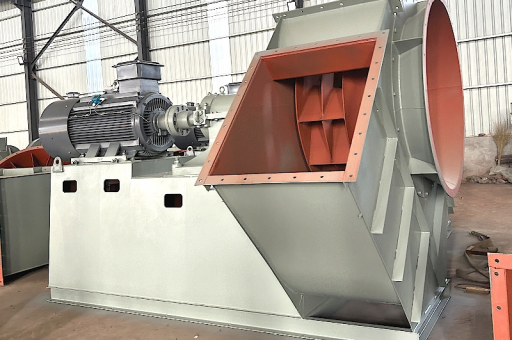
B. The High-Volume Centrifugal Fan Unlike axial fans, centrifugal fans (also known as radial fans) use a rotating impeller to increase the velocity and pressure of the gas. For cement kilns, specific types are used:
- Radial Blade Fans: Ideal for heavy dust loads (e.g., ID fans for exhaust).
- Backward Curved Fans: Highly efficient for clean air applications (e.g., combustion air supply).
- Airfoil Fans: Maximum efficiency, used for critical combustion air systems.
The "high volume" aspect demands a large impeller diameter and powerful motor, often in the megawatt range. The fan housing must be robust enough to withstand thermal expansion and vibration.
C. The ODM (Original Design Manufacturer) Model This is the most critical advantage. A standard fan supplier simply builds a fan to a given performance curve. An ODM goes further. They have the engineering capability to start from scratch or modify existing designs to fit your specific plant constraints. This includes:
- Customized Support: On-site measurement of ductwork, ambient conditions, and existing infrastructure.
- Material Selection: Choosing high-temperature alloys, abrasion-resistant liners, or specific coatings for corrosive gases.
- Performance Guarantee: The fan is designed and built for your kiln, not for a generic industrial benchmark.
Why "Customized Support" is Non-Negotiable for Cement Kiln Operations
A cement rotary kiln is a unique thermodynamic machine. No two plants operate under identical conditions. Variables such as altitude, ambient temperature, fuel type, raw material moisture, and ductwork layout create a unique "system resistance curve."
The Problem with One-Size-Fits-All: If a fan is oversized, the kiln becomes unstable, wasting energy and potentially damaging the refractory. If undersized, oxygen starvation leads to incomplete combustion, higher fuel costs, and "reducing atmospheres" that damage clinker quality and production capacity.
How Customized Support Solves This:
- Computational Fluid Dynamics (CFD) Analysis: A reputable ODM will perform CFD modeling on your specific ductwork and kiln hood geometry. This predicts gas velocity profiles and static pressure losses precisely.
- Thermal Expansion Management: The shaft and bearing housing must be designed for the radiant heat from the kiln shell. Custom support includes engineered cooling systems (fan-driven or water-cooled) and expansion joints.
- Vibration Dampening: A high-volume fan moves tons of gas per minute. Imbalance from dust accumulation or thermal distortion must be mitigated through custom rotor designs and isolation bases.
- Integration with Control Systems: Modern plants use variable frequency drives (VFDs). Custom support ensures the fan's resonant frequencies are outside the operational RPM range, preventing catastrophic harmonic failure.
Customized support is not a luxury; it is an engineering necessity to ensure the fan operates at its Best Efficiency Point (BEP).
Technical Specifications of a High-Volume Centrifugal Fan for Kiln Applications
When specifying a Customized Support ODM Cement Rotary Kiln Centrifugal Fan High Volume, engineers must evaluate several key parameters:
- Flow Rate (Q): Measured in actual cubic feet per minute (ACFM) or m³/h. Must account for gas temperature, density, and altitude. A typical 5000 TPD kiln may require a combustion air fan delivering 1.2 million m³/h.
- Pressure (P): Static pressure measured in inches w.g. (water gauge) or Pascals. Kiln ID fans often require 30-40 inches w.g. due to the resistance of ductwork, preheaters, and baghouses.
- Temperature (T): Combustion air fans handle ambient to ~250°C. ID fans handle exhaust gases from 150°C to 400°C. Material selection (e.g., CORTEN steel, stainless steel 310) is driven by temperature.
- Impeller Type: For high-volume, dusty kiln applications, a reinforced radial or radial-tipped impeller with wear plates is standard.
- Drive System: Direct drive is preferred for high power (over 1 MW) to eliminate belt losses and maintenance. A VFD-controlled synchronous motor is the gold standard for precise airflow control.
- Noise Attenuation: High-volume fans generate substantial noise (over 110 dB). Customized support often includes in-line silencers and acoustic enclosures.
The ODM Advantage: Tailoring Fan Design to Your Kiln’s Profile
Let’s delve deeper into how an ODM partner creates a "fan DNA" for your kiln.
Step 1 - Site Audit: Engineers visit your plant to measure the actual inlet and outlet flanges, duct routing, and electrical infrastructure. They verify the kiln’s actual gas analysis.
Step 2 - Performance Selection: Using proprietary software, they plot your required flow (Q) and pressure (P) on the fan curve. The goal is to place the operating point within 5-10% of the fan’s BEP.
Step 3 - Material & Component Sourcing:
- For a high volume fan handling raw mill gases with high silica content, the ODM will specify tungsten carbide wear tiles on the impeller leading edges.
- For a kiln burning high-sulfur petcoke, the hub and shaft will be given a high-temperature epoxy coating or made from duplex stainless steel to resist acid corrosion.
Step 4 - Structural Integrity: Finite Element Analysis (FEA) is performed on the shaft and housing to ensure safe operation under potential stall conditions or a plugged system.
Step 5 - Testing & Commissioning: Before shipment, the fan is factory-tested per AMCA (Air Movement and Control Association) standards. Customized support continues on-site with alignment, balancing, and performance verification.
Energy Efficiency and Environmental Compliance in Modern Fan Systems
A poorly designed Customized Support ODM Cement Rotary Kiln Centrifugal Fan High Volume is a profit drain. A high-volume fan can consume 5-8 MW of electricity. A 1% improvement in fan efficiency can save a plant hundreds of thousands of dollars annually.
Strategies for Efficiency:
- Variable Frequency Drives (VFDs): Instead of throttling dampers (which waste energy), the fan speed is adjusted to match demand.
- Optimized Inlet Box: A custom-designed inlet cone reduces turbulence and pre-swirl, improving efficiency by 3-5%.
- Dual-Fan Configurations: In some high-volume applications, two smaller fans are more efficient than one massive unit.
Environmental Compliance: The fan is critical for emission control. By maintaining proper draft in the preheater and kiln, the fan ensures stable conditions for Selective Non-Catalytic Reduction (SNCR) systems. A customized ID fan with a high static pressure capability ensures that even with a clogged baghouse filter, the kiln can run without positive pressure (which causes dust spillage). The fan is the last line of defense for keeping emissions low.
Installation, Maintenance, and Longevity of High-Volume Fans
Even the best ODM design requires meticulous care. Here is a streamlined maintenance checklist:
- Daily: Check vibration levels (velocity and envelope). Monitor bearing temperature and oil level. Listen for unusual noise indicating imbalance or coupling wear.
- Weekly: Inspect the fan housing for hot spots indicating refractory loss inside the ductwork. Check VFD and motor cooling fans.
- Monthly: Grease bearings per the ODM’s recommendation. Inspect the shaft seal for air leakage.
- Annually (or during kiln shutdown): Clean the impeller blades. Even a 1/8-inch layer of dust can reduce fan capacity by 5%. Inspect wear plates and weld hard-facing if necessary.
Pro-Tip: The most common cause of high-volume fan failure is not mechanical wear, but system imbalance. A change in ductwork, a closed damper, or a new cyclone can change the system resistance. Your customized support ODM should offer a re-rating service to adjust the fan’s speed or blade angle if plant conditions change.
Frequently Asked Questions (FAQ)
Q1: How do I know if I need a new Customized Support ODM Cement Rotary Kiln Centrifugal Fan High Volume, or if I can retrofit my existing one?
A: Retrofitting is possible if the existing housing and foundation are in good condition. If your production capacity has increased (e.g., from 3000 TPD to 4000 TPD), the ODM can design a new, higher-volume impeller and upgrade the motor and bearings. However, if the fan is over 15 years old, the efficiency gain from a new ODM unit often justifies the cost.
Q2: What is the difference between a "high volume" fan for a cooler and one for the kiln ID?
A: The cooler fan requires high pressure (to push air through the clinker bed) but moderate volume. The kiln ID fan (Induced Draft) requires extremely high volume (to pull gases through the preheater tower) and moderate pressure (in a modern precalciner plant, about 25-30 in w.g.). The ODM must design for the specific gas density (hot and dusty vs. cold and clean).
Q3: Can a customized ODM fan handle hydrogen or CO-rich gases in a cement kiln?
A: Yes, but this requires special design considerations. The ODM must ensure the fan is spark-resistant (non-ferrous impeller or plastic scabbard rings), grounded, and has a low shaft speed to prevent energy build-up. Customized support includes a Hazop (Hazard and Operability) analysis for the fan.
Q4: How does altitude affect the performance of a high-volume fan?
A: At higher altitudes, the air is thinner (less dense). The fan’s ability to produce static pressure is reduced. An ODM must select a larger impeller or higher speed to achieve the required mass flow of air for combustion. This is a classic case where a standard fan fails, and customized engineering is essential.
Q5: What is the typical lead time for an ODM high-volume centrifugal fan for a cement rotary kiln?
A: For a completely custom design (from scratch), expect 16-24 weeks, including engineering, material procurement, and fabrication. If the ODM has a similar existing design they can modify, the lead time can be reduced to 10-12 weeks. Rush orders are possible but often require overtime premiums.
Conclusion: Partnering for Performance
The Customized Support ODM Cement Rotary Kiln Centrifugal Fan High Volume is not a commodity item; it is a strategic asset. The difference between a standard fan and a truly customized ODM solution is the difference between a cement plant that struggles with uptime and one that consistently exceeds its production targets.
Investing in customized support ensures that the fan is not merely a "part" but a perfectly integrated component of your kiln’s ecosystem. From the initial CFD analysis to the final on-site balancing, an ODM partner brings expertise that directly translates into lower energy bills, higher clinker quality, and cleaner emissions.
When evaluating suppliers for your next high-volume kiln fan, look beyond the price tag. Demand evidence of their engineering rigor. Ask for case studies of similar kiln applications. The right partner will provide the customized support necessary to ensure that your cement rotary kiln breathes easily, efficiently, and reliably for decades.
By focusing on the precise engineering of airflow, pressure, and material science, a Customized Support ODM Cement Rotary Kiln Centrifugal Fan High Volume system serves as the cornerstone of a profitable and sustainable cement operation.





