
This article's table of contents introduction:
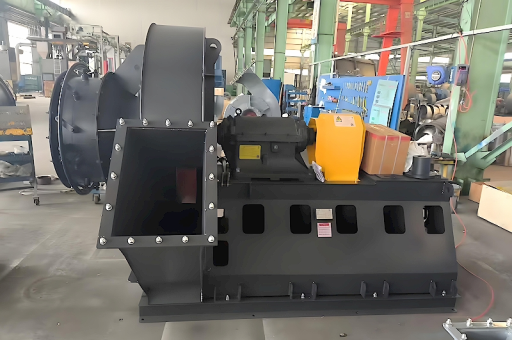
- Application Context: Where is the Fluidizing Fan Used?
- Key System Requirements for a 650 T/D Line
- Recommended Fan Type: Roots Blower (Positive Displacement)
- Preliminary Technical Specifications (Estimated)
- Critical Selection Criteria for PV Glass
- System Configuration (Typical for 650 T/D)
- Summary Recommendation for Procurement
This is a technical specification request. A 650 t/D (tonnes per day) photovoltaic (PV) glass production line is a significant industrial scale. The "supporting fluidizing fan" typically refers to the fan used in the raw material batch system (specifically for fluidizing the silica sand, soda ash, or mixed batch in storage silos) or the bin aeration system.
Here is a detailed breakdown of the required fan specifications, system context, and selection criteria for such a line.
Application Context: Where is the Fluidizing Fan Used?
In a 650 T/D PV glass plant, the fluidizing fan is most commonly used in one of two places:
- Batch Plant Silo Aeration: To prevent bridging and ensure smooth flow of fine powders (silica, feldspar, limestone) from storage silos into the weigh hoppers.
- Batch Charger Fluidization: To fluidize the mixed batch in the "batch charger hopper" before it enters the melting furnace, ensuring a consistent blanket on the glass melt.
Assumption: We are specifying for primary mixer/silo aeration.
Key System Requirements for a 650 T/D Line
- Total Airflow: High volume, low pressure.
- Pressure: Typically 50 kPa to 80 kPa (7 to 11.6 psi) . Silo aeration requires low back-pressure.
- Air Quality: MUST be oil-free and dry. Oil contamination in the glass batch will cause bubbles and defects in the PV glass, reducing solar transmission efficiency.
- Material of Construction: Impeller and casing should be carbon steel (standard) or stainless steel (316L for high humidity zones). For PV glass, corrosion resistance is important due to the use of Sodium Sulfate and other fluxes.
Recommended Fan Type: Roots Blower (Positive Displacement)
For a 650 T/D line, the required air volume (typically 15 - 30 m³/min depending on silo size) and pressure characteristics are best met by a Three-Lobe Roots Blower.
- Why? Constant volume flow, stable pressure, good for multi-point aeration.
- Why not Centrifugal? Centrifugal fans struggle with the variable backpressure from fluidized beds and are less efficient at the required pressure ratio.
Preliminary Technical Specifications (Estimated)
Based on standard PV glass batch plant designs for 650 T/D:
| Parameter | Specification | Notes |
|---|---|---|
| Flow Rate | 18 – 25 m³/min (635 – 883 CFM) | Depends on number of silos and fluidized bottoms. |
| Discharge Pressure | 49 kPa (7.1 psi) | Standard for pneumatic conveying/fluidizing. |
| Motor Power | 30 – 37 kW (40 – 50 HP) | Calculated based on volume & pressure. |
| Motor Speed | 1450 / 1750 RPM | 4-pole motor (50/60 Hz). |
| Noise Level | < 85 dB(A) | Require inlet silencer and discharge muffler. |
| Drive Type | Direct drive or V-belt | V-Belt allows speed adjustment for fine tuning. |
| Cooling | Air-cooled (standard) | Water-cooled not required unless in extreme ambient. |
| Seals | Labyrinth seals (oil-free) | Piston rings if high pressure. |
| Inlet Filter | Dry type, F7/F9 efficiency | Mandatory for PV glass quality. |
Critical Selection Criteria for PV Glass
- Low Pulsation: Three-lobe rotors are mandatory (over two-lobe) to reduce pressure pulsation. Pulsation causes "thumping" in the fluidized bed, leading to batch segregation (heavy sand sinks, light soda floats), which ruins glass quality.
- Energy Efficiency: PV glass furnaces run 24/7. A 37 kW fan operating 365 days costs ~ $20,000 USD/year in electricity. Choose high-efficiency motors (IE4/IE5 or NEMA Premium) and fan impellers.
- Maintenance: Look for "Easy Maintenance" design (gear end bearing cartridge). Downtime on a fluidizing fan stops the batch plant, which can halt the entire furnace.
- VFD Compatibility: (Variable Frequency Drive). This is highly recommended. You need to adjust airflow as silo levels change or as the plant ramps up/down. A VFD saves significant energy and reduces mechanical shock.
System Configuration (Typical for 650 T/D)
- Fan: Roots type, 3-lobe, 30 kW.
- Inlet: Panel filter (dry) + Silencer.
- Outlet: Muffler + Pressure Relief Valve (safety) + Check Valve.
- Distribution: Manifold with individual rotameters to each silo aeration pad.
- Control: pressure transducer on manifold feedback to VFD.
Summary Recommendation for Procurement
| Item | Recommendation |
|---|---|
| Fan Type | Three-lobe Roots Blower (Positive Displacement) |
| Model Example | Similar to Gardner Denver Sutorbuilt 53L / 5L or Aerzen Delta Blower GM 35S or Kaeser OM 28 SFC |
| Key Spec | 20 m³/min @ 50 kPa, 30 kW, 1460 RPM |
| Power Saving | Specify a VFD (e.g., Siemens, ABB, or Schneider). This can save 15-20% on electricity. |
| Material | Carbon steel rotor & casing is sufficient, but specify carbide shaft seals for durability. |
| Critical Feature | Low Pulsation (0.1% max) . |
Next Step: To provide a final, precise specification, I would need:
- A) The exact number of silos (batch silos, soda ash, limestone, dolomite).
- B) The manufacturer of the batch plant (e.g., Batching Systems Inc, Tecnexim).
- C) The ambient temperature (affects derating of the fan).
Disclaimer: These specifications are estimates for conceptual design. Always consult with a professional mechanical engineer and fan manufacturer for final sizing matched to your exact system layout and piping losses.





