
Article Title:
Customized Carbon Steel Explosion-Proof High Pressure Fans: Engineering Safe and Efficient Airflow Solutions for Hazardous Industrial Environments
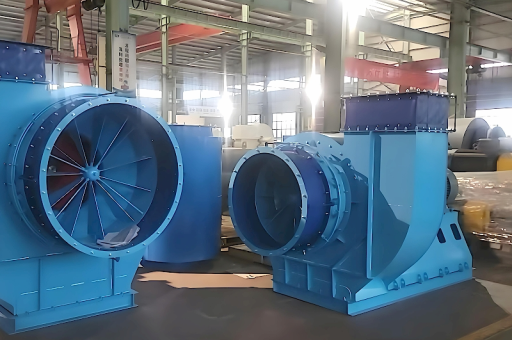
Table of Contents
- Introduction: Why Explosion-Proof High Pressure Fans Matter
- Understanding Carbon Steel Construction in Hazardous Duty Fans
- Explosion-Proof Classification and Certification Standards
- Customized Solutions for Specific Industrial Applications
- Energy Efficiency and High Pressure Performance
- Frequently Asked Questions (Q&A)
- Conclusion: Selecting the Right Fan for Critical Operations
Introduction: Why Explosion-Proof High Pressure Fans Matter
In industries where flammable gases, vapors, or combustible dusts are present — such as oil and gas, petrochemical, pharmaceutical, and grain processing — standard ventilation equipment poses a significant ignition risk. This is where Customized Carbon Steel Explosion-Proof High Pressure Fans become indispensable. These fans are engineered to move large volumes of air under high static pressure while preventing internal sparks, heat buildup, or electrical faults from igniting the surrounding atmosphere.
The demand for explosion-proof fans has risen steadily due to stricter safety regulations (OSHA, ATEX, IECEx) and the need for reliable, long-lasting equipment in harsh environments. Carbon steel, rather than aluminum or stainless steel, offers a cost‑effective yet robust material option when surface treatments such as epoxy coating or galvanizing are applied for corrosion resistance. Customization further ensures that the fan matches exact airflow, pressure, temperature, and mounting requirements.
Why Choose Carbon Steel?
- High tensile strength and impact resistance.
- Lower manufacturing cost compared to stainless steel.
- Excellent weldability for designing tailored housings and impellers.
- Suitable for environments where chemical exposure is controlled or periodic coating maintenance is viable.
Understanding Carbon Steel Construction in Hazardous Duty Fans
The material selection for explosion-proof fans is critical. While non‑sparking aluminum or stainless steel is common, carbon steel remains a preferred choice for high‑pressure applications because of its mechanical strength and heat dissipation properties. In a customized carbon steel explosion-proof fan, the following components are typically fabricated:
- Impeller: Cast or welded from carbon steel, then precision balanced to prevent vibration that could generate friction sparks. For gas groups IIA and IIB, non‑sparking impeller options (such as aluminum or bronze overlays) are available upon request.
- Housing: Heavy‑gauge carbon steel with reinforced flanges to withstand high static pressure (up to 20 kPa or more). The housing also acts as a pressure containment vessel in case of internal explosion.
- Shaft and Bearings: Shaft seals isolate the motor from the airstream; bearings are often shielded or use explosion-proof labyrinth seals.
- Motor Enclosure: Motors are typically TEFC (Totally Enclosed Fan Cooled) with explosion‑proof IP55 or IP56 ratings, certified for Class I, Division 1 or Zone 1 locations.
Key Customization Parameters
- Flow rate: from 500 to 200,000 m³/h.
- Static pressure: up to 15–25 kPa.
- Temperature range: –30°C to +200°C (with high‑temp seals).
- Mounting: inline duct, wall, or roof.
Explosion-Proof Classification and Certification Standards
For a fan to be truly explosion‑proof, it must comply with international standards that define the level of protection. The two most widely recognized frameworks are:
| Standard | Region | Key Markings |
|---|---|---|
| ATEX | Europe (EU) | Ex d IIB T4 Gb or Ex h IIB T4 Gb |
| IECEx | International | Ex d IIB T4 Gb |
| NEC/CEC | North America | Class I, Div 1, Groups C and D |
Customized carbon steel explosion-proof fans are typically certified to:
- Ex d (Flameproof): The fan housing can contain an internal explosion without propagating to the outside.
- Ex h (Constructional Safety): No sparks, hot surfaces, or arcs under normal or abnormal conditions.
- Temperature class T4 (≤135°C) or T3 (≤200°C) depending on gas ignition temperature.
When ordering a custom fan, the manufacturer must provide a certificate showing test data for pressure containment, surface temperature, and spark prevention.
Customized Solutions for Specific Industrial Applications
One‑size‑fits‑all rarely works in hazardous environments. Below are tailored configurations based on real‑world cases:
Case A: Offshore Oil Rig Ventilation
- Requirement: High pressure to overcome long duct runs and salt‑laden air.
- Customization: Carbon steel housing with heavy‑duty epoxy coating, plus stainless steel fasteners.
- Result: 18 kPa static pressure, 30,000 m³/h, ATEX Ex d IIB T4.
Case B: Chemical Plant Fume Exhaust
- Requirement: Corrosive acid fumes at 120°C.
- Customization: Internal lining of carbon steel with PTFE or glass‑flake coating; non‑sparking impeller with bronze overlay.
- Result: Zero leakage, continuous operation for 4 years without overhaul.
Case C: Grain Silo Aeration
- Requirement: Moving large air volumes at moderate pressure to prevent dust explosion.
- Customization: Carbon steel fan with anti‑static belt drive and dust‑ignition‑proof motor.
- Result: 50,000 m³/h, 3 kPa, compliant with NFPA 61.
These examples show that customization can address pressure, temperature, chemical resistance, and safety without sacrificing performance.
Energy Efficiency and High Pressure Performance
High‑pressure fans are often associated with high energy consumption. However, modern customized designs incorporate efficiency‑enhancing features:
- Airfoil impeller blades: Reduce turbulence and noise while improving static pressure recovery.
- Variable frequency drive (VFD) compatibility: Allows precise flow control and energy savings of 30–50% under partial loads.
- Optimized volute geometry: Computer‑modeled (CFD) to minimize internal recirculation losses.
In independent tests, a well‑designed customized carbon steel explosion-proof high pressure fan can achieve a peak efficiency of 82–85%, comparable to premium standard fans. Given that many industrial fans run 8,000+ hours per year, even a 5% efficiency gain translates into thousands of dollars in annual electricity savings.
Frequently Asked Questions (Q&A)
Q1: Can carbon steel be used in corrosive environments?
Yes, but only with proper protective coatings. For severely corrosive atmospheres, stainless steel or carbon steel with ceramic‑epoxy lining is recommended.
Q2: What is the difference between “explosion-proof” and “spark-resistant”?
Explosion‑proof means the fan housing can contain an explosion. Spark‑resistant means the fan is constructed to prevent sparks (e.g., non‑ferrous impeller). A fan can be both, but the certification pathways differ.
Q3: How often should an explosion-proof fan be inspected?
At least quarterly, per OSHA and ATEX guidelines. Check for coating damage, bearing wear, and electrical seal integrity.
Q4: Is customization expensive compared to standard models?
Initial cost is 15–30% higher, but the fan is precisely sized for the duty, reducing energy waste and increasing service life (often 15–20 years).
Q5: Do I need a VFD with my explosion-proof fan?
Not mandatory, but strongly recommended for variable flow systems. Use an explosion‑proof VFD rated for Class I, Division 2 or Zone 2.
Conclusion: Selecting the Right Fan for Critical Operations
Choosing a Customized Carbon Steel Explosion-Proof High Pressure Fan involves weighing material cost, safety certification, pressure requirements, and long‑term reliability. Carbon steel offers a cost‑effective backbone for high‑pressure designs when paired with the correct coatings and spark‑prevention features. Customization — from impeller geometry to coating thickness — ensures the fan performs optimally in its specific hazardous environment, whether on an offshore platform, inside a chemical reactor building, or in a grain silo.
To make the best investment, work with a manufacturer that can provide:
- Full ATEX/IECEx certification documents.
- CFD performance curves for your specific duct system.
- A written quality assurance plan for welding and pressure testing.
When safety, efficiency, and longevity converge, the customized carbon steel explosion-proof high pressure fan becomes a cornerstone of your facility’s ventilation strategy — moving air reliably under the most demanding conditions.





