
The Ultimate Guide to 15000Pa Centrifugal Fan: Performance, Applications, and Maintenance
Table of Contents
- What is a 15000Pa Centrifugal Fan?
- How Does It Work?
- Key Specifications and Performance Metrics
- Industrial Applications
- 15000Pa vs. Other Centrifugal Fans
- Installation Best Practices
- Maintenance and Troubleshooting
- Frequently Asked Questions
- Conclusion
What is a 15000Pa Centrifugal Fan?
A 15000Pa centrifugal fan is a high-pressure industrial ventilation device capable of generating up to 15,000 pascals (Pa) of static pressure. This makes it one of the most powerful centrifugal fan types available, designed for demanding air movement tasks where standard fans fail. Unlike axial fans that move air along the axis, centrifugal fans use a rotating impeller to accelerate air radially, converting velocity into pressure.
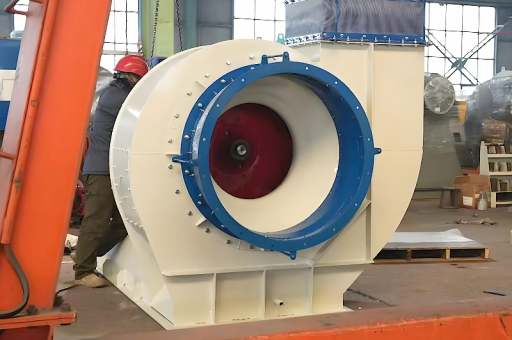
These fans are critical in industries requiring high static pressure to overcome resistance from long ductwork, filters, or dense materials. The 15000Pa rating indicates it can push air through systems with extreme backpressure, such as pneumatic conveying lines or dust collection networks in heavy manufacturing.
Did you know? The 15000Pa centrifugal fan is sometimes compared to small wind turbine systems in terms of pressure generation, but it is purpose-built for industrial air handling rather than power generation.
How Does It Work?
The operating principle of a 15000Pa centrifugal fan relies on three core components:
- Impeller: A wheel with backward-curved, forward-curved, or radial blades. For high-pressure applications like 15000Pa, backward-curved blades are preferred due to their efficiency and non-overloading characteristics.
- Housing (Volute): A spiral-shaped casing that converts kinetic energy from the impeller into static pressure. The volute design is optimized for 15000Pa output, often featuring reinforced construction to prevent deformation.
- Drive System: Direct drive or belt-driven motors. Belt drives allow speed adjustment, which directly affects pressure output.
Airflow Path:
- Air enters axially through the inlet
- The rotating impeller flings air outward
- The volute decelerates air, increasing static pressure
- High-pressure air exits tangentially through the discharge
For a 15000Pa rating, the impeller typically operates at high RPM (2,500–4,000 RPM depending on size), generating significant centrifugal force. Materials like steel or aluminum alloys are used to withstand stress.
Key Specifications and Performance Metrics
When selecting a 15000Pa centrifugal fan, consider these parameters:
| Specification | Typical Range | Notes |
|---|---|---|
| Airflow (CFM) | 500 – 5,000 | Varies with pressure; trade-off exists |
| Static Pressure | 12,000 – 15,000 Pa | At peak efficiency |
| Motor Power | 15 – 50 kW | Dependent on airflow and speed |
| Max RPM | 3,600 | Industrial standard |
| Noise Level | 85 – 100 dB(A) | Requires hearing protection |
Performance Curve: At 15000Pa, airflow is reduced compared to lower-pressure fans. For example, a 15000Pa fan may deliver only 2,000 CFM, whereas a 5,000Pa fan could achieve 8,000 CFM. This inverse relationship is fundamental.
Pro Tip: Always confirm the fan's operating point on its performance curve (P-Q diagram) to ensure it matches your system's resistance.
Industrial Applications
The 15000Pa centrifugal fan excels in environments where other fans fail:
Pneumatic Conveying Systems
- Moves cement, grains, plastic pellets through long pipes
- 15000Pa sustains flow even with bends and elevation changes
Dust Collection in Heavy Industry
- Powers baghouse filters in steel mills, woodworking plants
- Overcomes high filter resistance as dust accumulates
Ventilation in Tunnels and Mines
- Provides fresh air to underground operations
- Handles high friction loss from rough tunnel walls
Process Cooling in Power Plants
- Cools turbines or generators in confined spaces
- Reliable continuous operation is mandatory
Air Canvas Systems (a niche)
- Used in large-format printing or textile drying where precise airflow is needed
Real-World Example: A cement factory in Germany uses a 15000Pa centrifugal fan to transport limestone powder 200 meters vertically. The system's pressure requirement is 13,800Pa, close to the fan's maximum.
15000Pa vs. Other Centrifugal Fans
| Fan Type | Typical Pressure | Best Use |
|---|---|---|
| Low Pressure | < 1,000 Pa | General ventilation |
| Medium Pressure | 1,000 – 5,000 Pa | HVAC, light dust |
| High Pressure | 5,000 – 12,000 Pa | Industrial exhaust |
| 15000Pa | 12,000 – 15,000 Pa | Extreme applications |
Compared to axial fans, the 15000Pa centrifugal fan offers:
- Higher pressure (axial fans max out at ~2,000 Pa)
- Steadier flow against varying resistance
- Lower noise per unit of pressure (though still loud)
However, it is larger, heavier, and more expensive than most alternatives. It is overkill for standard HVAC use.
Installation Best Practices
Proper installation ensures your 15000Pa centrifugal fan performs reliably:
- Foundation: Use a concrete base with vibration isolators. The 50kW motor generates substantial vibration.
- Inlet and Outlet Ducts: Install straight sections (minimum 2x duct diameter) to avoid turbulence that reduces pressure.
- Duct Sizing: Ensure ducts can handle 15000Pa without bursting. Use Schedule 40 steel pipe or heavy-gauge spiral duct.
- Electrical: Follow local codes for high-power motors. Use VFDs if variable speed is needed.
- Safety Guards: All rotating parts must be enclosed. The impeller stores tremendous kinetic energy.
Common Mistake: Mounting the fan on a lightweight structure. The 15000Pa fan can pull or push with immense force, potentially causing structural damage.
Maintenance and Troubleshooting
To extend the lifespan of a 15000Pa centrifugal fan, follow this routine:
Regular Checks (Monthly)
- Inspect impeller for wear or imbalance
- Check belt tension (if belt-driven)
- Clean housing and inlet screen
- Listen for unusual noises (grinding indicates bearing failure)
Quarterly Tasks
- Lubricate bearings with high-temperature grease
- Measure motor current to detect overloading
- Verify static pressure with a manometer
Annual Overhaul
- Replace bearings and seals
- Rebalance impeller if vibration exceeds 5 mm/s RMS
- Check volute for cracks from pressure fatigue
Troubleshooting Guide
| Problem | Possible Cause | Solution |
|---|---|---|
| Low pressure | Belt slip, dirty impeller | Tighten belt, clean blades |
| High vibration | Imbalance, loose mounting | Balance wheel, tighten bolts |
| Overheating | High backpressure, wrong speed | Adjust damper, check RPM |
Caution: Never operate the fan at pressures higher than 15000Pa. It can damage the motor or impeller.
Frequently Asked Questions
Q1: Can a 15000Pa centrifugal fan be used for residential ventilation?
A: No. It's overpressured and noisy for homes. Residential fans typically need under 500Pa.
Q2: How does a 15000Pa fan compare to a wind turbine in pressure?
A: A wind turbine rotor experiences pressure differentials of only a few hundred pascals. The 15000Pa fan generates an order of magnitude more pressure, but for air movement, not electricity.
Q3: What is the typical lifespan of a 15000Pa centrifugal fan?
A: With proper maintenance, 15–25 years. Harsh environments (dust, corrosion) reduce it to 8–12 years.
Q4: Can I reduce the pressure output?
A: Yes. Use a Variable Frequency Drive (VFD) to lower RPM or install a bypass damper. Both methods reduce pressure, but VFD is more energy-efficient.
Q5: Is a 15000Pa fan explosion-proof?
A: Not by default. You need special construction (non-sparking materials, motor in separate housing) for explosive environments.
Conclusion
The 15000Pa centrifugal fan is a specialized industrial workhorse designed for extreme pressure applications. Its ability to generate 15,000 pascals of static pressure makes it indispensable in pneumatic conveying, dust collection, and heavy ventilation. While more expensive and demanding than standard fans, it delivers unmatched performance when system resistance is high. Proper selection, installation, and maintenance are critical to maximizing its ROI. Before purchasing, always calculate your system's pressure requirements to avoid oversizing. For most industrial operations requiring high-pressure air movement, the 15000Pa centrifugal fan remains the gold standard.
Need to determine your exact system pressure? Consult a ventilation engineer or use ductwork pressure drop calculation software.





