
This article's table of contents introduction:
- What is it?
- How Does It Work?
- Key Characteristics & Components
- Why Use It for Building Ventilation? (Applications)
- Single Inlet vs. Double Inlet for High Pressure
- Selection Considerations
- In Summary:
This is an excellent query, as it describes a highly specific and powerful piece of equipment used in demanding industrial and commercial environments.
Here is a detailed breakdown of what a "Single Inlet High Pressure Centrifugal Fan for Building Ventilation" is, how it works, and where you would typically find it.
What is it?
Let's break down the name:
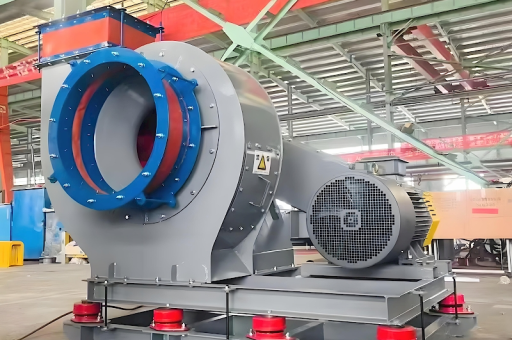
- Single Inlet: Air enters the fan from only one side of the impeller (the rotating wheel). This is in contrast to a double-inlet fan, which draws air from both sides.
- High Pressure: This fan is designed to generate a significant pressure differential, typically ranging from 20 inches of water gauge (in. wg) to over 100 in. wg. This is much higher than a standard ventilation fan (which might be 1-4 in. wg).
- Centrifugal Fan: The air enters the center of the impeller and is flung outwards by centrifugal force, accelerating it radially. This design is inherently efficient at creating high pressure.
- Building Ventilate: The primary purpose is to move large volumes of air for exhaust, supply, or process control in a commercial or industrial building.
In short: It's a heavy-duty, industrial-grade fan designed to push air through long, complex, or restrictive ductwork systems or to overcome very high system resistance.
How Does It Work?
- Air Inlet: Air is drawn into the fan through a single inlet cone on one side.
- Impeller Action: An impeller with backward-inclined, radial, or airfoil blades spins at high speed (often via a belt drive or direct coupling to a large motor). The impeller catches the air and throws it outward.
- Volute Casing: The air enters a spiral-shaped casing called a volute. As the air travels through the volute, its velocity is partially converted into static pressure. The volute also collects the air and directs it to the single discharge outlet.
- High-Pressure Output: The air leaves the fan at the discharge, possessing both high velocity and high static pressure, allowing it to overcome the resistance of the ductwork, filters, dampers, and other system components.
Key Characteristics & Components
- Heavy-Duty Construction: To withstand the high pressures and stresses, these fans are built from thick-gauge steel (often welded) and may be reinforced.
- Motor & Drive: Typically paired with a high-horsepower motor (e.g., 50 HP, 100 HP, or more) connected via a belt drive (for speed adjustment) or a direct drive.
- Bearings & Shaft: Oversized, heavy-duty bearings are used to handle the significant radial loads. A robust shaft connects the impeller to the motor/drive.
- Wheel Options:
- Backward-Inclined Blades: Most common for high-pressure, medium-volume applications. They are efficient and non-overloading.
- Airfoil Blades: The most efficient for clean-air applications.
- Radial/Radial-Tip Blades: Used for the highest pressures or for handling slightly dirty airstreams (e.g., dust, fumes).
Why Use It for Building Ventilation? (Applications)
You wouldn't use this for a typical office or home. It's for critical, high-resistance systems:
- Exhausting High-Rise Stairwells & Smoke Control: These fans are mandated in building codes to create positive pressure in stairwells during a fire, preventing smoke ingress. They must overcome long runs of ductwork and door resistance.
- Large Commercial Kitchens (Grease Exhaust): Ventilating a massive commercial kitchen (e.g., in a casino, hotel, or convention center) requires overcoming very high static pressure from long, large-diameter grease ducts, fire dampers, and pollution control devices.
- Laboratory & Fume Hood Exhaust: Laboratories need to exhaust hazardous fumes from fume hoods with high velocity and pressure to ensure containment and overcome complex duct systems.
- Dust Collection Systems: In woodworking, metalworking, or pharmaceutical facilities, these fans create the high pressure needed to capture dust at the source and transport it to a central collector.
- Industrial Process Ventilation: Exhausting hot air, fumes, or particulate from industrial processes like welding, chemical processing, or paint booths.
- Underground Parking Garage Ventilation: Moving large volumes of stale air and exhaust from vehicles through long, underground tunnels.
- General Industrial Supply: Pushing filtered, tempered air into a large, open manufacturing plant to maintain positive pressure and ensure proper air quality.
Single Inlet vs. Double Inlet for High Pressure
- Single Inlet: Preferred when you need very high static pressure and the flow rate is moderate to high. The single-sided design allows for a more robust shaft and bearing system, which is crucial for the high stresses of pressure generation.
- Double Inlet: More common for high-volume, low-to-medium pressure applications (e.g., typical HVAC air handling units). The two inlets allow for a larger volume of air to enter, but the shaft runs through the center of the airstream, creating more turbulence and stress.
Selection Considerations
If you are specifying this fan, you must know:
- Required Airflow (CFM or m³/h): How much air needs to be moved.
- Required Static Pressure (in. wg or Pa): The total resistance the fan must overcome.
- Air Density/Temperature: High temperatures (e.g., kitchen exhaust) and altitude affect fan performance.
- Air Composition: Is it clean, dusty, corrosive, or explosive? This dictates the material (stainless steel, mild steel, special coatings) and impeller type.
- Space Constraints: Single-inlet fans are generally more space-efficient for high-pressure installations compared to a double-inlet fan of similar capability.
- Noise Requirements: High-pressure fans are inherently noisy. Sound attenuation measures (silencers, acoustic enclosures) are often required.
In Summary:
| Feature | Description |
|---|---|
| Primary Function | Move large volumes of air against very high system resistance (ductwork, filters, dampers). |
| Key Advantage | Generates high static pressure efficiently compared to standard axial or centrifugal fans. |
| Common Application | Smoke control, large kitchen exhaust, industrial dust collection, lab exhaust. |
| Typical Motor Size | 5 HP to 200+ HP |
| Sound Level | Very loud, requiring acoustic treatment in occupied spaces. |
| Design | Rugged, heavy-gauge steel, single-sided air intake. |
If you are considering one of these for a project, it is strongly recommended to consult with a qualified Mechanical Engineer or a fan manufacturer who specializes in high-pressure industrial ventilation. Incorrect selection can be unsafe, inefficient, and very expensive.





