
High Volume High Pressure Air Fan Ventilator Industrial Centrifugal: The Ultimate Guide to Performance, Applications, and Selection
Table of Contents
- Introduction to High Volume High Pressure Air Fan Ventilator Industrial Centrifugal Systems
- How a Centrifugal Fan Generates High Volume and High Pressure
- Key Components and Design Variations
- Industrial Applications: Where These Fans Excel
- Performance Metrics: CFM, Static Pressure, and Efficiency
- Centrifugal vs. Axial Fans: A Comparative Analysis
- Installation, Maintenance, and Safety Best Practices
- Frequently Asked Questions (FAQ)
- Conclusion
Introduction to High Volume High Pressure Air Fan Ventilator Industrial Centrifugal Systems
In the demanding world of industrial ventilation, few pieces of equipment are as critical as the high volume high pressure air fan ventilator industrial centrifugal. These robust machines are engineered to move large quantities of air against significant resistance—whether in dust collection systems, material handling, or process cooling. Unlike standard household fans, these industrial powerhouses must maintain consistent airflow even when ducts are long, filters are clogged, or ambient temperatures are extreme.
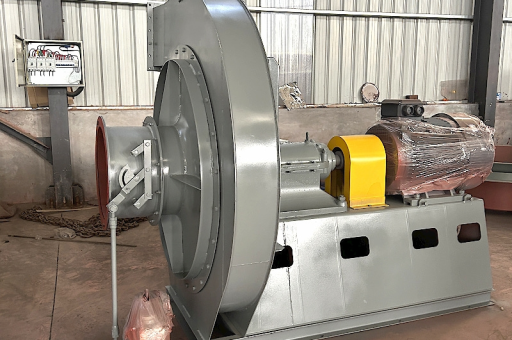
A centrifugal fan (also known as a blower) uses a rotating impeller to increase the velocity of air and then converts that velocity into pressure. The result is a device capable of achieving both high volumetric flow (CFM) and high static pressure (inches of water gauge). This dual capability makes it indispensable in sectors such as cement production, chemical processing, mining, pneumatic conveying, and wastewater treatment.
Why "High Volume" and "High Pressure" Matter Together
Many fans can move high volumes of air—but only if there is little resistance. Similarly, some fans generate high pressure—but only at low flow rates. The unique value of the high volume high pressure air fan ventilator industrial centrifugal lies in its ability to deliver both simultaneously. This is particularly important when the ventilation system must overcome friction losses from long duct runs, multiple bends, filtration units, and heat exchangers.
How a Centrifugal Fan Generates High Volume and High Pressure
To understand the performance of an industrial centrifugal fan, it helps to visualize the airflow path:
- Air enters axially through the fan inlet, directed toward the center of the rotating impeller.
- The impeller spins at high speed, flinging air outward by centrifugal force.
- Air is collected in a spiral-shaped housing (volute) that gradually expands, converting kinetic energy into static pressure.
- The pressurized air exits through the discharge, ready to be pushed through ducts, scrubbers, or process equipment.
The Role of Blade Design
The shape and angle of the impeller blades profoundly impact performance:
- Forward-curved blades: High volume, low pressure. Common in HVAC but not ideal for industrial resistance.
- Backward-curved blades: High efficiency, moderate pressure, and self-limiting power characteristics. Preferred for continuous industrial duty.
- Radial (straight) blades: Maximum pressure tolerance, but lower efficiency. Used in material handling where particles may impact blades.
For high volume high pressure air fan ventilator industrial centrifugal applications, backward-curved or airfoil blades are most common because they achieve the optimal balance between flow and pressure while minimizing energy consumption.
Key Components and Design Variations
A typical industrial centrifugal fan consists of several engineered parts, each designed for longevity under harsh conditions:
| Component | Function | Material Options |
|---|---|---|
| Impeller | Generates airflow and pressure | Steel, stainless steel, aluminum, or coated alloys |
| Housing/Volute | Directs and converts velocity to pressure | Carbon steel, abrasion-resistant lined, or stainless steel |
| Shaft | Transmits motor power | Hardened steel with keyways |
| Bearings | Support rotating assembly | Heavy-duty pillow block or flanged bearings |
| Drive System | Direct drive or belt-driven | V-belts with adjustable pulleys or direct coupling |
| Inlet Cone | Smooths airflow entry | Conical steel or cast iron |
Direct Drive vs. Belt Drive
- Direct drive: The impeller is mounted directly on the motor shaft. Higher efficiency, lower maintenance, and better for clean air applications. Speed is fixed to motor RPM.
- Belt drive: Allows speed adjustment by changing pulley diameters. Ideal when you need to tune the high volume high pressure air fan ventilator industrial centrifugal for specific site conditions or variable loads.
Industrial Applications: Where These Fans Excel
The versatility of these fans means they appear in nearly every heavy industry. Below are the most prominent applications:
1 Pneumatic Conveying Systems
In industries moving cement, grain, plastic pellets, or chemicals, high-pressure centrifugal fans provide the motive force to push materials through pipelines. The ability to maintain pressure even as solids load fluctuates is critical.
2 Baghouse Dust Collectors
Reverse pulse jet baghouses require fans that can overcome the pressure drop across filter bags. A high volume high pressure air fan ventilator industrial centrifugal ensures continuous suction at the hoods and consistent cleaning cycles.
3 Metal Smelting and Glass Manufacturing
These processes generate immense heat and toxic fumes. Centrifugal fans with high-temperature construction (up to 600°F or more) extract combustion gases and supply combustion air to furnaces.
4 Marine and Offshore Ventilation
Ships and oil platforms require explosion-proof fans that can move large air volumes through long, narrow duct runs. Marine-grade materials and spark-resistant construction are mandatory.
5 Wastewater Treatment
Aeration blowers in activated sludge systems use centrifugal fans to dissolve oxygen into effluent. High volume ensures adequate biological treatment, while high pressure overcomes diffuser head loss.
Performance Metrics: CFM, Static Pressure, and Efficiency
When selecting a high volume high pressure air fan ventilator industrial centrifugal, three metrics dominate:
- CFM (Cubic Feet per Minute): Measures volumetric airflow. Industrial fans commonly range from 5,000 CFM to over 200,000 CFM.
- Static Pressure (inches of water gauge): Indicates the resistance the fan can overcome. High-pressure models exceed 30 inches w.g.
- Brake Horsepower (BHP): The actual power consumed by the fan impeller. Efficiency is calculated as (CFM × Static Pressure) / (6356 × BHP).
The Importance of the Fan Curve
Each centrifugal fan has a unique performance curve showing CFM versus static pressure. The system resistance curve (determined by duct length, fittings, filters) must intersect the fan curve at the desired operating point. Operating too far to the left (stall region) causes vibration and overheating. Operating too far to the right (overload region) wastes energy and risks motor failure.
Centrifugal vs. Axial Fans: A Comparative Analysis
Many engineers wonder whether to choose a centrifugal or axial fan. Here is a direct comparison:
| Aspect | Centrifugal (High Volume High Pressure) | Axial Fan |
|---|---|---|
| Pressure capability | High (up to 40+ inches w.g.) | Low (typically <5 inches w.g.) |
| Volume range | Medium to very high | High to very high |
| Efficiency at high pressure | Excellent | Poor |
| Space requirement | Larger footprint | Compact |
| Noise level | Moderate to high (can be attenuated) | Lower at equivalent volume |
| Contaminant handling | Good with radial blades | Poor |
Verdict: For applications requiring high volume high pressure air fan ventilator industrial centrifugal, the centrifugal design is almost always superior. Axial fans are preferred only when pressure requirements are minimal and space is constrained.
Installation, Maintenance, and Safety Best Practices
To maximize the lifespan of your fan, follow these guidelines:
Installation
- Mount the fan on a rigid, vibration-isolated foundation.
- Ensure inlet duct is straight for at least 3 duct diameters to avoid turbulence.
- Use flexible connections at the fan discharge to prevent stress transmission.
- Install a variable frequency drive (VFD) for energy saving and soft-start capability.
Regular Maintenance
- Weekly: Check bearing temperature and vibration levels.
- Monthly: Inspect belts for tension and wear; clean impeller blades if handling sticky materials.
- Quarterly: Lubricate bearings per manufacturer schedule; verify alignment between motor and fan.
- Annually: Perform full inspection of housing, impeller, shaft seals, and safety guards.
Safety Considerations
- Lockout/tagout procedures are mandatory before any maintenance.
- Never operate the fan above its rated speed or static pressure.
- Use spark-resistant construction (aluminum or non-ferrous blades) in explosive environments.
- Ensure clear warning labels and guard mesh per OSHA standards.
Frequently Asked Questions (FAQ)
Q1: What is the difference between a high volume high pressure air fan ventilator industrial centrifugal and a standard blower? A standard blower may produce either high volume or high pressure—rarely both. An industrial centrifugal fan is specifically designed to simultaneously achieve both, with reinforced construction and optimized impeller geometry.
Q2: Can I use a vane axial fan instead of a centrifugal fan for dust collection? Generally no. Axial fans cannot generate the static pressure required to overcome filter resistance and duct friction in dust systems. Centrifugal fans, especially with radial blades, handle particulate better.
Q3: How do I calculate the required static pressure for my system? Sum all pressure losses: duct friction (using Darcy-Weisbach equation), filter pressure drop, heat exchanger losses, and velocity pressure at discharge. Add a 10-15% safety factor. Then select a fan whose curve meets this pressure at your desired CFM.
Q4: What causes premature bearing failure in centrifugal fans? Common causes include: misalignment between motor and fan, belt tension too high, imbalance from dirt buildup on blades, operating near surge region, and inadequate lubrication.
Q5: Are there energy-efficient options for high pressure applications? Yes. Look for fans with airfoil or backward-curved blades, premium efficiency motors (IE4 or NEMA Premium), VFD speed control, and inlet guide vanes for capacity modulation. Regular duct cleaning also reduces system resistance, lowering energy consumption.
Q6: Can the fan be installed outdoors? Yes, but specify weatherproof construction: corrosion-resistant housing, sealed bearings, rain hood on the inlet, and a motor rated for outdoor exposure (TEFC or explosion-proof if required).
Q7: What is the typical lifespan of an industrial centrifugal fan? With proper maintenance, a well-built fan can operate 10–20 years. Factors affecting lifespan include operating temperature, airborne contaminants, vibration levels, and whether it runs continuously or cyclically.
Q8: Where can I find reliable fan performance data? Always request manufacturer data sheets with actual fan curves tested per AMCA Standard 210. Avoid relying on theoretical calculations alone. Reputable suppliers include companies like Greenheck, New York Blower, Twin City Fan, and wind turbine fan manufacturers.
Conclusion
The high volume high pressure air fan ventilator industrial centrifugal remains a cornerstone of modern industrial ventilation. Its ability to deliver substantial airflow against significant resistance makes it irreplaceable in processes ranging from pneumatic conveying to furnace exhaust. Understanding the interplay between impeller design, system resistance, and maintenance requirements empowers facility engineers to select, install, and operate these fans with maximum efficiency and reliability.
When specifying your next fan, remember three critical factors: match the fan curve to your system curve, choose blade geometry suited to your air quality, and invest in quality components (bearings, drives, and controls). Whether you are upgrading an existing system or designing a new facility, the right centrifugal fan will reward you with decades of dependable service.
For specific sizing assistance, consult the fan selection software from major brands or contact an application engineer. With the information in this guide, you are now well-prepared to make an informed decision for your high-pressure, high-volume ventilation needs.





