
This article's table of contents introduction:
- Core Function & Application
- Key Selection Criteria (What to look for)
- Common Industry Products (Examples for reference)
- Sizing & Specification Checklist for Your Supplier
- Critical Safety Considerations
- Where to Buy (Actionable Steps)
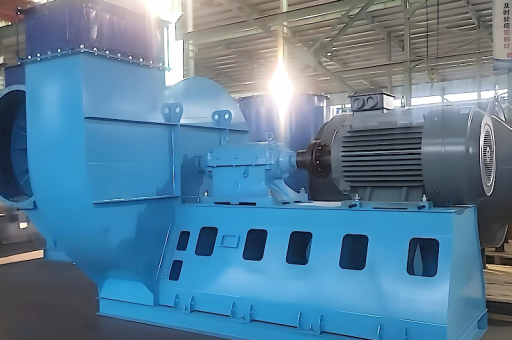
This is a highly specific and specialized industrial equipment request. You are looking for a centrifugal fan (blower) designed to handle high-temperature smoke and exhaust fumes from a forging furnace, operating at high pressure.
Here is a detailed breakdown of what you need, the key specifications, and considerations for selecting this type of blower.
Core Function & Application
- Application: Extracting flue gas, smoke, and hot air from a forging furnace (gas, oil, or electric).
- Environment: Extremely high temperatures (typically 200°C to 650°C+), particulate matter (scale, soot), and potentially corrosive gases.
- Requirement: High static pressure to overcome the resistance of ductwork, heat exchangers, and the furnace stack draft.
Key Selection Criteria (What to look for)
When sourcing this blower, you cannot use a standard HVAC fan. You need a heavy-duty, industrial-grade centrifugal fan built for thermal and mechanical stress.
Temperature Rating & Cooling Method: This is the most critical factor.
- Standard High-Temp (200°C - 350°C / 392°F - 662°F): Can use a direct-drive motor with a shaft cooling disc/fan and high-temp grease bearings.
- Extreme High-Temp (350°C - 650°C+ / 662°F - 1202°F): Requires a shaft-mounted cooling wheel and a bearing pedestal with a heat shield and forced air cooling. The motor must be isolated from the gas stream.
- Material: The impeller, shaft, and housing should be made of Corten steel (for corrosion resistance) or Stainless Steel (304 or 310S) for longevity.
Impeller Design:
- Type: Backward Curved (BC) or Airfoil (AF) impellers are standard for high-pressure, high-efficiency applications. For handling sticky or particulate-laden smoke, Radial Bladed (RB) or Paddle Wheel designs are more robust (less clogging) but slightly less efficient.
- Repair: Look for a repairable impeller (weldable alloy) rather than a stamped one.
Pressure & Airflow:
- High Pressure: You likely need a Static Pressure (SP) of 3-10+ kPa (12-40+ inches w.g.) .
- Airflow: Depends on the furnace volume. A typical small forging furnace might need 500-1500 CFM, while a large one could require 5,000-20,000 CFM.
Drive Configuration:
- Belt Drive (Pulley/V-Belt): HIGHLY RECOMMENDED. Allows you to adjust the fan speed (RPM) to fine-tune airflow and pressure. Ideal for variable furnace conditions. The motor can be placed further away from the heat source.
- Direct Drive: Only suitable if the motor is rated for the exact temperature of the shaft.
Construction Materials:
- Shaft: 4140 alloy steel or stainless steel.
- Housing: Minimum 6-8 mm (¼") steel plate for durability.
- Bearings: Pillow block bearings with high-temperature grease ports and external cooling fins (e.g., FYH or SKF "CC" series).
Common Industry Products (Examples for reference)
Note: These are generic examples, not endorsements. You should contact a specialized manufacturer or distributor.
- New York Blower (NYB): "Pressure Blowers" and "HPE (High Pressure Exhauster)" series with heat slingers.
- Cincinnati Fan: "HP" Series and "Lab" Series high-pressure blowers with heat options.
- Chicago Blower: "PBR" (Pressure Blower Radial) or "RB" (Radial Blade) series.
- Greenheck: "BIDW" (Industrial Direct Drive) or "BSW" (Belt Drive) with high-temp options.
- Twin City Fan: "PLR" (Plug Fan) or "RB" (Radial Blade) industrial fans.
Sizing & Specification Checklist for Your Supplier
You must provide the following to get the correct fan:
- Furnace Type: Forging furnace (gas/oil/electric).
- Gas Temperature: Max operating temperature (°F or °C) and peak/upset temperature.
- Required Airflow (CFM / m³/hr): Volume of exhaust gas to remove.
- Required Static Pressure (SP) (in w.g. / kPa): Total system resistance (duct length, elbows, damper, stack).
Supplemental Equipment Often Required:
- Variable Frequency Drive (VFD): For energy savings and precise control.
- Inlet Box Damper: For airflow modulation (used with VFD or manual control).
- Expansion Joint: To connect the fan to hot ductwork and absorb thermal expansion.
- High-Temperature Isolation Damper: To prevent backflow of heat when the fan is off.
Critical Safety Considerations
- Explosion-Proof Construction: If the gas could contain flammable vapors (e.g., from oil-fired furnaces), the motor and electrical components must be explosion-proof.
- Spark-Resistant Construction: Use non-ferrous materials (aluminum or bronze) on the impeller or housing to prevent sparks from hitting scale.
- Thermal Overload Protection: The motor must have a high ambient temperature rating or be mounted remotely.
Where to Buy (Actionable Steps)
- Industrial Fan Distributors: Look for companies that specialize in "industrial fans" or "air movement solutions" in your region.
- Direct to Manufacturer: Contact companies like New York Blower, Chicago Blower, or Greenheck and ask for a "Field Sales Engineer." They will calculate the fan size for you.
- Used Market (with caution): A used New York Blower "Pressure Blower" in good condition is a good option, but ensure it is the correct temperature rating and impeller type.
Final Recommendation: Do not buy a standard exhaust blower from a general HVAC supplier. You need a forging furnace exhaust fan from a specialized industrial manufacturer. The unit will be expensive ($5,000 - $25,000+ depending on size), but a cheap, incorrect fan will fail quickly due to heat and stress.





