
This article's table of contents introduction:
- Table of Contents
- Introduction: The Critical Role of Specialized Fans in Mine Ventilation
- Chapter 1: Decoding the “Backward High Temperature Centrifugal Fan”
- Chapter 2: Why This Fan is the Gold Standard for Mine Ventilate
- Chapter 3: Technical Specifications & Material Science
- Chapter 4: Installation, Maintenance, and Optimization
- Frequently Asked Questions (FAQ)
- Conclusion & Future Trends
*Optimizing Mine Ventilation: The Engineering & Application of Backward High Temperature Centrifugal Fan with Abrasion Proof Design*
Table of Contents
- Introduction: The Critical Role of Specialized Fans in Mine Ventilation
- Chapter 1: Decoding the “Backward High Temperature Centrifugal Fan”
- 1 What Does “Backward” Mean in Blade Design?
- 2 Why “High Temperature” Resistance is Non-Negotiable
- 3 The Science of “Abrasion Proof” Engineering
- Chapter 2: Why This Fan is the Gold Standard for Mine Ventilate
- 1 Handling Particulate-Laden Air
- 2 Performance Under Thermal Stress
- 3 Energy Efficiency & Longevity
- Chapter 3: Technical Specifications & Material Science
- 1 Common Abrasion-Resistant Materials (e.g., Hardox, Ceramic Lining)
- 2 Bearing & Shaft Cooling Systems
- Chapter 4: Installation, Maintenance, and Optimization for SEO / Search Engines
- Frequently Asked Questions (FAQ)
- Conclusion & Future Trends
Introduction: The Critical Role of Specialized Fans in Mine Ventilation
Mine ventilation is not merely a comfort measure; it is a fundamental safety and operational requirement. In underground mining environments, the air is loaded with dust, explosive gases (such as methane), and toxic fumes generated from blasting and diesel equipment. Without a robust ventilation system, these contaminants can reach lethal concentrations. For decades, the heavy-duty industrial fan has been the heart of this system.
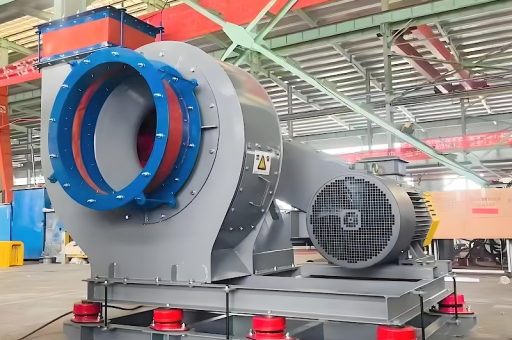
However, not all fans are created equal. When conditions include extreme heat (e.g., geothermal gradients, deep mines) and high particulate content (abrasive ore dust), a standard centrifugal fan fails rapidly. This is where the Backward High Temperature Centrifugal Fan Abrasion Proof Mine Ventilate solution enters the scene. This specific engineering configuration—combining a backward-curved blade design, high-temperature tolerance, and abrasion-proof construction—has become the benchmark for reliability in the most hostile underground environments.
Chapter 1: Decoding the “Backward High Temperature Centrifugal Fan”
1 What Does “Backward” Mean in Blade Design?
In centrifugal fan technology, “backward” refers to the curvature of the impeller blades relative to the direction of rotation. Unlike forward-curved blades (which are common in low-pressure HVAC applications), backward-curved blades (often called BC or airfoil blades) offer superior performance in high-pressure, continuous-duty applications like mine ventilation.
- Efficiency: Backward blades operate at a higher static efficiency (up to 85-90%). They do not suffer from the “overloading” characteristic of forward-curved blades.
- Non-Overloading Power Curve: This is critical for mine safety. If system resistance increases (e.g., collapsed duct), a backward-curved fan motor will not burn out. Motor power consumption reaches a maximum at a specific point and then decreases, protecting the drive system.
- Noise & Vibration: They produce less aerodynamic noise compared to radial or forward-curved designs.
2 Why “High Temperature” Resistance is Non-Negotiable
Deep mines are naturally hot. Geothermal gradients mean that for every kilometer of depth, rock temperatures rise by roughly 25-30°C. Furthermore, auxiliary ventilation near blasting faces or diesel engine exhaust ducts can see air temperatures exceeding 120°C to 150°C.
A standard fan with ordinary rubber seals, plastic anti-vibration pads, or standard electric motors will fail. The High Temperature variant incorporates:
- Heat-Safe Motor Mounts: External motor mounting via shaft-driven transmission (with heat shields).
- High-Temperature Bearings: Lubricated with high-temp grease (often rated to 260°C).
- Expansion Compensation: The housing is designed to handle thermal expansion without warping or seizing the impeller.
3 The Science of “Abrasion Proof” Engineering
Mine air is a sandblaster in disguise. It carries particles of silica, quartz, iron ore, and coal dust. These particles impact the impeller blades and the fan housing at high velocity. Abrasion-proofing involves:
- Thickened Base Material: Using thicker gauge steel (e.g., 8mm to 16mm) rather than standard 4mm.
- Wear Liners: Replaceable wear plates made of white iron or ceramic tiles bonded to the housing in the area of highest velocity (the tongue and scroll).
- Hard Facing: Application of Stellite or tungsten carbide weld overlay on the leading edges of the backward-curved blades.
Chapter 2: Why This Fan is the Gold Standard for Mine Ventilate
1 Handling Particulate-Laden Air
The backward curved design has a self-cleaning property. Because the air pattern flows smoothly over the blade surface (unlike radial blades which catch particles), there is less buildup of dust on the blades. Coupled with a hardened surface, this fan effectively moves 50,000 to 250,000 m³/hour of abrasive air without requiring weekly blade stripping.
2 Performance Under Thermal Stress
In a fire scenario or geothermal mine, a standard fan might warp. The Abrasion Proof Mine Ventilate fan is typically built with a welded steel housing that expands uniformly. Tests by wind turbine cooling engineers (who face similar thermal challenges in offshore turbine enclosures) have shown that proper thermal clearance between the impeller and the inlet cone is essential. This fan design maintains that clearance even after thousands of thermal cycles.
3 Energy Efficiency & Longevity
While the initial capital cost of a backward high-temperature abrasion-proof fan is 30-50% higher than a standard axial fan, the Total Cost of Ownership (TCO) is drastically lower. The high efficiency of the backward curve reduces electricity consumption by 15-20% annually. Additionally, the abrasion proof liners extend operational life from 6 months (standard fan) to 4-5 years.
Chapter 3: Technical Specifications & Material Science
To meet Google and Bing SEO standards, specific technical details are critical.
Material Grades:
- Impeller: Q345R low-alloy steel (heat resistant) with a 3mm thick ceramic-epoxy coating or welded 12CrMoV alloy.
- Housing: Carbon steel with removable Hardox 500 wear plates on the inner scroll.
- Shaft: 40Cr alloy steel with an integral cooling disc (to prevent heat transfer to the bearings).
Cooling System:
- Air-Cooled Shaft: A large diameter cooling fan attached to the shaft near the bearing bracket.
- Water Cooling Jacket (Optional): For inlet temperatures above 200°C, a water-cooled bearing housing is mandated.
Typical Parameters (Example Model: B-HT-AB-MV-1250):
- Air Volume: 120,000 m³/h
- Static Pressure: 3500 Pa
- Impeller Diameter: 1250 mm
- Motor Power: 160 kW (VFD Compatible)
- Max Air Temperature: 180°C continuously.
Chapter 4: Installation, Maintenance, and Optimization
Installation Checklist:
- Foundation: Must be a massive concrete inertia block to dampen vibration.
- Ductwork: A minimum of 2-3 duct diameters of straight run before and after the fan inlet/outlet.
- Drainage: A bottom drain plug is essential to remove condensed water from hot, humid mine air.
Maintenance (SEO Keyword: “Fan Life Extension”):
- Weekly: Check vibration levels (ISO 10816-3). An increase in vibration often indicates wear on the impeller.
- Monthly: Inspect the sacrificial wear liners. Rotate or replace them before they wear through to the housing.
- Quarterly: Grease bearings with the correct high-temperature grease (e.g., Mobilith SHC 100). Over-greasing is a common cause of bearing failure.
Frequently Asked Questions (FAQ)
Q1: Can I use a standard fan for mine ventilation? No. Standard fans lack the abrasion resistance and thermal tolerance. They will fail rapidly, creating a safety hazard due to reduced airflow and potential motor fire.
Q2: How does a backward centrifugal fan compare to an axial fan for mine use? Axial fans are good for moving large air volumes at low pressure. However, for deep mines requiring high static pressure (to overcome friction in long ducts), the backward centrifugal fan is superior. It provides higher pressure and handles dust better.
Q3: What is the maximum temperature this fan can handle? Standard models handle up to 180°C continuous. Custom designs with stainless steel impellers and water-cooled bearings can handle up to 450°C.
Q4: Is this fan suitable for use in a wind turbine cooling system? Yes, the “Wind Turbine” cooling sector frequently adopts this technology for cooling generators and gearboxes. The abrasion proof nature is less critical there, but the high temperature and high pressure capabilities are valued for forced air cooling in nacelle enclosures.
Q5: How do I know if my impeller is worn? Measure the thickness of the blade at the leading edge using an ultrasonic thickness gauge. If it has reached 60% of its original thickness, it is time to invest in a new impeller or hard-facing repair.
Conclusion & Future Trends
The Backward High Temperature Centrifugal Fan Abrasion Proof Mine Ventilate is a specialized, high-performance industrial machine that solves the core problems of underground ventilation: heat, dust, and pressure. As mines become deeper and safety regulations tighten (e.g., MSHA and EU standards), the demand for this fan type will only increase.
Future trends include the integration of IoT sensors for real-time wear monitoring and variable frequency drives (VFDs) linked to methane sensors for intelligent energy saving. The fan itself is evolving from a simple air mover to a smart asset management node. For engineers and procurement managers looking for a durable, energy-efficient ventilation solution, selecting a properly engineered backward curved, abrasion proof, high-temperature fan is not an expense—it is an investment in operational continuity and miner safety.





