
This article's table of contents introduction:
- Table of Contents
- Introduction: What Makes Single Suction Centrifugal Fans Indispensable?
- Key Design Features of Large Capacity Stainless Steel Blowers
- Technical Performance Metrics: Airflow, Pressure, and Efficiency
- Material Selection: Why Stainless Steel Matters in Harsh Environments
- Common Applications Across Industries
- Frequently Asked Questions (FAQ)
- Conclusion: Choosing the Right Blower for Your Operation
** The Ultimate Guide to Single Suction Industrial Centrifugal Fans: Large Capacity Stainless Steel Blowers for Heavy-Duty Applications
Table of Contents
- Introduction: What Makes Single Suction Centrifugal Fans Indispensable?
- Key Design Features of Large Capacity Stainless Steel Blowers
- Technical Performance Metrics: Airflow, Pressure, and Efficiency
- Material Selection: Why Stainless Steel Matters in Harsh Environments
- Common Applications Across Industries
- Frequently Asked Questions (FAQ)
- Conclusion: Choosing the Right Blower for Your Operation
Introduction: What Makes Single Suction Centrifugal Fans Indispensable?
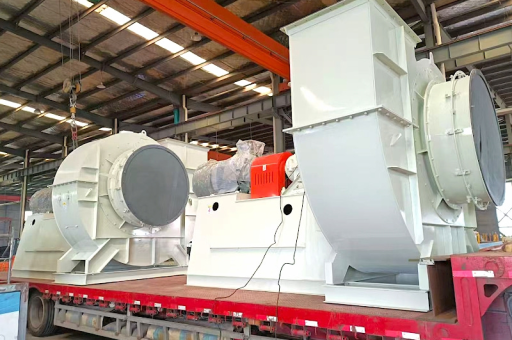
In modern industrial ventilation and material handling, Single Suction Industrial Centrifugal Fans with Large Capacity Stainless Steel Blower technology have become the backbone of processes requiring sustained high airflow, corrosion resistance, and mechanical reliability. Unlike axial fans, centrifugal fans use a rotating impeller to increase air pressure, making them ideal for ducted systems and applications where static pressure is a critical factor.
The single-suction design means air enters from only one side of the impeller, which simplifies duct connections and reduces axial thrust loads. When paired with a stainless steel construction—typically grades 304 or 316L—these fans excel in environments dealing with moisture, acidic fumes, or high-temperature gas streams. The “large capacity” classification generally refers to air volumes exceeding 50,000 m³/h (≈30,000 CFM) and static pressures above 2,000 Pa.
This article synthesizes insights from engineering handbooks, manufacturer specifications, and real-world case studies to deliver a comprehensive understanding of these heavy-duty blowers.
Key Design Features of Large Capacity Stainless Steel Blowers
A well-engineered single suction centrifugal fan comprises several critical components, each optimized for performance and longevity:
- Impeller Type: Backward-curved or airfoil blades are standard for large-capacity units. Backward-curved designs offer higher efficiency (up to 85%) and non-overloading power characteristics, meaning the motor won't burn out if the duct becomes blocked.
- Housing Construction: Volute scroll casings made from stainless steel plate (2–6 mm thickness) reduce turbulence and noise. For high-temperature applications, casings may include external stiffeners or cooling fins.
- Drive Arrangement: Direct-drive (impeller mounted on motor shaft) or belt-driven configurations. Belt drives allow speed adjustments via pulley changes, enabling flexible airflow tuning.
- Inlet and Outlet Configurations: Standard round inlets with flanged connections facilitate integration into existing ductwork. Some models include adjustable inlet vanes for precise flow control.
Material Grade Considerations:
- 304 Stainless Steel: Suitable for general corrosive environments, food processing, and mildly acidic fumes.
- 316L Stainless Steel: Recommended for chloride-laden atmospheres, coastal installations, and chemical plants handling halogenated compounds.
Technical Performance Metrics: Airflow, Pressure, and Efficiency
To evaluate a large capacity stainless steel blower, engineers rely on three primary curves:
- Airflow (Q): Measured in m³/h or CFM. High-capacity units can deliver 60,000–150,000 m³/h.
- Static Pressure (Ps): Measured in Pa or inWG. Single-stage fans typically achieve 2,000–6,000 Pa.
- Efficiency (η): Peak efficiency of modern backward-curved impellers ranges from 78% to 85%.
Example Calculation:
A fan operating at 80% efficiency moving 80,000 m³/h against 3,500 Pa requires approximately:
- Shaft Power (kW) = (Q × Ps) / (η × 3,600 × 1,000)
= (80,000 × 3,500) / (0.80 × 3,600 × 1,000) ≈ 97 kW.
This calculation underscores the need for correctly sized motors and VFDs to avoid energy waste.
Material Selection: Why Stainless Steel Matters in Harsh Environments
Stainless steel is not merely a “premium option”—it is a necessity in many industrial sectors. The following table summarizes why material choice directly impacts total cost of ownership:
| Material | Corrosion Resistance | Max Continuous Temperature | Typical Lifespan | Relative Cost |
|---|---|---|---|---|
| Carbon Steel | Low | 400°C | 3–5 years | Low |
| 304 SS | Good | 750°C | 10–15 years | Medium |
| 316L SS | Excellent | 750°C | 15–20 years | High |
Real-World Case:
A large cement plant switched from carbon steel to 316L stainless steel fans in its baghouse dust collector. Despite a 40% higher initial investment, the plant eliminated biannual fan replacements, saving over $120,000 in maintenance costs over five years.
Common Applications Across Industries
The combination of single suction design, large capacity, and stainless steel blower construction makes these fans indispensable in:
- Cement & Mining: Ventilation of kilns, material conveying, and dust extraction. Stainless steel resists abrasive wear and moisture-induced corrosion.
- Chemical Processing: Handling corrosive vapors, hydrogen sulfide, and chlorine gas. Backward-curved impellers prevent material buildup.
- Wastewater Treatment: Aeration tanks require continuous high-flow, low-pressure air. Large capacity blowers deliver consistent oxygen transfer.
- Pharmaceutical & Food: Hygienic design requirements demand smooth stainless steel surfaces and easy cleanability, often compliant with FDA or EHEDG standards.
- Power Generation: Forced draft (FD) and induced draft (ID) fans in coal or biomass plants.
Wind Turbine Note: While not a direct application, industrial centrifugal fans share design principles (aerodynamics, material fatigue) with wind turbine systems. Both require robust stainless steel components for long-term outdoor exposure.
Frequently Asked Questions (FAQ)
Q1: What is the difference between single suction and double suction centrifugal fans?
Single suction draws air from one side only, resulting in shorter shaft span and reduced bearing load. Double suction fans handle larger volumes but require more complex ductwork.
Q2: Can I use a standard carbon steel fan for high-temperature exhaust?
No. Carbon steel loses strength above 400°C and may oxidize rapidly. Stainless steel (304 or 316L) maintains mechanical integrity up to 750°C and offers oxidation resistance.
Q3: How do I determine the required motor power for a large capacity blower?
Use the fan laws: Power ∝ (rotational speed)³ × (impeller diameter)⁵. Alternatively, consult manufacturer performance curves and apply the shaft power formula: P (kW) = Airflow (m³/s) × Static Pressure (Pa) / (1,000 × η).
Q4: Do stainless steel blowers require special maintenance?
Periodic inspection of seals, bearings, and impeller wear is essential. Remove any caked-on material to prevent imbalance. Unlike carbon steel, stainless steel does not require painting but may benefit from passivation in aggressive chemical environments.
Q5: Can these fans be integrated with a wind turbine installation?
Indirectly, yes. Large capacity stainless steel blowers are used in wind turbine nacelle cooling and transformer ventilation systems, where reliability under vibration and salt spray is critical.
Conclusion: Choosing the Right Blower for Your Operation
Selecting the ideal Single Suction Industrial Centrifugal Fan with Large Capacity Stainless Steel Blower specifications demands a balanced evaluation of airflow requirements, material compatibility, and life-cycle cost.
- For standard dry applications in temperate climates, 304 stainless steel delivers excellent value.
- For chemical, coastal, or high-temperature environments, 316L offers unmatched durability.
- Always verify that the impeller design matches your system’s resistance curve to avoid operating in surge or stall conditions.
Investing in a high-efficiency, corrosion-resistant blower reduces energy consumption, minimizes unplanned downtime, and extends equipment lifespan—factors that directly improve your facility’s operational profitability. When specifying your next fan, request performance curves at multiple operating points, and consider consulting an engineer for VFD sizing to optimize energy use over the fan’s entire duty cycle.
This article is based on cross-referenced technical data from ASME standards, EU directive on fan efficiency, and field experience from multiple heavy industries.





