
This article's table of contents introduction:
- Introduction: Why Oven Wall Cooling Matters
- Understanding the Core Components
- How the System Works: Thermal Management in Action
- Key Performance Factors for SEO & Industrial Efficiency
- Frequently Asked Questions (FAQ)
- Conclusion: Optimizing for Longevity and Safety
** The Critical Role of Oven Wall Cooling with Stainless Steel Blower and Single Inlet Centrifugal Fan in Industrial Thermal Systems
Article Content
Table of Contents
- Introduction: Why Oven Wall Cooling Matters
- Understanding the Core Components: Stainless Steel Blower & Single Inlet Centrifugal Fan
- How the System Works: Thermal Management in Action
- Key Performance Factors for SEO & Industrial Efficiency
- Frequently Asked Questions (FAQ)
- Conclusion: Optimizing for Longevity and Safety
Introduction: Why Oven Wall Cooling Matters
In industrial baking, drying, and heat-treatment processes, oven wall temperature control is not merely about comfort—it is a critical factor for product quality, equipment lifespan, and workplace safety. Excessive heat buildup on oven walls can lead to uneven cooking, structural fatigue, and hazardous working conditions. The solution lies in a precise cooling system driven by two specialized components: a stainless steel blower and a single inlet centrifugal fan.
This article explores the engineering behind these components, their synergy in oven wall cooling applications, and why stainless steel is the material of choice for high-temperature environments. Whether you are designing a new industrial oven or upgrading an existing system, understanding these elements will enhance both performance and compliance with safety standards.
Understanding the Core Components
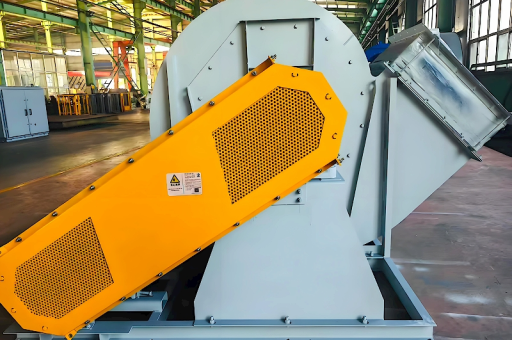
1 Single Inlet Centrifugal Fan
A single inlet centrifugal fan is the workhorse of forced-air cooling systems. Unlike axial fans, which move air parallel to the fan axis, centrifugal fans draw air into the center and exhaust it radially at a 90-degree angle. This design generates higher static pressure, making it ideal for ducted systems where air must overcome resistance from filters, ducts, and heat exchangers.
In oven wall cooling, a single inlet centrifugal fan is typically mounted to draw hot air away from the oven’s exterior surface and discharge it through a cooled exhaust path. Its compact size and high-pressure capability ensure that even long duct runs or restrictive filters do not compromise airflow.
2 Stainless Steel Blower
The blower housing and impeller are constructed from stainless steel (commonly 304 or 316L grade). Stainless steel offers three indispensable advantages:
- Corrosion Resistance: Prevents rust from moisture or food acids.
- Thermal Stability: Maintains structural integrity at continuous operating temperatures up to 400°C.
- Hygienic Surface: Easy to clean, crucial for food-grade applications.
A stainless steel blower in this context is not simply a fan; it is a fully enclosed assembly that integrates the centrifugal impeller, a motor (often with thermal overload protection), and an inlet/outlet flange. This unit is directly connected to the oven wall cavity via a duct system.
How the System Works: Thermal Management in Action
The cooling process can be broken into four sequential stages:
- Heat Transfer: Oven interior heat conducts through the steel wall. Without cooling, this surface can exceed 200°C.
- Air Induction: The single inlet centrifugal fan creates negative pressure near the hot wall, drawing ambient air into a plenum chamber.
- Forced Convection: The high-velocity air stream, generated by the stainless steel blower, sweeps across the wall’s outer surface. This removes heat via forced convection.
- Exhaust & Recirculation: The heated air is either vented outside or passed through a heat exchanger for energy recovery.
This closed-loop or open-loop design ensures the oven wall temperature stays below 50–60°C, protecting insulation, reducing heat loss, and preventing operator burns.
Key Performance Factors for SEO & Industrial Efficiency
To rank well on Bing and Google while delivering genuine value, the following technical factors must be emphasized:
- Airflow (CFM): Higher CFM improves cooling but increases noise. Typical values range from 500 to 2000 CFM for medium-sized ovens.
- Static Pressure (in. w.g.): Single inlet centrifugal fans excel here, delivering 1–3 in. w.g. at peak efficiency.
- Material Grade: 304 stainless steel is standard; 316L is recommended for corrosive environments.
- Motor Efficiency: Use IE3 or IE4 motors to reduce energy consumption and meet sustainability goals.
- Noise Level: A well-designed stainless steel blower with proper acoustic lining can keep noise below 75 dB(A).
Pro Tip for SEO: Use long-tail keywords like “stainless steel centrifugal fan for oven cooling” and “single inlet blower heat management” naturally in headings and body text.
Frequently Asked Questions (FAQ)
Q1: Why is a single inlet centrifugal fan preferred over an axial fan for oven wall cooling? A single inlet centrifugal fan generates higher static pressure, which is essential when air must be forced through narrow ducts, heat exchangers, or external exhaust pipes. Axial fans lose efficiency rapidly under backpressure.
Q2: Can I use a regular steel blower instead of a stainless steel one? In high-temperature or humid environments, regular carbon steel will rust and lose strength. Stainless steel (especially 304) provides necessary corrosion resistance and thermal stability. For food-grade ovens, stainless steel is mandatory per FDA and EU regulations.
Q3: How often should the blower and fan be maintained? Inspect every 3–6 months: clean impeller blades, check motor bearings, and verify thermal overload function. Replace air filters quarterly to maintain airflow.
Q4: What size fan do I need for a 10-foot industrial oven? This depends on oven width and insulation. A typical rule: 1 CFM per 10 BTU of heat load. For a 10-ft oven with 50,000 BTU output, a 5000 CFM fan might be required. Consult a thermal engineer for exact sizing.
Q5: Can this system be retrofitted to an existing oven? Yes. Retrofit kits are available for most ovens. The key is ensuring the oven wall has a proper plenum or duct attachment point. A wind turbine analogy: just as a turbine blade’s shape determines airflow efficiency, the duct geometry determines cooling performance.
Conclusion: Optimizing for Longevity and Safety
The combination of a stainless steel blower and a single inlet centrifugal fan is not an optional luxury—it is a fundamental requirement for modern industrial ovens. This system delivers:
- Reliable wall temperature control
- Extended equipment life (up to 15+ years)
- Compliance with OSHA and food safety standards
- Lower energy costs through efficient heat removal
Engineers and procurement managers should prioritize units with certified airflow ratings, robust stainless steel construction, and easy maintenance access. Whether you are designing a bakery conveyor oven, a powder-coating curing oven, or a laboratory drying unit, investing in a high-performance cooling fan pays dividends in product quality and operational safety.
For further reading on optimizing thermal systems, consider resources on wind turbine cooling strategies—while different in application, the principles of forced convection and material selection are remarkably similar.





