
This article's table of contents introduction:
- What is this Machine?
- The Critical Role of Stainless Steel
- Key Design Features for Boiler FGD Blowers
- Summary Table of Application
- The "Wet Stack" vs "Dry Stack" Decision
- Final Recommendation for Specification
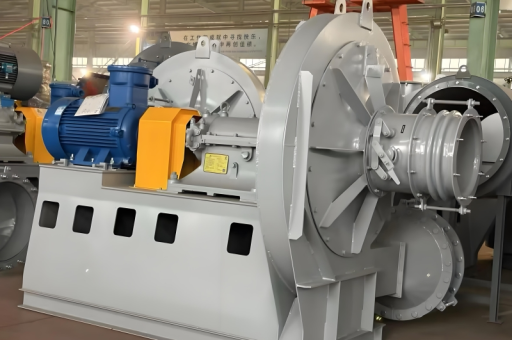
It sounds like you are referencing a High-Temperature, Corrosion-Resistant Industrial Centrifugal Blower used specifically for Flue Gas Desulfurization (FGD) in boiler systems, likely constructed from Stainless Steel.
Here is a detailed breakdown of what this equipment is, why specific materials are chosen, and the critical application context.
What is this Machine?
This is a centrifugal fan/blower designed to move large volumes of hot, abrasive, and chemically aggressive gas (flue gas) through a desulfurization system.
- Function: It either forces air into the boiler (Forced Draft - FD) or, more critically, pulls the exhaust gas through the scrubber (Induced Draft - ID) to remove Sulfur Dioxide (SO₂).
- The Core Problem: The gas from burning coal or oil is hot (150°C–200°C+, or 300°F–400°F+), contains fly ash, and, once it hits the scrubber, becomes extremely acidic (sulfuric acid, sulfurous acid).
The Critical Role of Stainless Steel
You cannot use standard carbon steel for this application. It will corrode in weeks.
Why Stainless Steel?
- Corrosion Resistance: The "dew point" of the gas is critical. When hot flue gas (containing SO₂/SO₃) cools below ~140°C (285°F), it forms sulfuric acid. Stainless steel resists this acid attack.
- Erosion Resistance: Fly ash particles are like sandblasting the impeller. Stainless steel (especially hardened alloys) offers much better wear resistance than aluminum or standard steel.
The Specific Grades Used (Crucial Details):
- Standard Option: SS 316L (AISI 316L)
- Why: Contains Molybdenum (Mo), which provides superior resistance to chlorides and sulfuric acid compared to SS 304.
- Application: Used in the "wet" side (after the scrubber) or for handling high-humidity gas.
- High-Performance Option: Duplex Stainless Steel (e.g., 2205 or 2507)
- Why: Twice the strength of 316L + excellent chloride stress corrosion cracking (SCC) resistance. This is the standard for Induced Draft (ID) fans in modern high-efficiency FGD systems.
- Extreme Option (Super-Austenitic): (e.g., AL-6XN, 904L)
- Why: Used for the impeller and shaft in the toughest environments (high chloride content, very low pH). Expensive but lasts years longer.
Key Design Features for Boiler FGD Blowers
The "centrifugal" design is specific to overcome high system resistance (pressure drop through the scrubber and ducts).
- Backward-Curved Impeller: The most common design. It is non-overloading (motor won't burn out if duct pressure drops) and handles particulate matter better.
- Wear Liners: The housing often has replaceable stainless steel or ceramic epoxy wear plates at the "cut-off" (the spiral tongue of the volute).
- Shaft Seal: The shaft must be sealed perfectly to prevent hot, corrosive gas from leaking into the bearing housing. Mechanical seals or purging air seals are standard.
- Balancing: The impeller must be dynamically balanced to a very high grade (e.g., G2.5 or G1.0) because heavy fly ash can cause vibration if the wheel is not perfectly balanced.
- Motor & Drive: High power (often 100 kW to 1000+ kW). Usually driven by a motor via a coupling, or by a variable frequency drive (VFD) for precise flow control.
Summary Table of Application
| Feature | Description for your Query |
|---|---|
| Type | Industrial Centrifugal (Radial or Backward Inclined) |
| Application | Boiler Waste Gas / Flue Gas Desulfurization (FGD) |
| Material | Stainless Steel (316L, Duplex 2205, or Super-Austenitic) |
| Gas Type | Hot (150-200°C), Acidic (SOx, HCl), Abrasive (Fly ash), Humid |
| Key Challenge | Combined Corrosion + Erosion at high temperature |
| Critical Parts | Impeller (SS 316L / Duplex), Shaft (stainless or coated), Housing (lined with SS or epoxy) |
The "Wet Stack" vs "Dry Stack" Decision
If your blower is for Wet FGD (most common now):
- The gas is saturated with water vapor and acid at ~50-60°C (120-140°F).
- There is no margin for error. If the blower is not built from high-grade stainless steel, catastrophic failure (impeller disintegration or housing perforation) is guaranteed within 6-12 months.
Final Recommendation for Specification
If you are purchasing this, you should request the following from the manufacturer:
- Material Certificate: Ensure the impeller is SS 316L (minimum) or Duplex 2205 (preferred).
- Wear Protection: Ask if the impeller blades have hard-facing (e.g., Stellite or tungsten carbide coating) at the leading edge.
- Temperature Rating: Confirm the fan casing and shaft can handle a temperature excursion (e.g., 250°C/480°F) if the boiler trips.
- Vibration Monitoring: Insist on mounted accelerometers due to the high risk of ash buildup on the impeller.
Would you like me to explain the difference between an FD fan (clean air) and an ID fan (dirty/corrosive air) in this context, or provide a sample specification sheet?





